





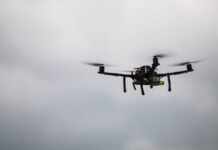


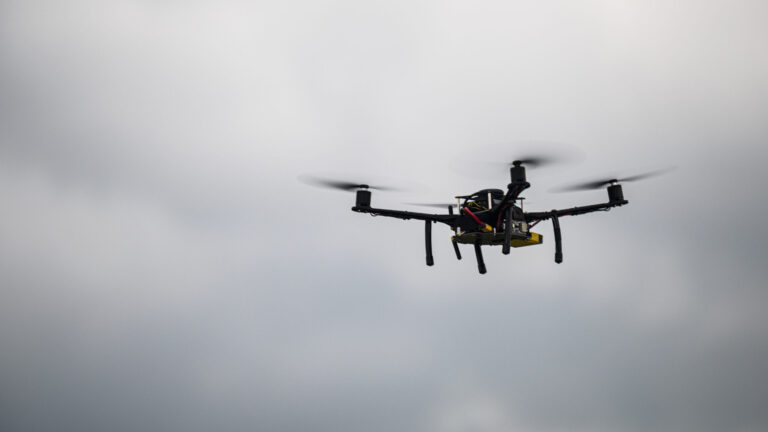
As the Pentagon works to ramp up domestic drone production, military officials and industry leaders remain divided over whether the current acquisition approach can generate the sustained demand required to build a lasting domestic industry. The goal is to build a robust manufacturing base, but uncertainty regarding long-term orders threatens to undermine these strategic objectives.
“There’s a lot of positive signaling, but we need to see the whites of the eyes: We need to see sustained, normalized demand,” James Slider, CEO of Performance Drone Works, told Breaking Defense. According to Slider, healthy demand would look like reliable, continuous commitments—such as providing 1,000 drones per month for a full year—rather than isolated, sporadic awards.
An Acquisition Model Built on Induced Demand
The Pentagon has launched multiple funding avenues and acquisition competitions to encourage companies to develop new drone systems and expand production without necessarily guaranteeing the longer-term orders needed to justify those investments. The strategy aims to build up domestic manufacturing capacity, but industry leaders warn that a lack of predictability could hinder the very investments they are trying to trigger.
The Army, the largest single source of demand for small drones, is deliberately attempting to „artificially induce” demand signals. “We’re trying to force a supply chain to stand up within the country, and so there’s a lot of companies that say, there’s just not enough demand for me to invest in that,” said Jon Strzelec, advanced manufacturing lead for small drones at Army Materiel Command.
The „Drone Dominance” Program and Competitive Logic
The “Drone Dominance” program is the clearest example of this approach: a series of “gauntlet-style” competitions designed to give companies repeated opportunities to win smaller deals, amounting to a total of $1 billion over two years.
While the Pentagon has already tapped dozens of companies to deliver tens of thousands of drones throughout the various phases of the program, these awards do not guarantee future orders. This uncertainty reflects a broader acquisition challenge: while repeated competitions provide opportunities to select new technologies and foster innovation, the lack of predictable follow-on orders makes it difficult for manufacturers to justify the major capital expenditures needed to scale production lines.
Financial Challenges and Strategic Risks
The Pentagon has outlined plans to spend nearly $55 billion on autonomy initiatives in its FY27 budget. However, the bulk of this funding was requested through a reconciliation package, leaving its future uncertain as Congress debates its approval.
Andrew Evans, director of the Strategy & Transformation Office inside the Army’s Deputy Chief of Staff for Intelligence (G-2), described the situation as the “ultimate economic challenge” for the department. “The challenge that our senior leaders are having to contend with is, how do you incentivize industry to build if your ordering period is so episodic?” Evans asked.
Industry Perspectives: Caution vs. Pragmatism
Industry opinion remains split. Some leaders, such as Callan Carpenter, chief revenue officer of Skydio, believe demand signals are “very strong” and are coming from across the federal government, not just the Department of Defense.
Conversely, other executives emphasize that large-scale investments require confidence. “If I were a manufacturer of drone systems, I wouldn’t be investing ahead of a very large amount of money or a consistent demand signal,” explained John Burer, CEO of the American Center for Manufacturing & Innovation. “It’s great to do a bake-off and to test some of these things and prove out that they can work, but then scaling production needs a different mindset, and it’s a cost focus oftentimes.”
A Strategic Gamble Still in Play
Even if Pentagon leadership and lawmakers find a way to secure stable funding, the success of this strategic gamble depends on a delicate balance between the desire for rapid innovation and the necessity of predictable mass production.
Without continuous orders, industry leaders warn that the cycle of “continuous competition” could generate more instability than progress. “There is no supply without demand,” said Chad Chasteen, of AV, during a recent discussion. “Continuous competition doesn’t mean you make industry fill out continuous requests for white papers. There has to be continuous awards, continuous orders to create that.”
In this context, the flow of funding for the Task Force Autonomous Warfare (formerly the DAWG package) serves as the decisive metric. If these funds successfully translate into contracts, industry confidence may grow. If not, the Pentagon’s efforts to construct a next-generation domestic drone industrial base risk remaining an unfulfilled ambition.