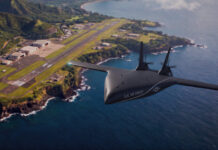



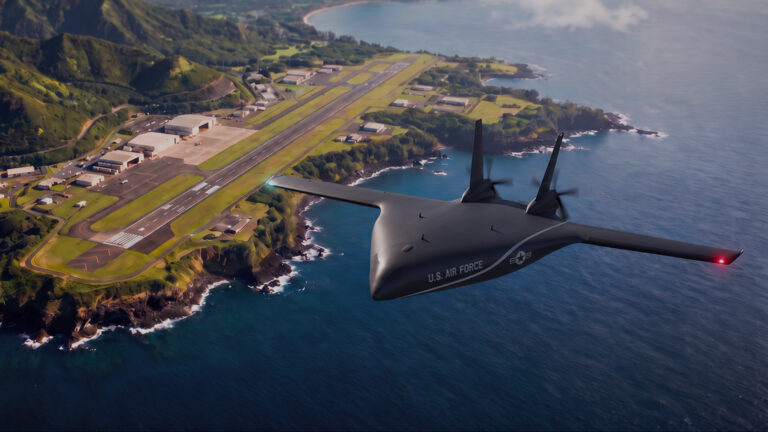
The U.S. Air Force has awarded aircraft startup Natilus a $3.5 million contract to support development of its KONA aircraft, designed to carry military cargo. The project is built around an unconventional aerodynamic layout that merges the wings and fuselage into a single structure.
A new military bet on blended-wing design
KONA is at least the second blended-wing-body, or BWB, aircraft project to receive Air Force funding. In 2023, JetZero secured a $235 million investment to build a full-scale demonstrator.
Although BWB concepts have been studied for decades, no such aircraft has yet reached the market. Natilus believes the time is right to move the design from the drawing board toward flight.
Funding aims to reduce development risks
The government contract supplements privately raised capital and will help advance key technologies for KONA. Natilus is targeting a first flight in late next year or early 2028. The award marks the first U.S. government investment in the company.
A BWB layout has some similarities to the flying-wing design of the B-2 bomber, but retains smaller, distinct wings. By blending the wings and fuselage, the aircraft can generate more lift than a conventional tube-and-wing design and potentially improve fuel efficiency. However, engineering complexity and other aeronautical challenges have kept the concept from becoming mainstream.
An aircraft for regional tactical transport
KONA will have an 85-foot wingspan and a maximum takeoff weight of 19,000 pounds. Natilus plans to equip it with a Pratt & Whitney PT6 turboprop engine.
The aircraft is aimed at “sub-tactical” transport missions, including in the Indo-Pacific. The company says it could fill the gap between the smaller Cessna C-208 and the larger Lockheed Martin C-130.
Unlike JetZero’s aircraft, which Air Force officials have linked to potential future refueling or airlift missions, KONA is intended for a more limited role. Natilus currently plans no military-specific modifications: the same design is meant for both defense and commercial customers, with the commercial market remaining the company’s primary focus.
Conventional controls, with a path to autonomy
Initial KONA aircraft will use a conventional cable-and-pulley system to connect the pilot’s controls to the aircraft’s flight-control surfaces. Natilus is also preparing for the possibility of optional piloting or fully autonomous flight, using either an in-house autonomy system or technology from an outside provider.
The company is assembling the KONA prototype at its facility in San Diego, California. At full production capacity, Natilus anticipates building roughly five aircraft per month.
A challenge to conventional aircraft design
Natilus aims to disrupt an industry where tube-and-wing aircraft remain dominant and performance improvements have largely come from incremental advances in propulsion.
The company points to SpaceX’s challenge to established providers in the space industry as a model, and hopes to bring comparable change to aviation. Whether BWB’s promised efficiency gains can be proven in flight and translated into a commercially viable aircraft remains to be seen.