


As the US Army reorganizes to deploy drones and other unmanned systems more rapidly, its special warfare school is training a new category of specialists: Robotics Technicians, designated Military Occupational Specialty 390A.
The first class recently graduated, while the second is preparing to complete its training with a field exercise at Clarke Range, Alabama. Scheduled for the first week of November, the exercise will test candidates’ ability to improvise and adapt their equipment under battlefield conditions. Its scenarios draw on lessons from conflicts in Ukraine, the Caucasus, and the Middle East.
“What we’re building is a soldier that can adapt a piece of robotic kit to the mission, to the enemy, to the terrain,” said Maj. Gen. Jason Slider, commander of the US Army’s John F. Kennedy Special Warfare Center and School.
Adaptability is the test’s central challenge
During the simulation, threats will change continually, forcing candidates to rethink their tactics and reprogram their robots on the spot. Electronic warfare will jam radio-control links, block GPS access, and cut them off from cloud-based AI coding tools.
Candidates will have to rely on equipment they can carry and use in the field, even in difficult conditions. “When everything goes black, they still have to be able to reach back into their toolkit and bring out those programs to get the robot to do what it needs to do,” said Chief Warrant Officer Michael Updike.
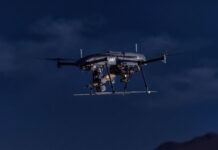
During the first class’s final exercise earlier this year, students fitted a quadcopter with a $1,000 HD camera and connected it to a decentralized mesh network. The setup allowed data to route around nodes affected by jamming.
Innovation without an internet connection
On battlefields in Ukraine, cloud services, large language models, and even GPS navigation are frequently disrupted. Even when communications are available, radio transmissions can reveal soldiers’ positions and expose them to precision strikes.
The final exercise at Clarke Range is therefore designed to recreate the pressures of modern combat. Candidates must find solutions without internet access and without relying on large, connected AI models.
The organizers have deliberately designed scenarios in which things can fail. The aim is to make participants try again, reconsider their approach, and learn to continue the mission after a setback.
More than drone operators or programmers
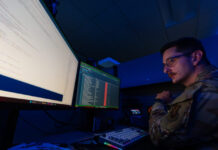
MOS 390A specialists are not simply drone operators, although they can operate drones. Nor are they just programmers, even though they can write code and use compact AI tools on ruggedized laptops in the field.
Their role is to integrate systems. They develop broad and detailed knowledge of Army drones, ground robots, and the networks that connect them. They link the officers commanding forces with the personnel operating specialized systems, adapting equipment and the way systems work together to meet mission requirements.
Recent conflicts have shown that specializing solely in piloting drones is not enough. Units that cannot quickly adapt their technology and tactics risk losing their advantage to an adversary that can adjust and respond.
Technology cannot replace a soldier’s resilience
Adaptation is not limited to equipment. It also requires changing tactics and ensuring soldiers can endure and operate under difficult conditions.
Technology can help a soldier reach an objective, but mission success still depends on the soldier’s ability to function in the field, close with the enemy, and carry the fight through to its conclusion.