Data released by the IDF on the third anniversary of the October 7, 2023 attacks outlines the scale of operations in Gaza, Lebanon, Syria, Iran and Yemen, as well as changes to Israel’s military structure.
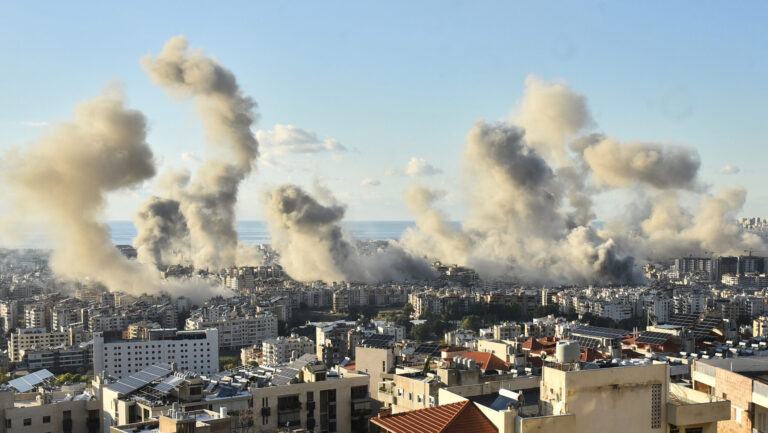
Over the three years since the war began with the Hamas attacks of October 7, 2023, the Israeli military says it has struck approximately 100,000 targets across multiple fronts. The figure appears in a data release issued by the IDF to mark the anniversary.
The military has not defined what it means by a “target,” nor does the release provide a comprehensive assessment of Palestinian casualties. The figures nevertheless convey the scale of Israel’s regional operations and the changes made to its forces during a prolonged conflict.
Gaza accounts for most of the strikes
According to the IDF, approximately 65,000 of the targets struck were in Gaza. Around 30,000 were hit during the first three months of the war, a period of intense operations that coincided with widespread destruction and the displacement of the population.
Outside Gaza, the Israeli military says it struck 28,000 targets in Lebanon and Syria, 4,500 in Iran, and 80 in Yemen. The strikes on Iran reportedly took place during the 12-day conflict in June 2025 and in an exchange of fire on February 28, 2026.
The IDF also says it confiscated 3,800 weapons and arrested “45,000 wanted individuals” in the West Bank.
Casualties and pressure on missile defenses
The Israeli military says it has eliminated four leaders of Hamas’s military wing, 17 brigade commanders, 60 battalion commanders and 300 company commanders.
According to the newly released figures, 970 Israeli military personnel and security-service members have been killed in the war. This is in addition to more than 800 civilians killed in the October 7 attacks. The data release does not include a Palestinian casualty total. Reports cited in the source material say Israel has accepted the Gaza Health Ministry’s estimate that more than 70,000 people have been killed. The ministry does not distinguish between civilians and combatants.
Israel’s missile defenses have also faced sustained pressure. The IDF estimates that approximately 31,540 projectiles have been launched at Israel from multiple fronts: around 10,200 from Gaza, 20,000 from Lebanon, 1,200 from Iran, 50 from Syria and 90 from Yemen. The military has not published official interception rates.
New units and a larger ground force
The conflict has prompted significant changes to the IDF’s structure. After a period of prioritizing technology and smaller units, the military says it needs more ground forces to address simultaneous threats.
Changes include the creation of new brigades and divisions, among them a Mountain Brigade on the northern border and a division tasked with coordinating the defense of the Jordan Valley. The IDF says it has also expanded its armored corps with new active-duty tank companies and established additional frameworks in intelligence and air defense.
Reservists serving beyond planned levels
The prolonged war has placed considerable strain on Israel’s reserve forces. At the start of the conflict, the IDF mobilized hundreds of thousands of reservists, some of whom spent extended periods with their units. The military says the 162nd Division spent 500 days in combat.
According to the new data, the reserve force has grown by approximately 36% since the war began. Combat reservists have served an average of 80–100 days per year, above the originally planned average of 55 days. The IDF acknowledges that mobilization on this scale has contributed to fatigue and challenges for the reserve system.
Reforms in intelligence, aviation and border defense
The IDF says its Intelligence Directorate has prioritized early warning of attacks. The announced changes include new oversight structures, warning operations rooms and analyst training, as well as a data division intended to integrate artificial intelligence and advanced computing.
Southern Command has strengthened defenses along the Gaza border, while Northern Command has established, according to the military, ten new military posts in Syria. The IDF also says the size of local civilian-led armed security squads has tripled.
The air force and navy have also been reorganized. The Israeli Air Force says it now has four times as many forces on alert, while the navy has strengthened coastal defenses and integrated patrol vessels with ground forces.
The figures describe a military reshaping its structure for a prolonged conflict and simultaneous operations across several areas. However, the data are the IDF’s own account, and the military has not detailed how it defines a “target.”