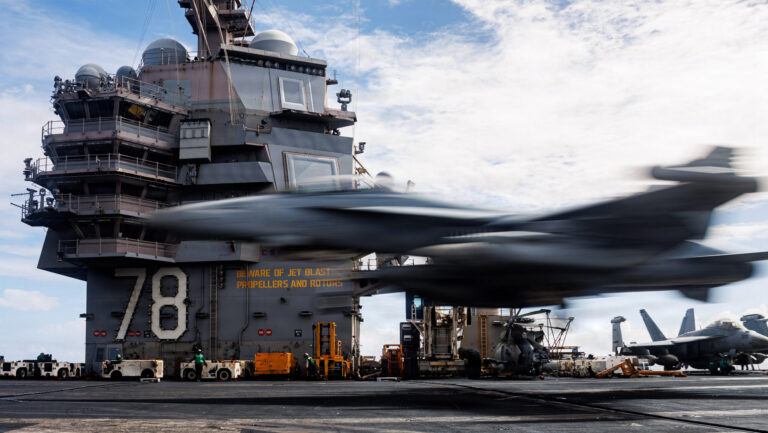
In a display of unprecedented naval endurance, the USS Gerald R. Ford is set to return to port this Saturday, concluding a 324-day deployment that has rewritten the modern naval record books. As the longest carrier deployment since the Vietnam War, the Ford’s mission serves as both a testament to American maritime dominance and a stark warning about the strain on a stretched global fleet.
Shattering Records and Defining Resilience
When the Ford moors at Naval Station Norfolk, it will have surpassed the previous modern record of 294 days held by the USS Abraham Lincoln. The mission’s duration now places the Ford in the company of Vietnam-era legends like the USS Midway and USS Coral Sea.
This deployment was not merely a test of time, but a grueling validation of the Ford-class platform. Throughout nearly 11 months at sea, the crew maintained a world-record sortie generation rate, proving that the Navy’s newest class of „supercarriers” can deliver sustained combat power at levels previously thought unreachable.
A Global Odyssey: Policing the World’s Hotspots
The Ford’s journey was a tactical tour de force across multiple theaters of operation. From the High North, where it integrated with NATO allies, to the volatile waters of the Eastern Mediterranean, the carrier group remained the centerpiece of strategic stability.
The deployment took an aggressive turn as the carrier shifted to US Southern Command (SOUTHCOM), forming the backbone of the naval buildup leading up to the political transitions in Venezuela earlier this year. The mission culminated in the Middle East, where the Ford completed five Suez Canal transits and provided critical support for Operation “Epic Fury,” demonstrating a level of versatility that defines modern naval doctrine.
The Maintenance Toll: The Hidden Cost of Endurance
While the Ford’s success is being hailed as an extraordinary achievement, it highlights a „backhanded compliment” to the current state of the Navy. The record-breaking length of the mission was born out of necessity, exposing a shortage in strike group capacity that forced the Ford to remain on station nearly five months longer than a standard deployment.
This extended service comes with a steep logistical price tag. Military officials note that for every 30 days a ship is extended, maintenance requirements increase by 6%. Having operated for five extra months, the Ford now faces a 30% surge in required maintenance work. As the „heroes” return home, the focus shifts from operational glory to the daunting task of repairing a vessel that has been pushed to the absolute edge of its mechanical limits.