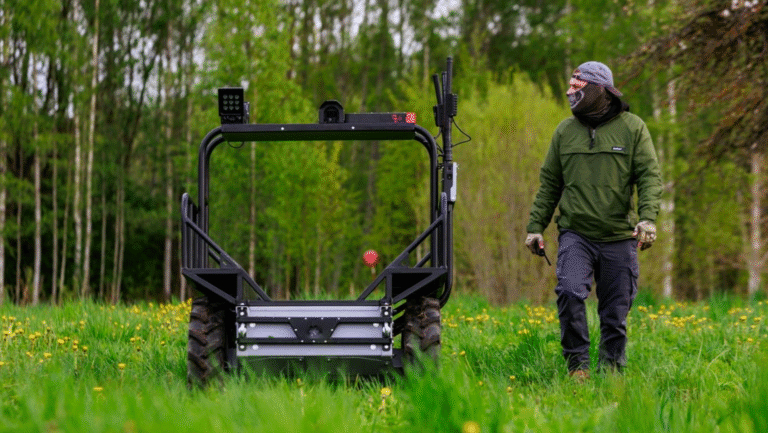
Deep within the rugged terrain of Latvia, a Ukrainian-made machine is tearing through the brush, signaling a shift in the global military balance. „Simba,” an unmanned ground vehicle (UGV) born from the necessities of the war against Russia, has made its NATO debut, proving that battlefield-tested innovation is now the primary driver of Western defense procurement.
From Stealth Development to NATO’s Front Line
Produced by the formerly low-profile UGV Laboratory, Simba was handpicked for the Eastern Flank Deterrence Initiative’s latest testing phase. Featured in the „Crystal Arrow 2026” exercises, this robotic platform is far from a laboratory concept. It arrives in the Baltics with a formidable resume: over 1,600 kilometers traveled across active combat zones in Ukraine, delivering mission-critical supplies where manned vehicles dare not go.
The platform boasts an operational range of 70 kilometers and the muscle to carry over 300 kilograms of payload. Its reliability has stunned observers; NATO reports indicate the UGV completed nearly 400 kilometers of intensive maneuvers before requiring even basic maintenance—a level of durability forged in the harshest environments on earth.
The FPV Challenge: Surviving the Modern Kill-Zone
While Simba excelled in logistical roles during the exercise, its creators emphasize its prowess in the dark. In Ukraine, nighttime is the shield that protects these machines from the lethal buzz of first-person-view (FPV) drones. Purported combat footage shows the Simba UGV stubbornly completing missions even after sustaining direct hits or losing structural components, a testament to its „rugged-first” design.
However, the transition to messy, high-intensity combat is not without hurdles. Experts point out that signal reliability—particularly with systems like Starlink in dense forests—and the need for greater autonomy remain critical hurdles. To stay relevant, the next generation of Simba-like robots must move beyond logistics, evolving into specialized platforms for counter-drone warfare and heavy fire support.
The 25,000-Unit Ambition: Ukraine’s Robotic Surge
As UGV Laboratory steps out of the shadows to seek international partnerships, the scale of Ukraine’s domestic production is becoming clear. With a national target of 25,000 UGVs for the first half of 2026, the country is rapidly becoming the world’s leading incubator for ground-based robotic systems.
The presence of Simba in Latvia is more than a demonstration; it is a professional exchange of „blood-earned” solutions. By sharing these battlefield-driven technologies with NATO allies, Ukraine is positioning itself as a central pillar of future land defense, offering a glimpse into a world where autonomous steel leads the way into the breach.