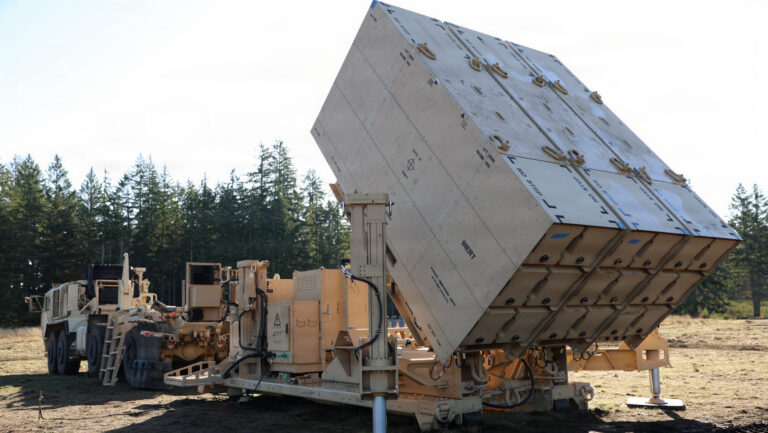
The US Army is preparing a new competition for a second interceptor for its Indirect Fire Protection Capability (IFPC) Increment 2 launcher. The effort could give companies that missed the initial selection another chance to compete, even as the service continues working with Lockheed Martin and the Boeing-Anduril team.
A second chance for companies that missed the first cut
Lt. Gen. Frank Lozano, the Army’s Portfolio Acquisition Executive for Fires, described the initiative as a parallel opportunity alongside the main program. The service plans to hold another competition in the fourth quarter of 2027.
The aim is to increase competitive pressure on the program and give other companies a path back into the field. Vendors that did not make the initial cut but continue investing in a second-interceptor capability will be invited to test at a range. The Army will provide targets, allowing those companies to demonstrate their systems and compete for a chance to rejoin the program.
The service is taking a similar approach with its next-generation short-range interceptor program. Other companies will be able to compete against Lockheed Martin and Raytheon, both of which hold Army contracts and are pursuing a production deal.
Pressure mounts to rebuild munition stockpiles
The initiatives come as the Pentagon looks for ways to accelerate production of critical munitions and replenish its stockpiles. In recent months, the Defense Department has signed several framework agreements intended to pave the way for multiyear contracts.
Those agreements alone, however, do not guarantee the orders industry needs. Army acquisition chief Brent Ingraham said the service must first see how the fiscal 2027 defense budget takes shape and whether munition purchases are made a funding priority.
Funding hinges on decisions in Congress
The administration placed a substantial portion of its planned munition purchases in a separate reconciliation request rather than in the base budget. Lawmakers have not yet advanced that request, and defense officials may revise the main budget proposal.
The overall funding level, whether a reconciliation package moves forward, and the final shape of the budget will all affect the Army’s ability to give industry a clear demand signal for critical munitions, Ingraham said. He also cautioned that manufacturers cannot be expected to make long-term investments based only on hypothetical plans or unfunded promises.
If the continuing resolution remains in effect for the full fiscal year, the Army may have to reprioritize its funding to ensure that money is available for multiyear procurement deals.