Pentagon seeks an aircraft costing roughly $10 million
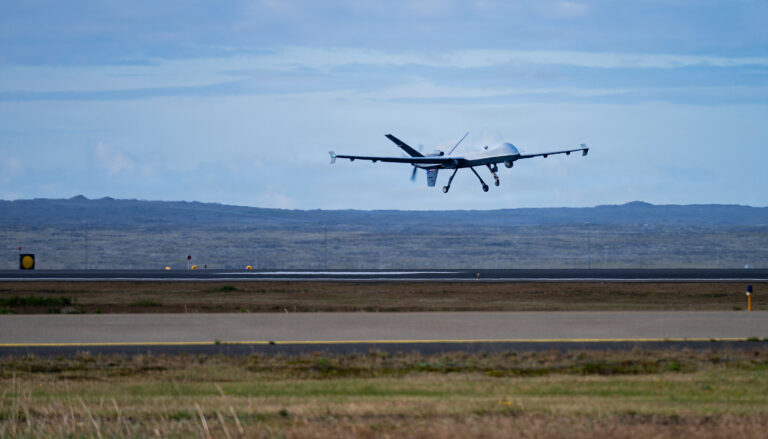
Heavy losses suffered by MQ-9A Reaper drones during recent combat operations against Iran are prompting the US Air Force to accelerate development of a new unmanned aircraft. The future platform, being developed under the Mass Modular Aircraft, or MMA, program, is expected to cost approximately $10 million per aircraft.
US officials say the pace at which Reapers are being lost has become a serious concern, despite the size of the current fleet. At least 45 aircraft — roughly one-quarter of the Pentagon’s inventory — have reportedly been lost since Operation Epic Fury began in February.
A $50 million platform that is difficult to replace
The depletion of the MQ-9A fleet has also highlighted the difficulty of quickly replacing combat losses. Depending on its sensors, weapons and mission equipment, a single Reaper can cost as much as $50 million.
Production of the MQ-9A ended last year. Although the upgraded MQ-9B SkyGuardian remains in production, it cannot be ordered and delivered in large numbers within a matter of months. Air Force officials caution that an active production line does not automatically mean that dozens or hundreds of aircraft can be made available immediately.
The Pentagon therefore launched the MMA program in July to develop a more affordable and easily manufactured platform that could be produced in sufficient numbers to make combat losses more manageable.
A drone designed to fly thousands of miles
The initial MMA requirements call for a one-way range of approximately 8,000 nautical miles, a high degree of modularity and a price point that would allow the Defense Department to accept losses without facing unsustainable replacement costs.
The original objective was to have 20 mission-ready aircraft by fiscal year 2031. Officials now say they have been directed to move faster and are reviewing options to compress the development schedule.
The current plan calls for a prototype within roughly one year and fielding at scale within approximately three years. The Air Force expects to acquire at least 180 MMA aircraft over time.
Lower costs through deliberate design trade-offs
The new aircraft will not attempt to replicate every capability of the Reaper. Instead, the program will rely largely on proven technologies and eliminate expensive features that are not essential to core missions.
The MMA platform is expected to feature a high-aspect-ratio wing, likely use a turboprop engine, fly very long distances and carry a substantial payload. Compared with Collaborative Combat Aircraft, or CCA, drones, it would fly more slowly but travel farther and carry more weight.
The Air Force wants the MMA’s airframe cost to be close to half the target price for a CCA, or approximately $10 million per aircraft. The estimate covers the aircraft itself and does not include the full package of equipment required to configure it for a specific mission.
General Atomics defends the Reaper’s advantages
General Atomics, the manufacturer of the Reaper, argues that the platform’s value comes from the combination of endurance, range, sensors, weapons, connectivity, adaptability and reliability rather than from any single feature.
The company is competing for the MMA program with a new design called Wildfire. General Atomics says the aircraft addresses the Pentagon’s requirements, could be delivered years earlier than competing solutions and would retain the Reaper’s key advantages at a lower cost.
Multiple suppliers and a common architecture
The MMA program is expected to follow an approach similar to the ongoing CCA effort. Aircraft would be developed in successive increments while relying on common government reference architectures for hardware and software.
That model would allow new capabilities to be introduced rapidly without requiring major block upgrades for every aircraft version. The platform must also be designed so that production can be expanded quickly if a military crisis demands additional capacity.
US officials want to keep multiple companies involved in the competition in order to encourage innovation and control costs. They are also considering aircraft from different manufacturers that could operate through a common command interface.
One operator controlling several drones
A central objective of the program is to increase automation. Instead of relying primarily on traditional stick-and-throttle controls, operators could use a simplified interface based on computer-style commands.
The Air Force wants a single operator to be capable of controlling several drones simultaneously and, ideally, multiple types of aircraft. Such a capability would reduce the burden on personnel and allow larger numbers of unmanned platforms to be deployed at a lower operating cost.