



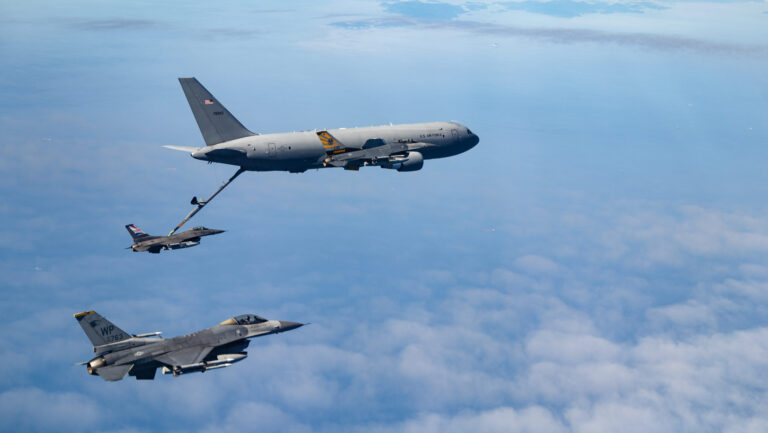
In an increasingly volatile global security environment, the ability to project air power over vast distances depends critically on an efficient and resilient aerial refueling fleet. Recent strategic assessments, however, indicate that the U.S. Air Force faces significant challenges in this domain, necessitating a comprehensive transformation to maintain air superiority against adversaries capable of contesting operational environments.
Exposing the Fleet’s Vulnerabilities
The current refueling fleet, relying largely on legacy platforms from the Cold War era, such as the KC-135, and newer iterations like the KC-46, is proving increasingly ill-equipped for the demands of modern high-end conflict. Limitations in range, fuel offload capacity, and platform survivability, coupled with the heightened vulnerability of forward-deployed bases, pose a significant strategic risk. Over-reliance on fixed, vulnerable infrastructure could drastically curtail operational options in direct conflicts, underscoring the urgent need for a new approach that transcends current incremental solutions.
A New Class of Tanker: The Blended-Wing Body Solution
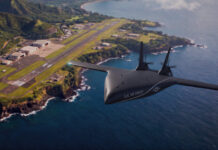
To maintain its strategic advantage, the Air Force must prioritize the development of a new generation of tanker aircraft. A highly promising avenue is the development and fielding of medium-sized tankers featuring a blended-wing body (BWB) design. These platforms would offer extended range and superior fuel-carrying capacity, facilitating longer, more efficient missions. Integrating this type of technology, coupled with disciplined acquisition strategies, represents not just a necessary technological leap, but a fiscally sound investment to ensure sustained global reach.
Securing the Future through Infrastructure and Connectivity
Resilience, however, extends beyond the aircraft themselves. Strengthening airfield infrastructure through targeted investments in hardened facilities—including reinforced fuel storage and protective hangars designed to shield critical assets from observation and attack—is essential. Simultaneously, equipping tankers with modern mission systems to enhance connectivity and advanced self-defense capabilities is crucial to ensuring they can operate effectively in contested airspace. This integrated approach, blending cutting-edge aeronautical design with robust active and passive defense infrastructure, provides the necessary foundation to ensure the U.S. Air Force can project power globally, regardless of the challenges presented by the theater of operations.