










Integrating Anduril’s Next Generation Command and Control (NGC2) technology into the U.S. Army’s existing communications systems proved more challenging than expected. A field test in Hawaii exposed technical and operational hurdles, while also providing lessons that could shape the program’s expansion to other units.
Field testing exposes integration challenges
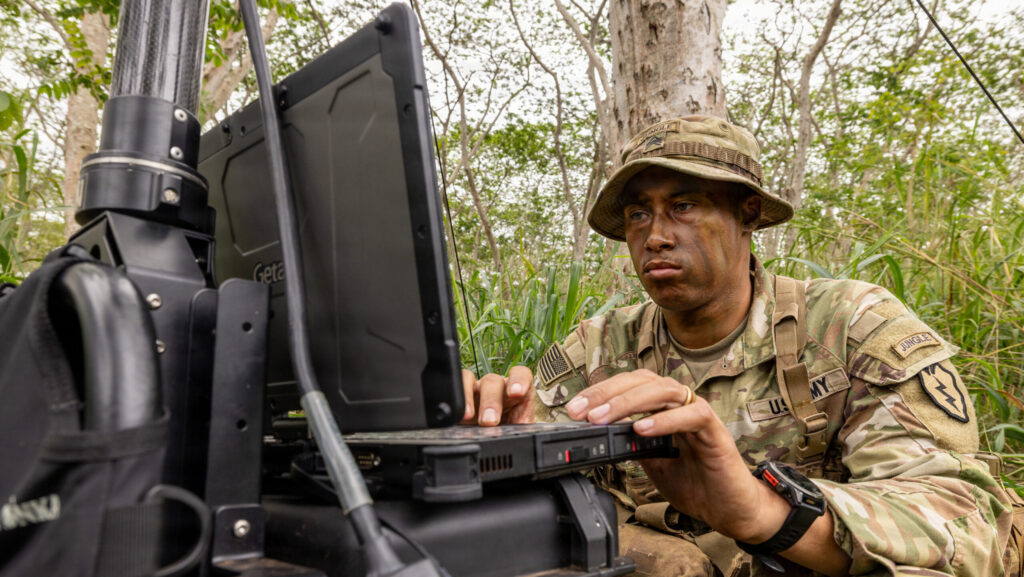
In September, the 25th Infantry Division used Anduril’s Lattice platform during Exercise Lightning Surge 5. The effort formed part of a broader campaign to modernize the Army’s command-and-control architecture.
Before the Hawaii exercise, NGC2 technology had been used by the 4th Infantry Division in Colorado, alongside mostly new, commercially sourced hardware and software. In Hawaii, however, the platform had to operate alongside older infrastructure and different technologies.
Army and industry officials described the difficulties as expected integration challenges when teams and systems with limited experience working together are brought into an operational setting. Still, the test revealed that data transmission through Lattice and the system’s ability to scale require further improvement.
Terrain and vehicles reshape the requirements
The differences between the two divisions proved significant. The 4th Infantry Division operates in more open terrain and uses Stryker vehicles, which offer greater capacity for equipment. The 25th Division trained in a tropical, heavily wooded environment and relies primarily on lighter infantry vehicles.
Those conditions constrain the type and amount of equipment that can be installed, as well as the computing capacity available at different levels of the unit. Solutions designed for heavier formations therefore cannot simply be transferred to mobile infantry units without adjustment.
Compatibility with existing equipment presented another challenge. Unlike the 4th Division, which received a largely new set of systems, the 25th Division must retain some legacy capabilities. Integration required adapting Lattice to radios with different waveforms and configurations, as well as determining how voice and data traffic should be separated.
New capabilities added during the exercise
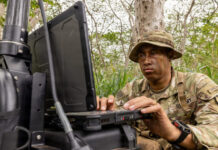
During the test, the Army also requested that edge-computing functions be integrated onto tablets. Until then, Lattice had been installed on vehicle-mounted computer systems; using it on tablets was a first for the team involved.
The request came in the middle of the exercise, complicating the work. For future tests, participants hope similar requirements can be identified and prepared before units deploy to the field.
Teams are also working to refine radio configurations, channel capacity, the separation of voice and data traffic, and beyond-line-of-sight communications. The aim is to ensure units can access the information they need even when conventional links are unavailable.
The 25th Division offers a template for wider deployment
The Hawaii test matters in part because it more closely reflects the circumstances of units that have not received a full replacement of their equipment. Lessons from the 25th Division are expected to help establish a baseline configuration for introducing NGC2 to other formations within I Corps.
The Army plans to continue refining the systems used by the 4th Division and to prepare for wider deployment across the other I Corps divisions during the fiscal year. The schedule will depend on available resources and budget constraints, as well as the logistical demands of moving equipment to units in Alaska and across the Pacific.
The stated goal is for NGC2 to support units’ missions—not disrupt them. The Army is therefore seeking to coordinate the rollout with each formation’s exercises and training schedule.