













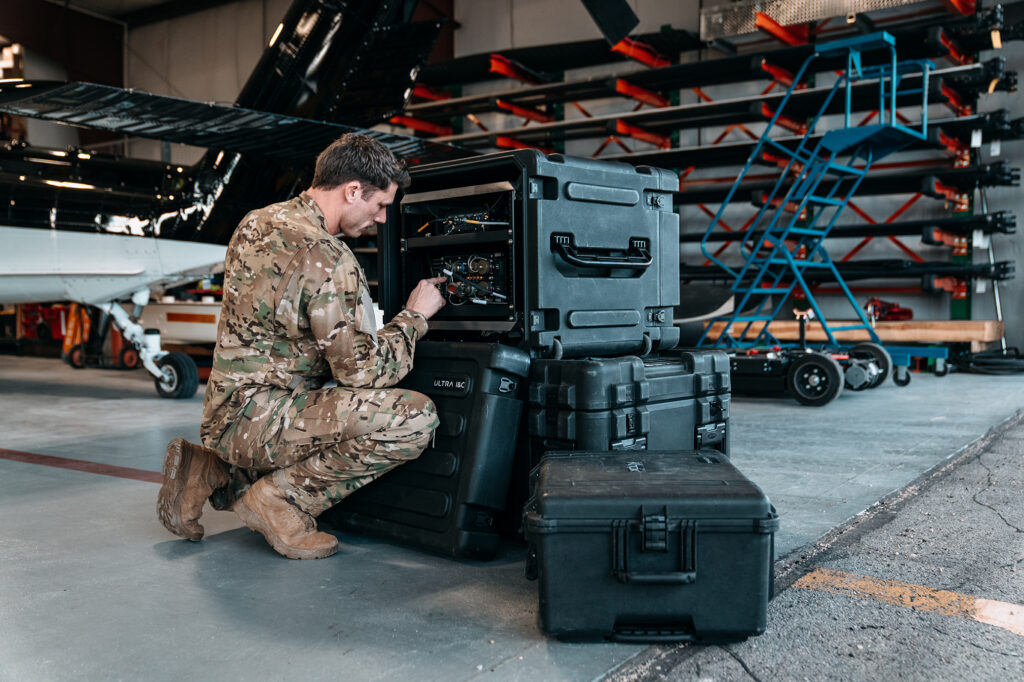
Aviation, ground vehicles and maritime platforms need ever-greater processing power at the edge of operations. As data volumes grow and artificial intelligence takes on a larger role, operators need modern communications, advanced autonomy and mission applications that can be upgraded quickly.
Yet many military systems still rely on hardware architectures designed in an era when integrating a new capability could take years. Ultra I&C’s Knox processor family offers a different approach: modernize the system from within, without replacing the entire platform or repeating a costly integration process.
An open architecture designed to adapt
In traditional systems, cabling, interfaces and processor configurations can limit the introduction of new capabilities. Even a relatively modest upgrade may require redesign, additional testing and delays. A faster processor alone cannot solve the problem if the surrounding architecture cannot evolve.
Knox is designed to support successive upgrades to internal components while leaving the platform’s external structure unchanged. Aircraft, vehicles and ships can gain new capabilities without replacing their existing systems wholesale.
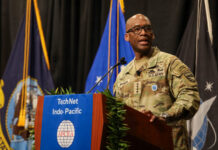
“We’re enabling the rapid tech insertion of new capabilities into legacy airframes that are often vendor locked,” said Randy Fields, Ultra I&C’s chief technology officer and general manager for Edge Compute.
Upgrades where the mission happens
Knox processors use a flexible backplane and commercial off-the-shelf cards aligned with MOSA principles and the SOSA architecture. This design can enable upgrades to processing, communications and mission applications without replacing the chassis or rewiring an aircraft.
The front panel preserves the platform’s connections to sensors, radars, weapons and communications equipment. Inside, the backplane routes data to processing hardware and mission applications that turn raw inputs into useful information for operators.
Fields describes Knox as the mission system’s “brain.” It can take in data from sensors, weapons and communications links—including Starlink or Starshield—and route it to mission applications, cockpit displays or common-operating-picture displays. The architecture supports the integration of new waveforms, RF capabilities, VPX graphics processing units and other mission-specific cards.
From unmanned aircraft to maritime platforms
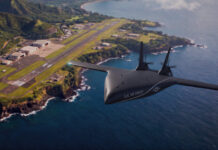
The U.S. Marine Corps is already using this approach to improve edge processing of mission-critical data on MQ-9B Reaper aircraft. Earlier this year, it ordered Knox-5 processors, which are optimized for unmanned platforms where space is limited. The MQ-9B supports intelligence, surveillance and reconnaissance, target acquisition and maritime domain awareness.
The same modular architecture can be applied to crewed and uncrewed aircraft, ground vehicles, and surface and subsurface maritime platforms. Components and autonomy systems can be adapted across domains, allowing platforms to take on new capabilities without a wholesale replacement of existing equipment.
“Our flexible backplane approach enables us to upgrade indefinitely,” Fields said. Instead of purchasing a system designed only for today’s requirements, government customers can invest in a foundation that adapts as mission needs change.
More capability in less space
Traditional multi-level security systems may require separate boxes, switches and power supplies. These add weight, take up space and consume power—all especially valuable resources aboard aircraft.
Knox aims to consolidate multiple functions into fewer units. In some configurations, a single flight-certified unit can handle multiple security domains and mission functions internally. This can reduce size, weight and power demands while making more room for sensors and weapons.
One example is the Knox-10, which combines multi-level security processing and 100-gigabit Ethernet switching in a single unit—functions that previously required three separate systems.
“Being able to do multi-level security inside one box saves fuel and gives you more room in the aircraft for the things that matter,” Fields said.
Built to evolve with the mission
Capabilities such as Starlink and Starshield were not part of operational plans a few years ago, but they have since become relevant to missions. A modular architecture can accommodate them when needed, along with new waveforms, RF cards, communications solutions, allied interoperability systems, AI applications and autonomy capabilities.
This flexibility can help prevent platforms from becoming obsolete before the end of their service lives. It can also reduce the need for repeated, costly integration cycles.
A more flexible supply chain
An open architecture is intended to provide flexibility not only for upgrades, but also for sourcing. Key components can come from multiple qualified suppliers across the U.S. defense industrial base, reducing reliance on a single source and supporting production at scale.
A new Knox production line is being established in Columbus, Ohio. According to Fields, this approach can support faster delivery and upgrades performed in theater, without sending equipment back to the factory.
Computing designed for tomorrow’s requirements
Knox is about more than additional processing power. Its approach brings together rapid technology insertion, reduced equipment footprint and weight, supply-chain flexibility, and the ability to adapt systems as new requirements emerge.
For air, land and maritime platforms, the goal is a computing foundation that can keep pace with mission demands—so new capabilities can reach operators faster, without rebuilding the entire system every time requirements change.