





Technology could support future autonomous aircraft
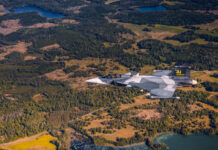
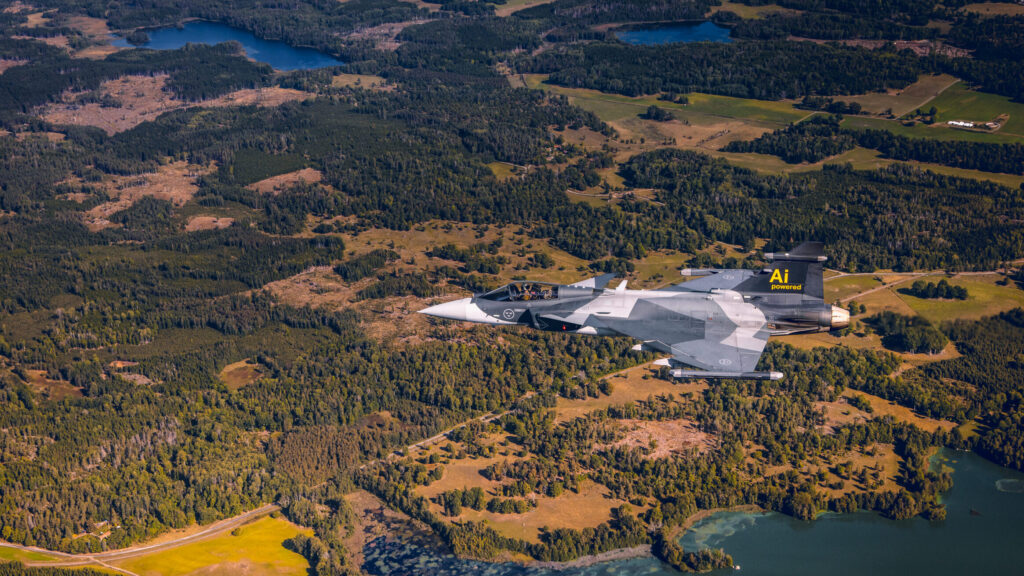
Swedish company Saab has unveiled a set of in-house artificial intelligence agents tested aboard its Gripen E fighter. The company says the trials demonstrate its ability to develop, train and integrate AI systems for air-combat operations.
The agents use several AI techniques to make tactical decisions in complex operational environments. They are designed to work alongside a pilot in the cockpit or operate from an uncrewed aircraft.
Academy to train virtual fighter pilots
A central part of the effort is Saab’s AI Fighter Jet Pilot Academy, an infrastructure initiative intended to develop, train and evaluate the agents. Saab aims to turn flight-test results into a dependable capability that can learn and improve over time.
Peter Nilsson, head of Advanced Programs at Saab’s Aeronautics business, said the challenge is not simply to show that an AI agent can fly, but to build a system that can keep learning and remain relevant. In his view, bringing operational experience, learning and fielded capability closer together can provide a strategic advantage.
Testing in beyond-visual-range combat
So far, the agents have been tested mainly in beyond-visual-range (BVR) combat scenarios. Saab took part in a similar test campaign in 2025, when Helsing’s Centaur system took control of the fighter and autonomously completed a series of BVR maneuvers.
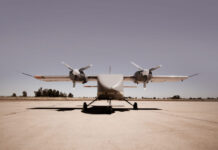
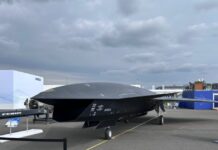
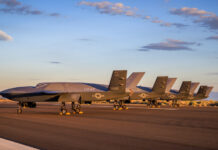
Over the longer term, Saab plans to use its in-house AI technology in future aircraft programs. The company is developing three uncrewed aircraft, designated A1, A2 and A3, as part of its work toward a “loyal wingman” drone designed to fly alongside crewed fighters.
Computing infrastructure for AI development
To support the computing demands of the program, Saab has become a founding partner in Sferical AI, a Swedish initiative backed by the government. Nilsson said developing this capacity in Sweden matters because it can help the company retain control over its data rather than depend on commercial cloud providers.
According to a company presentation, Sferical AI is built on Nvidia’s DGX SuperPOD architecture and can support the development of large language models and vision-language models, including tools for communication between agents and operators.
Saab says one hour of simulated training can produce data equivalent to one billion hours of human flight time under certain training conditions. Nilsson described the rate of growth in computing capacity as difficult to comprehend.