











For years, Western debate about Kaliningrad has focused on the Suwałki Gap: a roughly 100-kilometer strip between Poland and Lithuania that separates the Russian exclave from Belarus. In a conflict scenario, Russian forces operating from Kaliningrad and western Belarus could seek to sever this land corridor, cutting the Baltic states off from the rest of NATO.
The risk remains relevant to the defense of the Eastern Flank. But concentrating almost exclusively on Suwałki may obscure Kaliningrad’s broader significance: a military platform capable of threatening not only the Baltic states, but targets across Western Europe.
The threat reaches far beyond the eastern frontier
The assumption that a war with Russia would primarily affect eastern EU states belongs to another era. Kaliningrad gives Moscow the ability to project threats deep into Europe, putting capitals, critical infrastructure, and civilian targets far from the eastern frontier at risk.
The war in Ukraine has shown that modern conflict is not confined to the front line. Drone, ballistic-missile, and long-range strikes can hit civilian infrastructure across vast distances. Kyiv has endured sustained missile and drone attacks, despite being roughly as far from Russia as much of Western Europe is from Kaliningrad.
In an age of long-range precision weapons and mobile drones, strategic depth is losing its meaning. Europe’s security can no longer be divided neatly between frontline states and countries assumed to be beyond the reach of conflict.
An arsenal that complicates NATO planning
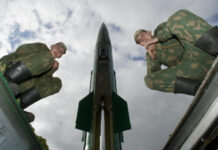
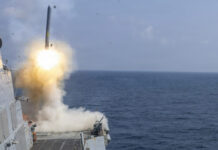
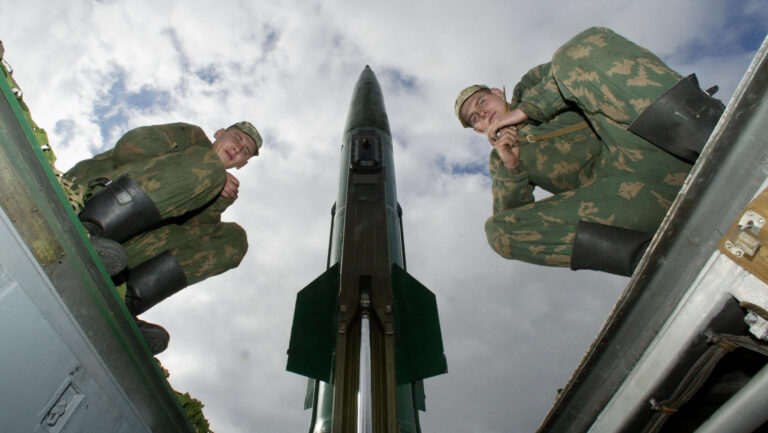
Often described as an “unsinkable aircraft carrier,” Kaliningrad hosts a substantial military presence. The exclave contains Iskander missile systems capable of carrying nuclear warheads, S-400 batteries, and other coastal missile systems. Their reach extends well beyond Poland and Lithuania, placing targets in Germany within range.
Some assessments suggest the Russian Baltic Fleet could further extend that reach. Russian military exercises and movements—including the “Zapad” strategic exercise with Belarus in September 2025—can also make it harder to determine Moscow’s intentions.
The ambiguity is compounded by the dual-use nature of some systems, which can carry conventional or nuclear payloads. NATO may be unable to determine in advance which kind of warhead is involved, forcing the alliance to plan for worst-case scenarios around Russian deployments and exercises.
The Baltic Fleet and threats beneath the surface
Kaliningrad is also home to Russia’s Baltic Fleet, which combines conventional missile forces with nuclear-capable systems. The military presence overlaps with maritime activities regarded as hostile, including the use of Russia’s so-called “shadow fleet” to circumvent Western sanctions.
The risks extend beyond commercial shipping. US intelligence has reportedly warned that Gerbera-type attack drones could be carried aboard commercial vessels, potentially threatening sensitive NATO territory in Europe and the United States.
At the same time, disruptions to undersea infrastructure—including communications cables and pipelines—have been affecting Western Europe’s digital connectivity and energy networks for years.
Deterrence—and a push to reduce escalation risks
European leaders therefore face a dual task: raising public awareness of the risks posed by Kaliningrad while persuading Moscow that reducing the military buildup in the exclave would serve Russia’s own interests.
The challenge is no longer limited to defending the Suwałki Gap or protecting the Baltic states. Kaliningrad underscores how a modern conflict could reach far beyond the front line—and why the security of Europe as a whole is interconnected.