





Turkey, Saudi Arabia and Austria among prospective customers
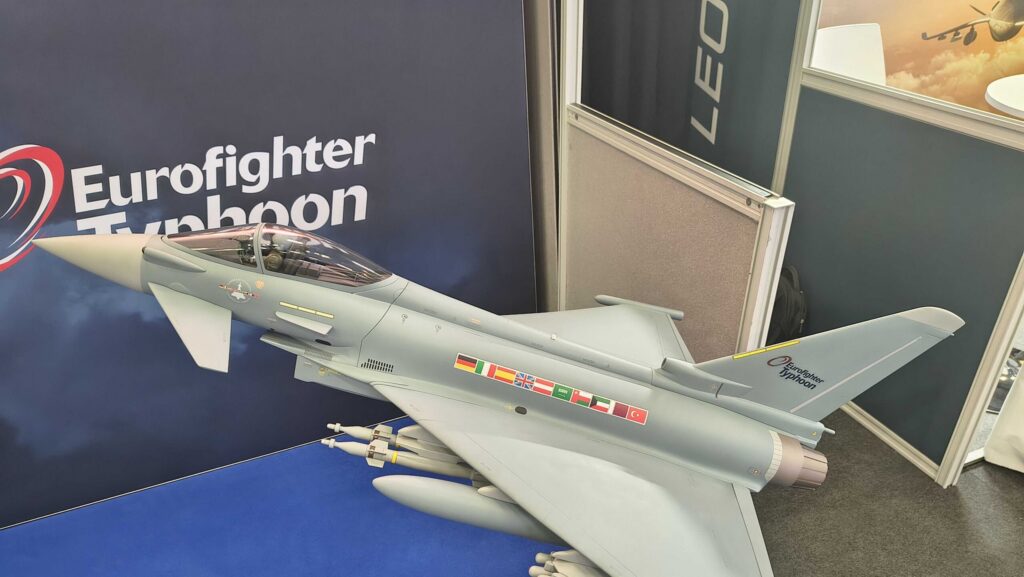
The Eurofighter consortium is pursuing global export opportunities for more than 200 Typhoon fighter jets, according to an infographic presented at the International Fighter Conference. Potential deals include second-batch orders from Turkey and Saudi Arabia, totaling 78 aircraft, and a possible Austrian purchase of 36.
The consortium did not provide a breakdown for at least 86 of the aircraft included in its projection. Portugal, Poland and Bangladesh have long been among the markets it is pursuing.
Portugal prepares to replace its F-16 fleet
Portugal needs to replace its aging F-16s. The Eurofighter Typhoon is competing against the F-35, Gripen and Rafale, with Airbus leading the consortium’s sales campaign in Lisbon.
Airbus said its proposal for Portugal is in the final stages of preparation and is due to be formally submitted by the end of the year. The company said the offer will address operational sovereignty, lifecycle value and industrial cooperation.
Poland and Bangladesh weigh other options
Poland is considering buying 32 additional fighter jets to meet an air-superiority requirement. However, Warsaw could choose to acquire more US-made F-35s after securing a $4 billion Foreign Military Financing loan from Washington.
In Bangladesh, a letter of intent signed last year by Leonardo and the country’s air force opened talks on a potential Eurofighter deal. Dhaka has also advanced negotiations with China for J-10CE fighters.
Production and existing orders
The consortium’s export projection has grown from the 134 aircraft cited at last year’s conference. Meanwhile, Eurofighter is fulfilling contracts for Spain, Germany and Kuwait, with 60 aircraft currently in production.
Recent orders, including Turkey’s deal, amount to 89 aircraft scheduled for future production, alongside purchases by Spain, Germany and Italy. The consortium provided no update on plans to increase production. Last year, Eurofighter CEO Tamarit Degenhardt said the company was targeting an annual output of 30 aircraft from 2028, contingent on securing new export business.