



AI agents tested aboard the Gripen E
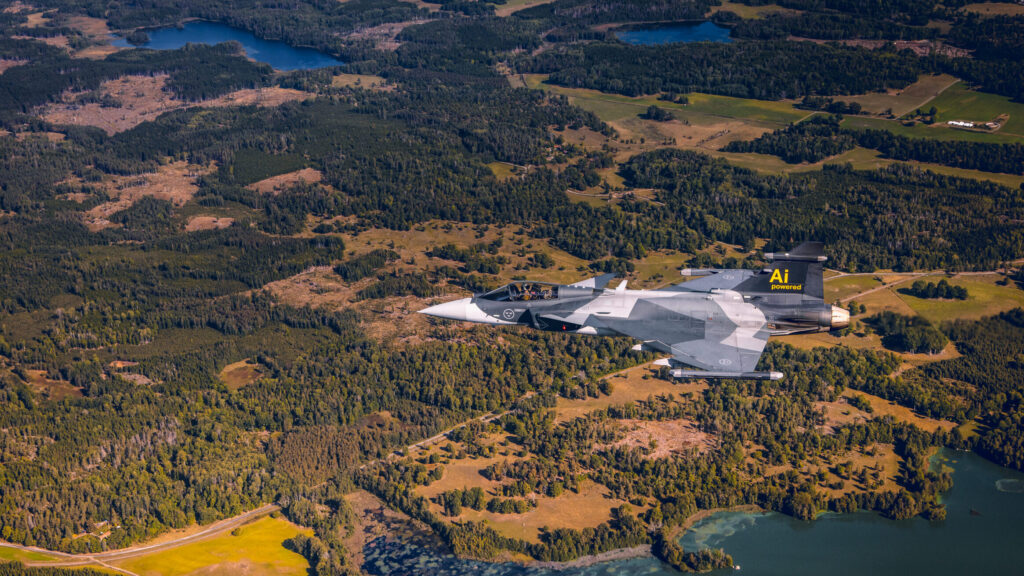
Swedish defense company Saab has unveiled an in-house suite of artificial intelligence agents intended for future aircraft platforms. The technologies have been tested aboard a Gripen E multirole fighter.
Saab says the project demonstrates its ability to develop, train and flight-test its own AI systems for air-combat operations. The agents use several AI techniques to make tactical decisions in complex operational environments and can work alongside a pilot or operate from an uncrewed aircraft.
An academy to train AI pilots
A central part of the effort is Saab’s AI Fighter Jet Pilot Academy, which is designed both to develop the agents and to establish the infrastructure needed to train and evaluate them.
Peter Nilsson, head of Advanced Programs at Saab Aeronautics, said the challenge is turning successful test flights into a dependable capability that can learn and improve over time. He argued that strategic advantage increasingly comes from bringing experience, learning and operational capability closer together.
Nilsson also emphasized the value of a platform such as the Gripen, which is designed to handle the high processing speeds required by software-driven capabilities.
Testing focuses on beyond-visual-range combat
So far, Saab’s AI agents have been tested and integrated mainly in beyond-visual-range (BVR) combat scenarios. In 2025, Saab also conducted a flight-test campaign using Helsing’s Centaur AI system, which took control of the fighter and autonomously performed a series of BVR maneuvers.
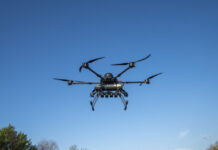
In the longer term, Saab intends to apply its in-house AI technology to future air programs. The company is developing three uncrewed aircraft — the A1, A2 and A3 — as part of its work toward a new loyal wingman drone.
Computing power and data control in Sweden
To expand the computing capacity available to its AI agents, Saab has become a co-founder of Sferical AI, a Swedish government-backed initiative. Nilsson said building capacity in Sweden could give the company greater control over its data, rather than relying entirely on external cloud providers.
According to a Saab presentation, Sferical AI is based on Nvidia’s DGX SuperPOD architecture and is intended to support the development of large language models and vision-language models, helping agents and operators communicate.
In a one-hour simulated training flight, the system can generate the equivalent of one billion hours of flight time for a human pilot, Nilsson said, describing the scale of the computing power as difficult to grasp.