


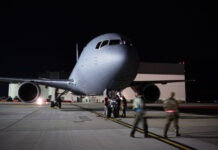








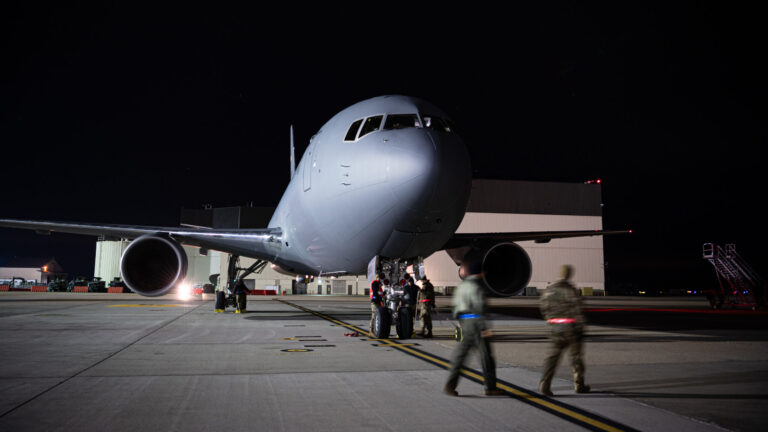
The U.S. Air Force has awarded Boeing a $2.8 billion contract to build a new batch of KC-46 Pegasus aerial refueling tankers. Covering the program’s 13th production lot, the deal includes 15 aircraft to be manufactured at Boeing’s facilities in Seattle, Washington, with deliveries expected to wrap up by the end of June 2030.
“We’re grateful for the trust the U.S. Air Force continues to place in our team,” said Jake Kwasnik, Boeing’s vice president for the KC-46 program. “The KC-46 plays an important role in enabling military operations around the world, and we look forward to building on that partnership while staying focused on delivering on our commitments to support the warfighter.”
A Growing Global Fleet
This latest award brings the total number of KC-46 tankers under contract to 203, including international sales. To date, Boeing has delivered 116 Pegasus aircraft to the U.S. Air Force, six to Japan, and two to Israel. More foreign operators could soon join the roster following Washington’s August approval of a potential KC-46 sale to Qatar.
Derived from Boeing’s 767 commercial jet, the KC-46 is America’s newest air refueler, acquired to gradually replace the aging KC-135 Stratotanker fleet. Beyond refueling other aircraft mid-flight, the Pegasus doubles as a versatile mobility platform capable of transporting both cargo and personnel.
The End of a Costly Contract and the Push for Upgrades
Lot 13 marks the final order under the program’s original 2011 fixed-price contract—an arrangement that saddled Boeing with billions of dollars in losses due to development hurdles and production setbacks. While the Air Force plans to extend production under a new framework for up to 75 additional aircraft starting with Lot 14, officials have signaled that future units will come at a higher price tag.
Moving forward with that extension, however, comes with strict strings attached. Air Force leaders have vowed not to proceed unless the tanker’s persistent top-tier issues—known as Category 1 deficiencies—are resolved. Chief among them is the troubled camera system operators rely on to guide the refueling boom. A major upgrade, dubbed Remote Vision System (RVS) 2.0, is slated to begin fielding in early 2028.
The Future of Aerial Refueling: Upgrades or a Clean-Sheet Design?
Even as it buys more KC-46s, the Air Force is launching a fresh round of analysis to map out its long-term refueling strategy, with a primary focus on enhancing existing aircraft.
Still, some defense analysts argue that incremental upgrades won’t be enough. A recent report from the Hudson Institute urges the Pentagon to invest in a clean-sheet tanker featuring a blended-wing body design, which would deliver greater range and fuel offload capacity. According to the report’s authors, such a next-generation aircraft would be far better suited to meet the logistical demands of a potential conflict with China.