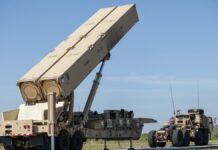

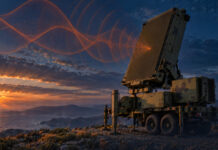



Defending the U.S. territory of Guam against an air-and-missile assault from a peer adversary can no longer be managed in silos. In a battlespace where systems like Patriot, THAAD, Aegis, and fighter aircraft were never originally built to operate as a single unit, the military must fight as one cohesive force. Training each service branch in isolation is no longer enough to counter simultaneous, high-end threats.
This reality has sparked a major shift toward live, virtual, and constructive (LVC) training—an approach that injects simulated threats, fifth-generation fighters, and autonomous aircraft directly into the operational networks warfighters rely on in combat. Through U.S. Indo-Pacific Command’s Pacific Multi-Domain Training and Experimentation Capability (PMTEC) program, CAE is demonstrating how this integration underpins joint air-and-missile defense, pairs F-35s with collaborative combat aircraft (CCA), and prepares forces for contested environments.
Guam: The Proving Ground for Joint Operations
With its airfields, naval facilities, and vital logistics hubs, Guam is a linchpin in any potential Indo-Pacific conflict. Yet its compact geography makes defending the island an exceptionally tough air-defense problem, where every second and every decision counts.
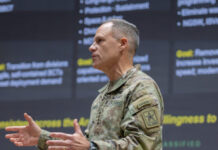
Historically, the Army, Navy, and Air Force have trained within their own lanes, but protecting Guam demands a shared threat picture and synchronized tactics. “A common execution error seen in the occasional joint exercises is the duplication of targeting across services. The difficulty of doing multiple exercises means these lessons get relearned as units and personnel rotate out before being able to train again in a complex scenario,” says Matthew Martin, CAE’s lead for LVC.
PMTEC tackles this by feeding simulations directly into live command-and-control networks rather than building separate training systems. During the Valiant Shield exercise, a simulation cell at Andersen Air Force Base in Guam generated virtual ballistic missiles, cruise missiles, and adversary aircraft, streaming them simultaneously into Army, Navy, and Air Force systems. Beyond technical connectivity, the exercise bridged organizational gaps: Army air defenders joined Air Force-style tactical debriefings, while Air Force battle managers coordinated airspace directly with ground operators—proving that technology must be matched by shared tactics and seamless communication.
Fifth-Generation Fighters and Autonomous Wingmen Enter the Fight
Vast distances across the Pacific are no longer a barrier to joint readiness. During Valiant Shield, F-35 simulators at Misawa Air Base in Japan were linked in real time to the Guam exercise, allowing pilots to fly defensive missions guided by Air Force controllers thousands of miles away.
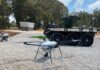
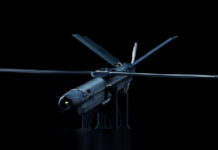
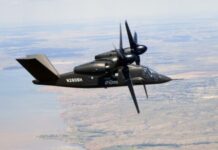
The exercise also pushed the boundaries of future warfare by integrating collaborative combat aircraft (CCA) still in testing. By combining U.S. Air Force autonomy tools with capabilities from its CCA Academy in Texas, CAE enabled warfighters to operate alongside both virtual autonomous wingmen and a live MQ-28 flying near Guam.
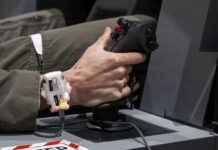
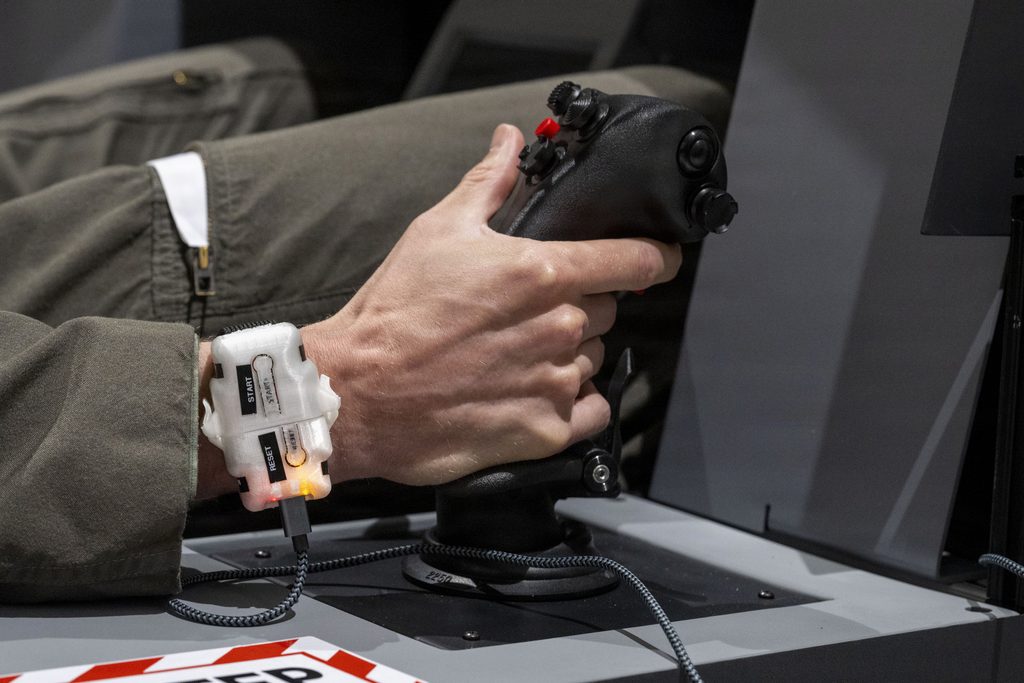
The real challenge isn’t just getting autonomous aircraft airborne—it’s determining how much control human operators should retain. “CCAs will undoubtedly be a permanent fixture in future representative LVC mission exercises,” notes Dr. Brian Stensrud, CAE’s Technical Fellow for Artificial Intelligence. To measure the human factor, F-35 pilots and air-battle managers wore biometric sensors tracking workload, situational awareness, and trust in autonomy. “If the platform is completely autonomous and you have no visibility into how it’s functioning or how it’s making its decisions, then the trust level becomes very low,” Martin warns.
Artificial Intelligence: The Architect of Complex Scenarios
As joint exercises grow in scale, building them demands massive amounts of time and manpower. To break this bottleneck, CAE is developing an AI-driven mission environment designed to automatically translate a commander’s training goals into a ready-to-run exercise—selecting simulation tools, configuring data, and generating forces. “We’re trying to close that loop with AI and automation, rather than relying on dozens of people involved in making it all happen,” Stensrud explains.
Artificial intelligence also transforms the simulated adversary. Moving away from rigid, scripted behaviors, AI-generated opponents act dynamically and unpredictably, forcing warfighters and intelligence analysts to adapt in real time to realistic sensor data and evolving attack patterns. The result is a recurring, high-end training capability rather than a rare, resource-heavy event.
From Training Tool to Operational Capability
Scaling LVC across the Pacific requires a secure digital backbone. Leveraging the U.S. Air Force’s cloud-based Simulator Common Architecture Requirements and Standards (SCARS) program, simulation tools are hosted in a cybersecure environment and linked to classified mission networks, allowing threat and weapon models to be updated rapidly.
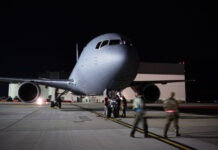
The next frontier is allied integration. During the U.S.-Japan bilateral exercise Keen Sword, the network connected Japanese air controllers, U.S. and Japanese F-35 simulator pilots, and live aircraft via Link 16. Looking ahead to spring 2027, Resolute Forces Pacific will link Japan, Guam, and Hawaii into a single air-defense environment, allowing forces to practice distributed command and control—including shifting authority if a command center is damaged or knocked offline.
Ultimately, this interconnected ecosystem goes far beyond individual training. It empowers commanders to test operational plans, expose vulnerabilities, and rehearse missions before a shot is ever fired. “Ultimately, that can become not just a training tool,” Martin concludes. “It can become a true operational capability by enabling opportunities like mission rehearsal.”