The changes impact upon the energy sectors in Romania
Organizers: COTIDIANUL, Casa Serafim
Crowne Plaza Bucharest, “Magnolia Hall” | May 27, 2021
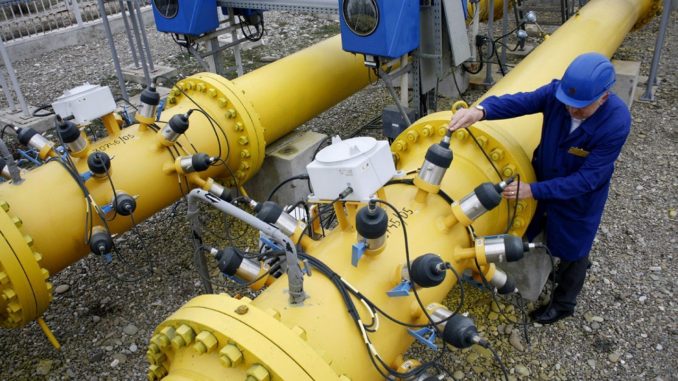
The struggle for resources in Europe and especially in Romania has never been more stringent than now. The hydrocarbon resources discovered in the Black Sea and the Mediterranean inflame the spirits among the riparians and attract the interest of some world players in oil and gas. Romania is both a producer of gas and oil and is, at the same time, in the area where the gas-gas highways intersect, which now becomes a valuable alternative, less polluting than coal.
Special guest: DEFENCE UNLIMITED ( www.defenceunlimited.com )
Welcome speech: Mr. Akos Derzsi, state secretary MINISTRY OF ENERGY in Romania
Strategic message of Mr. Iulian Iancu, expert The World Energy Council – the Romanian National Committee
Razvan Nicolescu, expert, former Minister of Energy, member of the Board of Directors of the European Institute for Innovation and Technology, claims that energy Romania has a glorious past, has a present that does not look bad but internationally must be more vocal, more ambitious. „It is true that we have an absolutely glorious past in terms of energy and wherever I go in the world we can afford to look into the eyes of anyone with great dignity. The present is not bad either and sometimes we may not be aware of certain things. Romania is the fourth country in the world to decrease the level of emissions versus the increase of gross domestic product. So only three countries in the world, Denmark, Finland and the United Kingdom, have managed to grow so much gross domestic product in the last 15 years while reducing emissions. This is remarkable. Romania has an average emission of tons per capita almost four times lower than the European average, which again allows us at any table, in any negotiation, let’s say we are the ones who contribute to reducing pollution in Europe. And never in an international context would I accept that Romanians be put in the corner because, I repeat, we contribute to reducing pollution and no one can dispute the World Bank figures. There is no country in Central and Eastern Europe that proposes a 30% share of renewable energy as Romania proposes „, said Nicolescu during the Conference” Romania – European Energy Hub, organized by Cotidianul. From his point of view, Romania needs to be more vocal and a little more courageous in assuming a regional role. „They should announce a date for achieving neutrality and our situation allows us to have this date before the date assumed by the EU, namely 2050,” said Nicolescu. Romania’s problem, in his opinion, is in terms of governance and is valid for all parties, for all institutions, for all experiences. „We need 2-300 people in decision-making to write a strategy, but especially to have the capacity to execute. Our big problem is not the lack of a strategy, but that we can’t apply it, we can’t execute it. The share of state-owned companies, from my point of view, is unsustainably high. With very few exceptions, these companies are quite inactive. There are many multinationals, we do not have the capacity to conclude strategic partnerships with common objectives and the local private capital, unfortunately, is undersized. Probably one thing we should do in the next period, and in the context of the avalanche of European funds, is to encourage domestic private capital to play a more important role in the energy sector „, concluded Nicolescu
Bogdan Andronic, director of the Department of Access to European Funds and International Relations at Transgaz, claims that, in the wider context of decarbonization, reduction of greenhouse gas emissions assumed by Romania, a new problem has arisen, namely hydrogen. It is the new religion of the EU, he said during the Romania – European Energy Hub Conference, organized by Cotidianul. According to him, there are a number of countries, including Romania, which start from a different energy dowry, from a different economic context, from a different energy mix, but practically all EU states must reach the same place. , and the watchword is hydrogen. Until this resource is accessible to all, a transition period is needed. „We received from the Ministry of Energy the draft GD on the National Plan for investments and climate change, version 2021-2030. It is encouraging that gas continues to be a transition fuel. So the role of gas remains significant for at least a horizon of ten years from now. We have projects for the development of the ongoing national transport system worth 4-4.2 billion euros, of which already for almost a third, ie 1.25 billion euros, are key projects, finally destination, or the final decision has been made investment. We do the part related to Transgaz. We have already made working groups, we have made partnerships, we collaborate with universities, with the University of Oil and Gas, with the University of Bucharest, with research institutes, we collaborate with other market players to see how we can adapt the transport pipelines because the adaptation , that refurbishment of the pipelines, is estimated to mean about 25% of the new value of the investment. So we are not thinking about dedicated pipelines yet, we are thinking of pipelines through which gas will be introduced in a mixture with hydrogen. Of course, there are a whole series of problems that we can’t control yet, namely the percentage of hydrogen that is introduced, who makes this mixture, who introduces it into the pipes. Of course, at the moment we start with the beginning, that is, we make an estimate of what a possible market demand means, the possible production facilities, because we are only a segment for an integrated system that includes both production and transport, and consumers, and distributors, ”said Andronic. There would be more arguments for the hub, according to him. „We are on important transport corridors. This is how we are positioned as a country, between the markets in Central Europe and the resources that are the sources of gas in the south-east. Romania is part, in the vision of the European Union, in this single market. It practically means the development of such natural gas trading hubs in everything that means market areas. Romania is in the southeastern market area. As you well know, Transgaz operates a pipeline network of about 14,000 km and we are proud of the 467 km in BRUA. We are a country that has the least dependence on imports, we produce about 10 billion cubic meters per year, we consume about 12 billion per year. Why hub? Hub means transparency, hub means access, means liquidity, hub means predictability. We say that Transgaz has practically gained from being an energy security provider „, concluded Andronic.
Professor Dan Ioan Gheorghiu, director of ISPE, claims that Romania missed a few years ago the chance to become a regional energy hub and as the situation now shows, this desideratum of our country will never be fulfilled. „In my opinion, Romania missed this goal of becoming an energy hub in 2013-2014. Then there were many more premises to become an energy hub. We had the Nabucco project, we had the submarine cable interconnection project with Turkey, we had the AGRI project, we had an emulation on fast electricity and gas interconnection with the Republic of Moldova, we had the interconnection project with Serbia and the third interconnection with Hungary. So we were in a situation where, through some decisions that were taken at that time, we could take them further „, said Gheorghiu during the Conference Romania – European Energy Hub, organized by Cotidianul. Gheorghiu wanted to specify that today he no longer believes in this energy hub. „And I will tell you why I do not believe. First of all, the only achievement we have at the moment is this gas interconnection between Romania and the Republic of Moldova, which is really a project started in 2012 and which has continued today. But it is the only achievement. Otherwise, Romania’s connection rate on electricity is 7%, the lowest in the EU world. Suppose the interconnection with Serbia is done, then the degree of interconnection increases to 9%, which is insignificant in the idea of becoming an energy hub. The maximum import that Romania can make today, through Transelectrica, is at the level of 2,000 megawatts. If you look at what happens every day when the wind is not blowing, we import between 1,300 and 1,700 megawatts. So we still have a very small difference. This in the conditions in which the coal works. Next we will rely on this coal and it cannot be stopped like this all of a sudden because it pollutes. Indeed, coal is a big polluter, but even the pressure put on the shoulders of countries based on coal by the European Union through these CO2 certificates does not seem right to me. We started from a price of 3.5-4.5 euros per tonne of CO2 emitted in the production of electricity by coal-fired power plants and this morning it was 53.5. The burden is so great that all the money that companies earn has to go on some papers. They can no longer develop, they can do nothing. Of course it forces you to stop but this is not a solution because so many governments have not been able to make any decisions at the time, and this is what I have been talking about for the last six or seven years, to move to this clean call technology with all which means expenses, in order to give a chance to the coal-fired power plants and the miners as well ”, said Gheorghiu. The ISPE representative then spoke about the renewable area. „Now we encourage renewables and we do very well. I am also here to encourage these renewables, but when we released them and facilitated the construction of wind and photovoltaic parks, we have nothing to back them up with, and this backup kills us because today Romania does backup when the wind is not blowing or it is dark days. And we are still with coal-fired power plants, which is totally against everything we have learned in college and in the experience we have gained over time. That is why gas is required to be the transition fuel, but gas is no longer attractive at this price of CO2 certificates. Because if we take a ton of CO2 to 53.5 gas, we have to pay a third of it, so almost 18. That’s the price that a state-of-the-art combined cycle power plant will have to pay per ton of CO2 produced, modern, as you want. And we need to be very careful because in all the feasibility studies done by our institute, ISPE, we had as reference a ton of CO2 somewhere at 7-8 euros. So we will have to resume everything we did last for Romgaz and private individuals. Because there are a lot of private people at the moment who came and said that I do in Baia Mare or Satu Mare. Very good, because that’s where I’m interested. Everything that is produced in Romania is produced in the south and transported to the north. Transylvania consumes somewhere between 2,500 and 3,000 megawatts and its total production is about 500 MW. So the rest is transported on power lines, with losses, with everything you need. We need a clear head that can read all versions of strategies. Only I have worked on about 15-16 versions of strategies in the last 30 years… These strategies should become like a textbook in which you take it like at school and read. Let Transelectrica say where it wants to be and where it allows you to place production capacities. Not all in the south, not all in Dobrogea. Now, in Dobrogea we have a huge problem. Speaking of units 3 and 4 from Cernavoda, I don’t see them made and I tell you very clearly why. Once upon a time, energy production in Dobrogea surpassed any imagination due to these renewables. We can no longer get energy from there unless we set and aim to build some direct current lines that will take the energy out of Dobrogea and take it somewhere to Transylvania „, said Gheorghiu.
Octavian Calmic, President of ANRE in the Republic of Moldova, says that our country is very important for Chisinau in terms of gas and electricity interconnections. „We see Romania as a rescue for the energy system in the Republic of Moldova. We rely heavily on the competent expertise and direct involvement of Romania in the development of all connection projects on both natural gas and electricity that are underway or are in the design and implementation phase. And here I want to express my sincere thanks for that effort made by Transgaz through the subsidiary of the Republic of Moldova in the construction of the Iasi-Ungheni-Chisinau gas pipeline, which is put into use, is put under pressure and will be included in the economic circuit and to ensure the energy security of the Republic of Moldova on natural gas „, said Calmic during the conference Romania – European Energy Hub, organized by Cotidianul.ro. According to the official from Chisnau, there are three interconnections towards implementation. At a more advanced stage is the Isaccea – Vulcănești interconnection with a 330 kV overhead line construction to Chisinau. There is also funding for this interconnection, of 270 million, from several international financiers, the World Bank, EBRD, EIB. „It simply came to our notice then. We know that several companies from Romania that participated in the tenders announced in the Republic of Moldova and we hope that they will also be winners „, Calmic added. Another connection project is Suceava-Balti, which will actually provide that bridge between two systems: the former Soviet system and the European system. „In fact, this connection will be ensured through these interconnections and will be the first signal of joining and switching to another working regime in the energy field. I must mention that we have also made great progress in everything related to taking over the entire package of rules in the energy field, both on natural gas and on electricity and renewable resources. All normative acts have been adopted for the creation of market elements, even if the market is not yet functional because we have a past. At least starting with the current year, on October 1, 2021, we intend to implement the infrastructure elements of free markets for both natural gas and electricity by creating the entire set of instruments and participations. And here I invite all those who have skills and knowledge in this sector to intervene and participate in their development in the Republic of Moldova „, Calmic added. The official from Chisinau also mentioned that there are two more lines of action in the Republic of Moldova that would be of interest to potential investors. „We are talking about creating new capacities or modernizing existing capacities in the production or cogeneration of electricity or thermal energy. So the government intends to soon approve a decision to install 400 megawatts in capacity for renewable resources in the next four years. There are certain quotas for each technology, they are support or support tools. I hope that the Republic of Moldova will be integrated through Romania to the European market and Romania must become an important player in the European market in everything related to the energy sector and energy security taxes „, concluded Calmic.
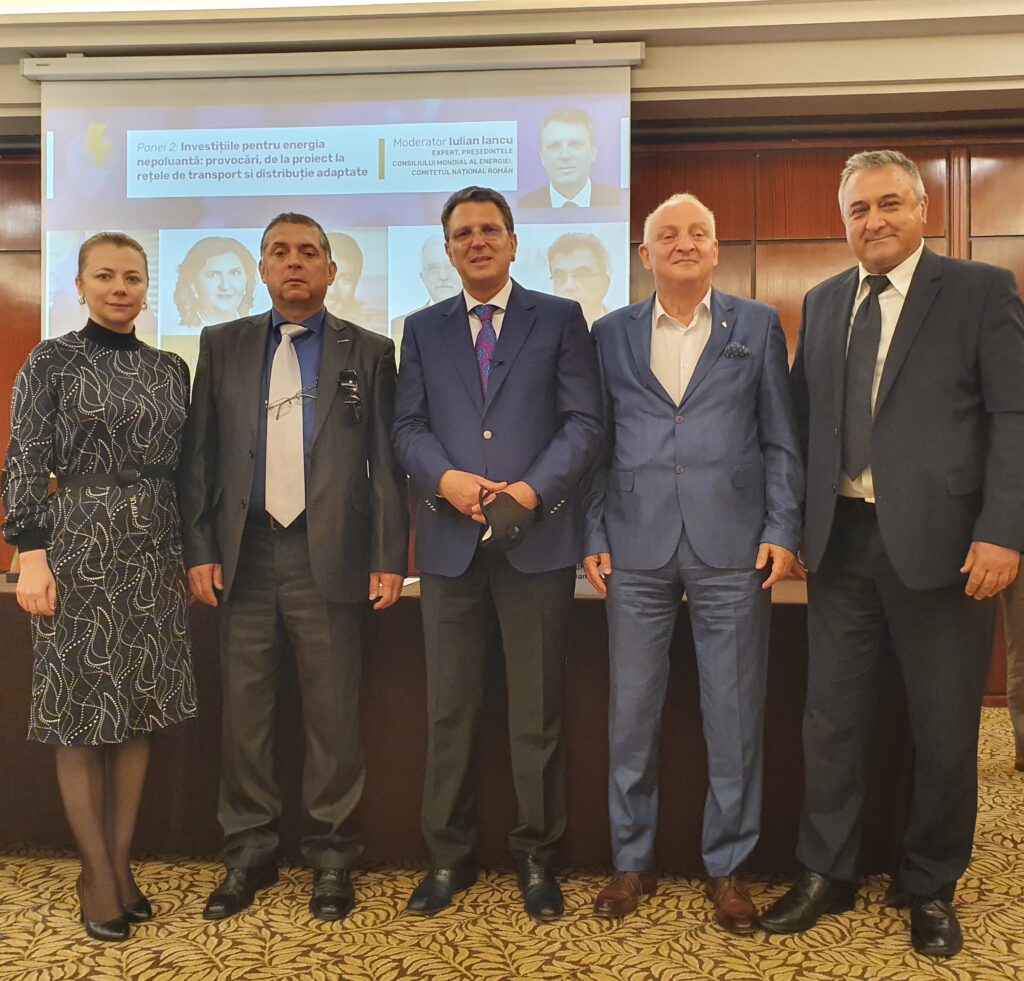
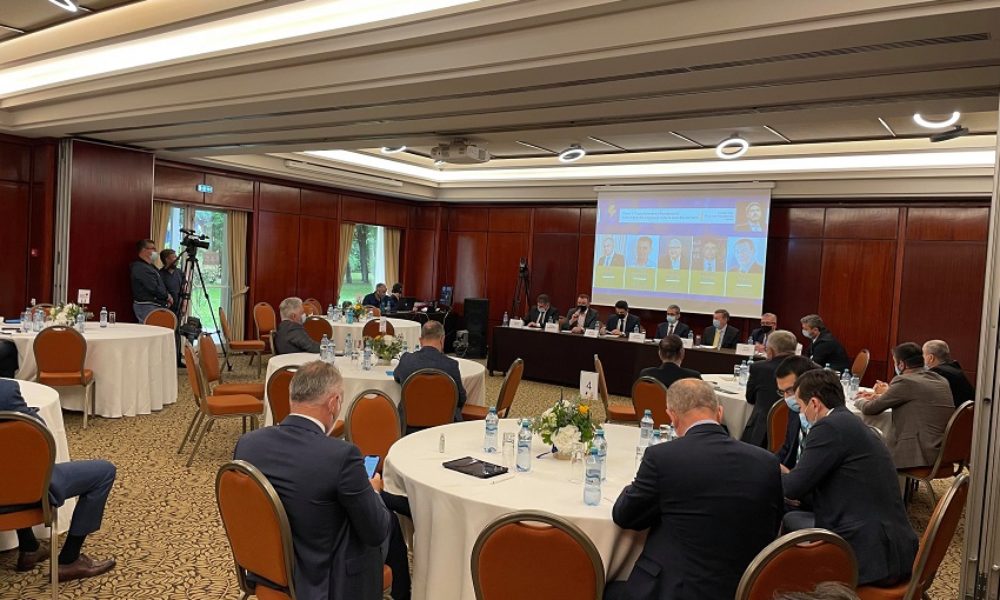
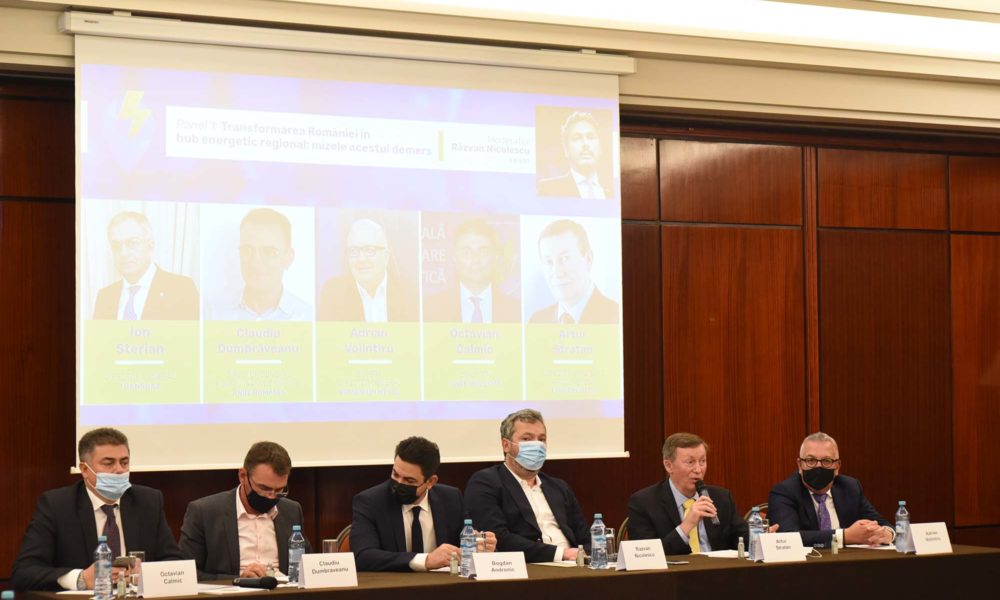
Pictures | guests and participants:
Razvan Nicolescu – expert, Ion Sterian-general manager TRANSGAZ, Claudiu Dumbraveanu – general director for the energy markets – the National Authority for Gas Regulation ( ANRE ), Ioan Dan Gheorghiu-Chairman & general director ISPE SA, Adrian Volintiru – expert & general director Romanium Metal, Octavian Calmic – director ANRE Moldova, Artur Stratan – strategic procurement director Chimcomplex, Sorin Dobircianu, Ph.D. – sr. expert government & NATO, Iulian Iancu – expert The World Energy Council – the Romanian National Committee, Nicole Anca Halaicu – sr. expert the Romanian Senate, Dan Petre, Ph.D. – general director INVESTISIA Romania, Adrian Goicea – President of the Supervisory Board CNTEE TRANSELECTRICA SA, Corina Popescu – general director ELECTRICA, Vice President of the Union of the Energy Industries ( Eurelectric ), Alexandru Floristean – Head of Intelligence HYDROGEN EUROPE, Mihai Minescu – President of the University Senate ( the Petroleum and Gas University Ploiesti Romania ), Petrisor Peiu – economic analyst, Dan Boabes – expert, Diana Muresan – expert, Razvan Ciubotaru – expert, Cornel Nistorescu etc.