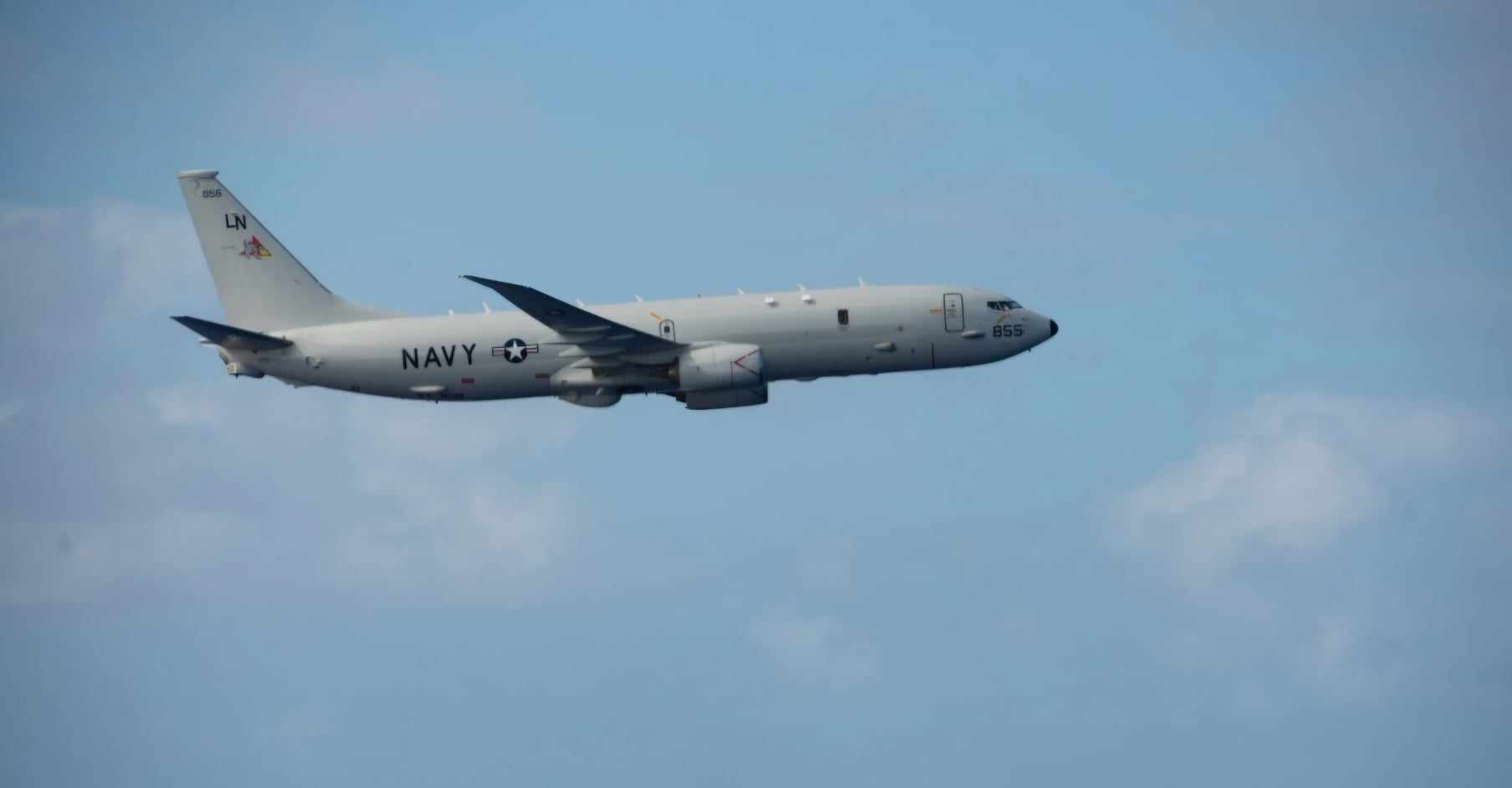
The testing for integrating a long-range, ship-killing missile onto the Navy’s P-8 Poseidon maritime patrol aircraft is anticipated to conclude this summer, as per a Boeing executive.
„Testing progress is currently positive. We anticipate completion later this summer if everything proceeds as planned. This will provide the US Navy with yet another capability,” stated Jon Spore, Boeing’s senior business development representative for the P-8, during a briefing at the company’s Jacksonville, Fla., facilities.
This initiative involves Boeing integrating the Long Range Anti-Ship Missile (LRASM), produced by Lockheed Martin, onto the aircraft. Equipping the Poseidon with this weapon is seen as a strategic move to bolster the Navy’s maritime strength against China, as per analysts cited by Breaking Defense.
Once testing is finalized, the P-8 will be capable of carrying up to four LRASMs, each having a range exceeding 200 nautical miles according to Lockheed.
The Navy is yet to specify the completion timeline for the testing. Additionally, the Navy has engaged Lockheed and RTX in developing HALO, a follow-on missile to LRASM anticipated to be operational by the end of the decade.
Alongside LRASM integration, Boeing has independently financed the development of a multimission pod for the Poseidon, set to commence flight testing next month. This testing is expected to span approximately two years and will incorporate features that are not inherent to the aircraft.
The pod’s contents will be determined based on customer requirements, potentially encompassing systems like radars and sensors. „Customer input is paramount in defining sensor requirements. Collaboration with sensor suppliers to identify suitable components is also ongoing,” highlighted Spore.
Moreover, Boeing is actively working on upgrading Navy P-8 planes at Cecil Field facilities, aiming to implement an enhancement known as Increment 3 Block 2. The first aircraft began this process earlier this year and is projected for completion by January, according to Mark Stevens, Boeing’s program manager for the initiative.
Increment 3 Block 2 enhancements encompass the addition of antennas for submarine signal detection, improved anti-submarine warfare capabilities, and enhanced satellite communications connectivity for wideband communication.