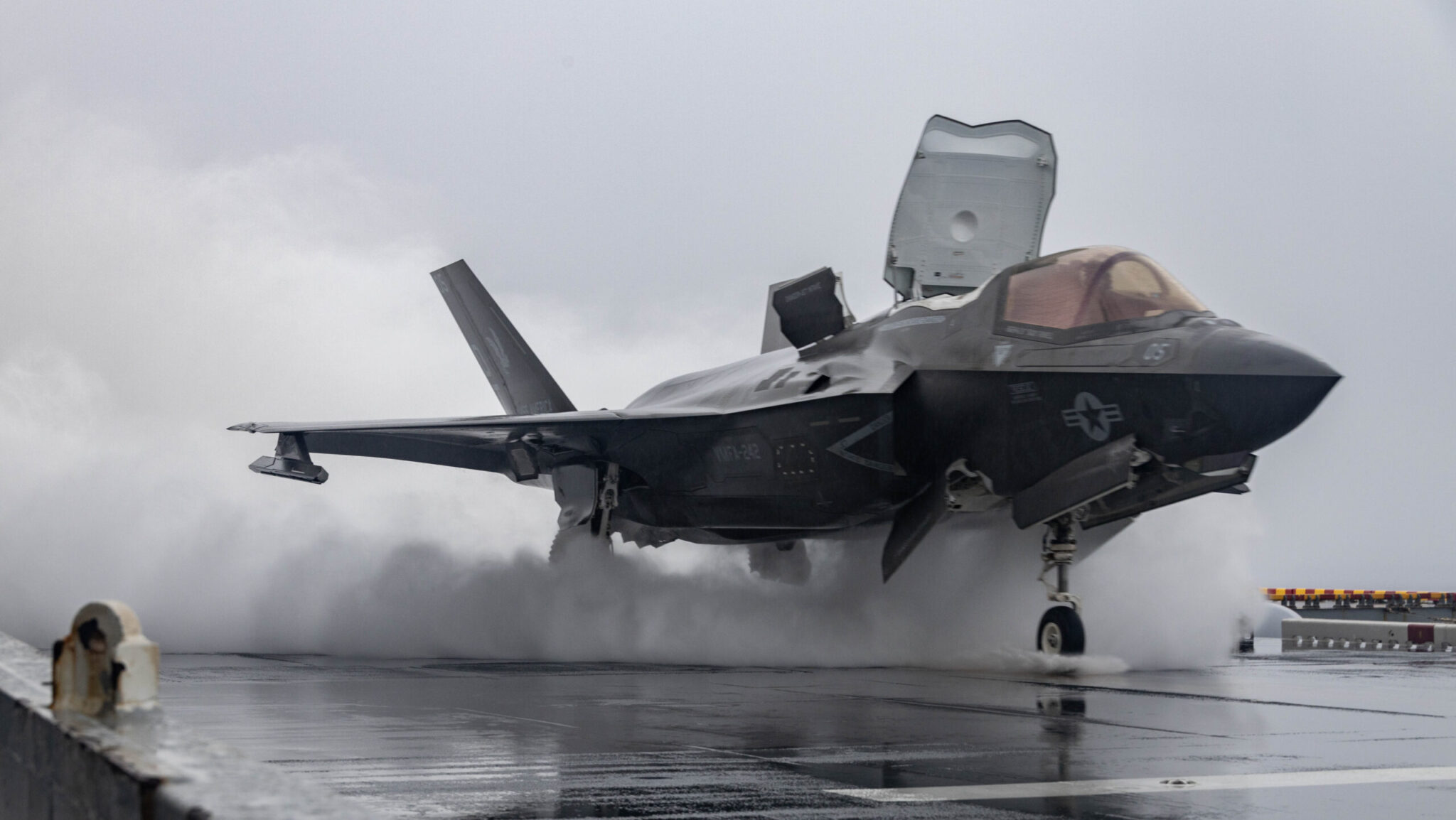
The Marine Corps is set to publish its next service-wide aviation plan, known as AVPLAN, this December, ahead of the „execution” phase of a newly revealed initiative that aims to reformulate the service’s warfighting concepts, functions, and technologies used throughout Marine aviation.
Historically released biennially, with the last AVPLAN published in 2022, this document provides a comprehensive overview of the platforms that the Marines will utilize in the future.
What distinguishes this year’s AVPLAN is that it will precede the third phase of “Project Eagle,” scheduled to commence next summer. This information was disclosed in a public document issued by the Marine Corps in partnership with Naval Air Systems Command earlier this month, ahead of an industry day set for September 9, which will focus on one of the project’s lines of effort.
Launched in 2022 and organized by an internal Marine Corps office known as “The Cunningham Group,” Project Eagle has only recently begun receiving public attention, with service leadership discussing its implications during the Modern Day Marine exposition in May.
“What Project Eagle does for us, as we look across three [future years defense programs], is it shows us where the trade space is,” stated Lt. Gen. Bradford Gering, deputy commandant for aviation, during the exposition.
The initial phases of Project Eagle focused on establishing key operational lines and gathering feedback from the Marine Corps commandant. The upcoming third phase, set to last through 2040, will emphasize „execution,” leading to significant changes in Marine aviation, from new warfighting concepts to the implementation of artificial intelligence tools.
Two innovative concepts emerging from this initiative are “Distributed Aviation Operations” (DAO) and “Decision-Centric Aviation Operations” (DCAO).
According to the document, “Marine aviation must further its capabilities for operating in austere and distributed littoral environments as an essential element of the Stand-in Force, and in support of [Expeditionary Advanced Basing Operations].” DAO emphasizes the need to reassess traditional functions of Marine aviation.
“The central idea of DCAO is to accelerate the decision cycle of the [air combat element] to machine-level speeds using cutting-edge and emerging technologies,” it elaborates. This approach aims to facilitate the rapid assembly and disassembly of a distributed force, achieving mass’s benefits while minimizing risks linked to concentration.
The document notes that while the six traditional functions of Marine aviation—offensive air support, anti-air warfare, assault support, aerial reconnaissance, electronic warfare, and control of aircraft and missiles—have been effective in the past, ongoing studies will explore expanding these functions to enhance support for the Joint Force.
As part of Project Eagle, several new „roadmaps” are being created for live, virtual, and constructive training; sustainment; command and control; ground support; and aircrew recruitment and retention, among other areas.
The new publication of the AVPLAN is integral to Project Eagle’s second phase and “has been a vital tool to communicate the deputy commandant for aviation’s vision and direction to multiple audiences.” The project aims to realign Marine aviation’s trajectory and serves as a crucial milestone in the Commandant’s vision for force modernization, ensuring that the nation’s 911 force remains agile, dynamic, and ready for future challenges.