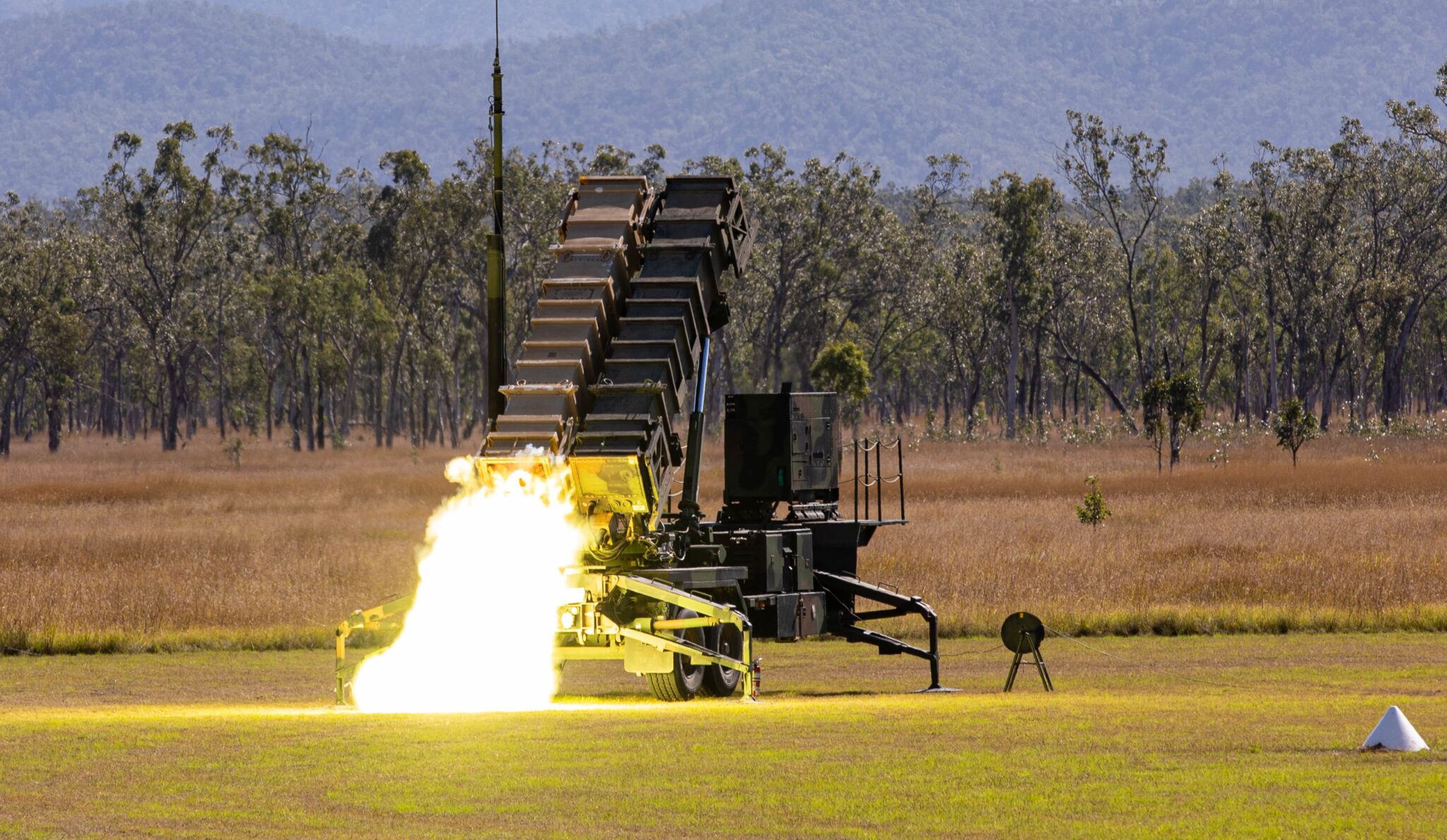
Amidst a new wave of Russian attacks on Ukrainian critical infrastructure, a senior Ukrainian official has raised alarms over the significant delays in receiving much-needed military equipment from allies, particularly the Patriot surface-to-air weapon systems.
“Sometimes these gaps are excessively long. You cannot do military planning. You cannot calculate what you [should be able to] count on, on the battlefield,” stated Dmytro Kuleba, the Ukrainian Minister of Foreign Affairs, during a doorstep address at the European Union (EU) foreign ministers’ meeting held in Brussels today. He emphasized that after two years of conflict, these systems should function seamlessly without any delays.
As a notable example, Kuleba highlighted the hold-up on air defense weapons like the U.S.-produced Patriot systems, which are essential for intercepting aircraft, cruise missiles, and shorter-range ballistic missiles. These systems have notably been credited with downing Russian Kh-47M2 Kinzhal hypersonic missiles throughout the ongoing war. Earlier this year, Ukrainian President Volodymyr Zelenskyy requested an additional seven Patriot systems; however, despite previous assurances, Kuleba pointed out that those systems have yet to arrive.
“In April, when we made a plea for the delivery of more Patriot systems, there was good progress and announcements were made, but some… were announced and not delivered yet,” Kuleba remarked. “We are entering a school year, and we must protect our cities. We have to protect our children. Therefore, I urge all partners who made their pledges to finally deliver these systems.”
Since February 2022, Washington has pledged over $55.5 billion in military assistance to Kyiv, according to recent U.S. State Department figures. This package includes two Patriot air defense batteries, 12 National Advanced Surface-to-Air Missile Systems, an unspecified number of HAWK systems, and more.
The U.S. first committed to sending a Patriot battery to Kyiv in 2022 and announced a second in June this year. In July, President Joe Biden unveiled a broader agreement among NATO members, including the U.S., Germany, Italy, the Netherlands, and Romania, to send five air defense systems to Ukraine. Coincidentally, today the U.S. State Department approved the Netherlands to purchase two new Patriot launching stations, estimated at $224 million.
“In the coming months, the United States and our partners intend to provide Ukraine with dozens of additional tactical air defense systems,” Biden stated during a NATO summit. “The United States will ensure that when we export critical air defense interceptors, Ukraine goes to the front of the line. They will receive this assistance before anyone else.”
While Kyiv is persistently pressing for the timely delivery of Patriot systems, it is also advocating for international partners, including the U.S. and the UK, to lift weapons restrictions on Army Tactical Missile Systems (ATACMS) and Storm Shadow long-range cruise missiles to strike Russian territory.
Kuleba indicated that lifting these restrictions would allow for attacks on “legitimate military targets,” which likely includes Russian airfields and strategic bombers responsible for attacking Ukraine’s critical infrastructure.
“What really matters is the timing, and this is the issue today. This is why we have an open conversation with the United Kingdom and the United States, asking them not to waste the momentum that our soldiers and civilians have paid for with their blood and sacrifice,” he explained. However, there are currently no indications that either the Biden administration or the new UK Labour government are willing to alter their stance.
On Tuesday, Pentagon Press Secretary Maj. Gen. Pat Ryder reiterated the ongoing discussions, stating that Zelenskyy has clearly articulated his views both publicly and privately.
“We will continue to consult closely with our Ukrainian partners as well as our allies and partners around the world on how best to support Ukraine,” the two-star Air Force general affirmed.
“Our policies haven’t changed,” Ryder added. “You’ve heard us say that the Ukrainians can use U.S. security assistance to defend themselves from cross-border attacks, essentially counterfire. However, regarding long-range strike capabilities, particularly deep strikes into Russia, our policy remains unwavering.”
In contrast, Josep Borrell, the head of EU foreign affairs, supported Kuleba’s position, calling for the lifting of weapon restrictions “in accordance with international law,” and warning that Russia “wants to bomb a European country into full capitulation.”
Highlighting the toll of Moscow’s aggression, he noted that since the onset of the war in Ukraine, Russia has expended approximately 14,000 drones, “almost” 10,000 missiles, and many more glide bombs.
The EU has initiated the process to transfer revenues from frozen Russian assets to Ukrainian industry, totaling €1.4 billion ($1.6 billion), which has enabled an increase in weapons production.
Additionally, a further €6 billion ($6.6 billion) is due to be transferred to EU member states as reimbursement for equipment sent to Ukraine; however, this transfer has been stalled due to Hungary’s veto. Borrell suggested he plans to find a way to “circumvent” this lone dissenting voice.