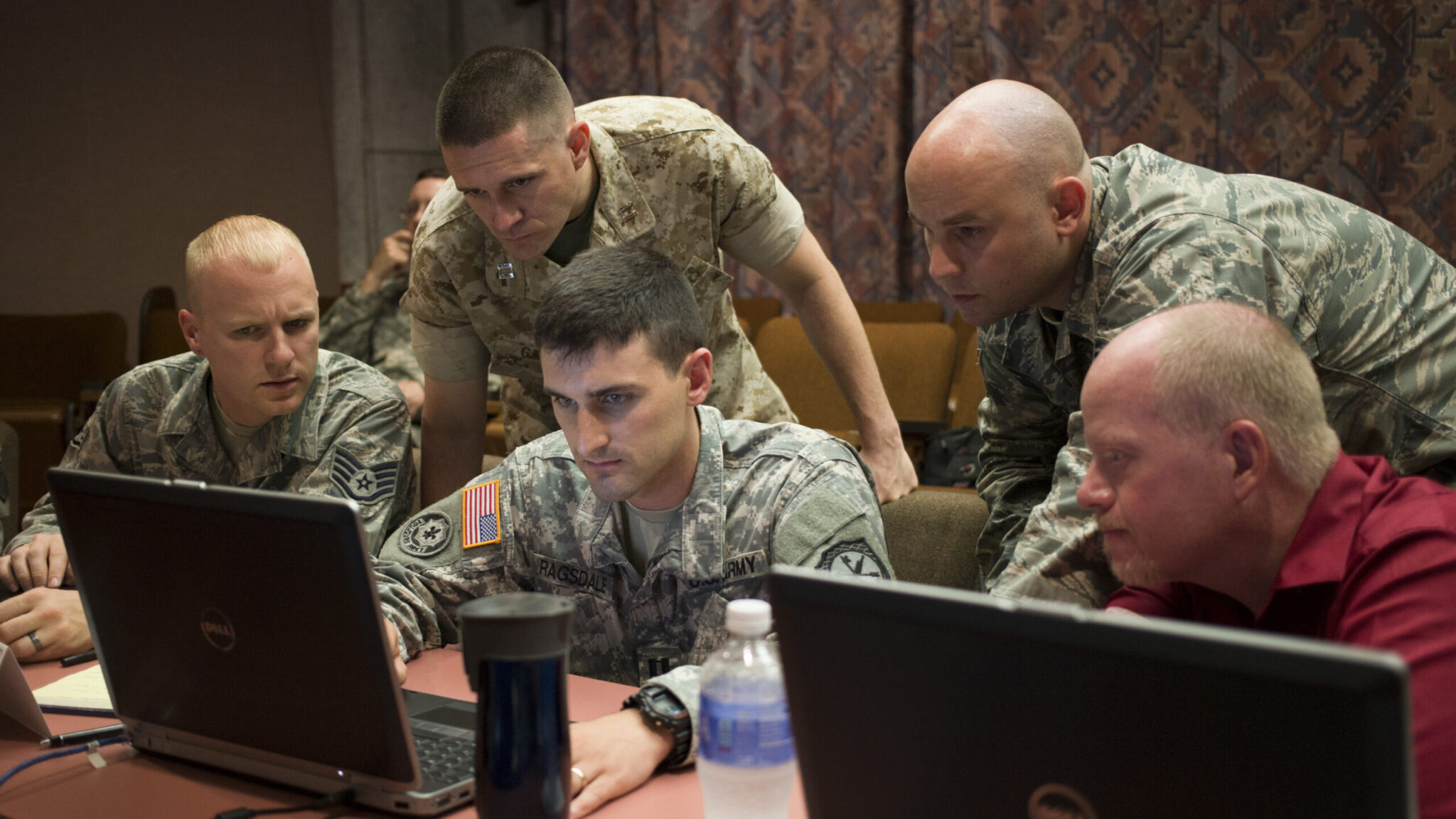
A year after launching a new initiative aimed at significantly enhancing its cyber workforce, the Pentagon reports progress but continues to grapple with a critical shortage of skilled personnel. Mark Gorak, principal director for resources and analysis for the DoD Chief Information Officer, acknowledged the ongoing challenge of filling the 28,000 roles still needed during an interview with Breaking Defense at TechNet Augusta last week.
While the current shortfall is an improvement from the previous year, Gorak highlighted the difficulty in generating the next generation of cyber talent. „We need to address how to create and generate that next generation of talent,” he stated.
As part of the Cyber Workforce Strategy Implementation Plan, the Pentagon has successfully hired 12,000 new personnel; however, turnover has led to a loss of 10,000 staff members, resulting in a net increase of only 2,000. Currently, approximately 225,000 individuals work in the cyber workforce, which consists of 75,000 federal civilians, 75,000 military personnel, and 75,000 contractors, according to Gorak’s office. The DoD classifies 72 positions as part of its cyber workforce.
Gorak pointed out that simply filling vacancies is insufficient; there is also a pressing need for qualified individuals. “The second biggest challenge is ensuring the qualification of the current workforce and achieving consistency across the board,” he said. With the DoD’s vast size, ensuring competency is a monumental task. The workforce is sorted into three competency levels: basic, intermediate, and advanced, with the DoD defining qualifications for only the basic level.
This lack of a unified skill evaluation process, especially for intermediate and advanced levels, adds complexity when assessing various skill sets within the cyber workforce. For example, offensive attackers and exploitation analysts have distinct skill requirements, making it hard to determine if an individual meets the necessary qualifications.
“If you’re coming out of Carnegie Mellon with a PhD, I’m not going to send you to our eight-week basic IT course. You don’t need it. We will consider those experiences to assess who is qualified and for what,” Gorak explained.
Efforts to facilitate exchange programs between government workers and industry have also faced obstacles, as departments hesitate to release staff members amid ongoing personnel shortages. “Everyone tells me they want to exchange with industry, but I don’t want to send anyone. That’s not how an exchange program works,” Gorak stated, emphasizing the need for mutual exchange to foster understanding of shared challenges.
Adding to the workforce challenges, Space Force Vice Chief Gen. Michael Guetlein reported that his service branch is struggling to retain cybersecurity operators. “I cannot hire talent fast enough and keep them long enough, because as soon as I get them trained, industry hires them back for a lot more money,” he said at an Intelligence and National Security Alliance event in Washington.
In terms of progress, Gorak noted that the Pentagon has completed two of the 38 initiatives outlined in its cyber workforce strategy, falling short of its goal to finish ten by the end of fiscal 2024. One of the completed initiatives is the establishment of the Cyber Academic Engagement Office, where Gorak serves as director. This new office aims to consolidate cyber-related activities between the DoD and academic stakeholders.
“We give full responsibility for the entire cyber academic outreach for the entire DoD, which is a difficult job,” Gorak explained. “The goal is to identify gaps and partnerships to avoid every entity having to have separate relationships with colleges.”
The second accomplished initiative is increasing Congressional awareness of cyber workforce development priorities. While this may seem minor, Gorak indicated it is crucial for improving communication with lawmakers, helping avoid lengthy legislative processes to support cyber workforce enhancements.
Despite the minimal completion rate for initiatives thus far, Gorak views the two successes as significant due to the bureaucratic hurdles involved. “I do believe my job is to navigate through the bureaucracy to facilitate these programs,” he remarked, asserting that achieving ten completed initiatives represents a meaningful advancement. “That is ten that we wouldn’t have completed if we didn’t do this,” Gorak added.