On Tuesday, the United States announced a serious allegation against Russia and Iran, claiming that the Kremlin has received specific Iranian ballistic missiles for the first time and may deploy them “within weeks” in the ongoing war in Ukraine. America’s top diplomat described this situation as a “dramatic escalation.”
The accusation, which has been denied by Iran, has drawn condemnation from Washington and its European allies. However, it also provides insight into Moscow’s tactical considerations and reveals potential capacity challenges faced by the Kremlin’s military efforts, according to officials and analysts.
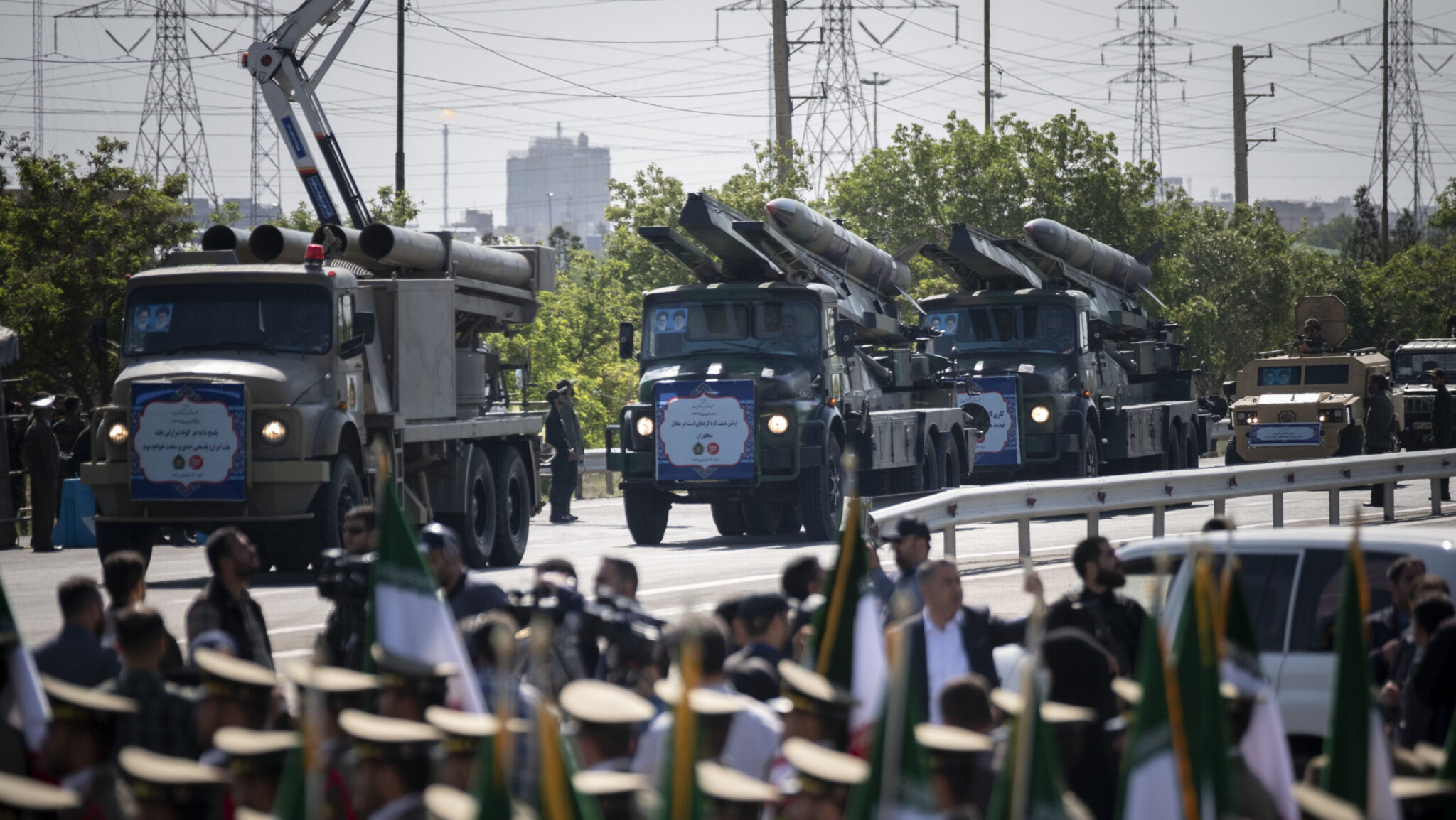
US officials indicated that the 75-mile-range Fath-360 missiles would likely be utilized in close-quarters combat, allowing Russia to conserve its longer-range capabilities for broader battlefield applications. This could enhance Russia’s arsenal and enable it to target various locations, including civilian areas, as noted by Pentagon Press Secretary Maj. Gen. Pat Ryder. Jean Loup Samaan, a senior research fellow at the Middle East Institute, agreed with this assessment, stating that Iran’s advanced ballistic arsenal, primarily comprising short and mid-range missiles, would serve tactical needs in the border areas between Russian and Ukrainian troops.
Additionally, Samaan suggested that the Kremlin’s engagement with Iran might signal internal production challenges within Russia’s defense industry. “This outreach to Iran could indicate that the Russian defense industry is struggling to meet the demand for weapon production needed by its forces,” he explained.
Concerns also linger regarding the effectiveness of Iranian missiles, particularly following a significant Israeli defense operation that successfully neutralized many threats launched toward Israel in April. However, Behnam Ben Taleblu of the Foundation for Defense of Democracies clarified that the Fath-360’s reliability is not directly comparable to missiles like those employed in previous operations. “The Fath-360 is derived from Iran’s most accurate ballistic missile, the Fateh family,” he said, pointing out that there is a substantial difference between the missile systems’ performance records.
Can Kasapoğlu, a senior fellow at the Hudson Institute, highlighted that the Fath-360 is a “textbook tactical ballistic missile,” emphasizing its rapid launch capabilities and low costs as compelling factors when deployed in salvos.
Sanctions and Skepticism
In response to the alleged transfer of Iranian missiles to Russia, France, Germany, and the United Kingdom announced immediate steps to terminate bilateral air services agreements with Iran and to impose sanctions on entities associated with Iran’s missile program. The US echoed these actions.
While experts acknowledged the significance of these sanctions and the cancellation of economic agreements, many believe they may not be sufficient to deter Tehran. Samaan noted, “Sanctions have occasionally slowed down nuclear and ballistic programs, but the Islamic Revolutionary Guard Corps (IRGC) has historically found ways to circumvent them.” He added that Iran’s increasingly independent defense industry, along with support from partners like North Korea, has further mitigated the impact of sanctions.
Ben Taleblu argued that these penalties should have been enforced following Iran’s drone transfers to Russia two years ago, which could have prevented the more recent missile transfers. “However, they can now serve as a foundation for a coherent European policy toward Tehran if paired with the reimposition of UN sanctions,” he added.
Despite the sanctions, the relationship between Russia and Iran appears to be intensifying. Both nations have expressed intentions to finalize a comprehensive defense agreement aimed at strengthening military cooperation.
“Iran’s increasing arms proliferation is indicative of a larger issue,” Ben Taleblu stated. “Both Iran and Russia are methodically working to reshape regional power dynamics in their favor, fostering deeper military cooperation while compartmentalizing their conflicts. Addressing one of these challenges effectively will necessitate improvements in policies regarding the other.”