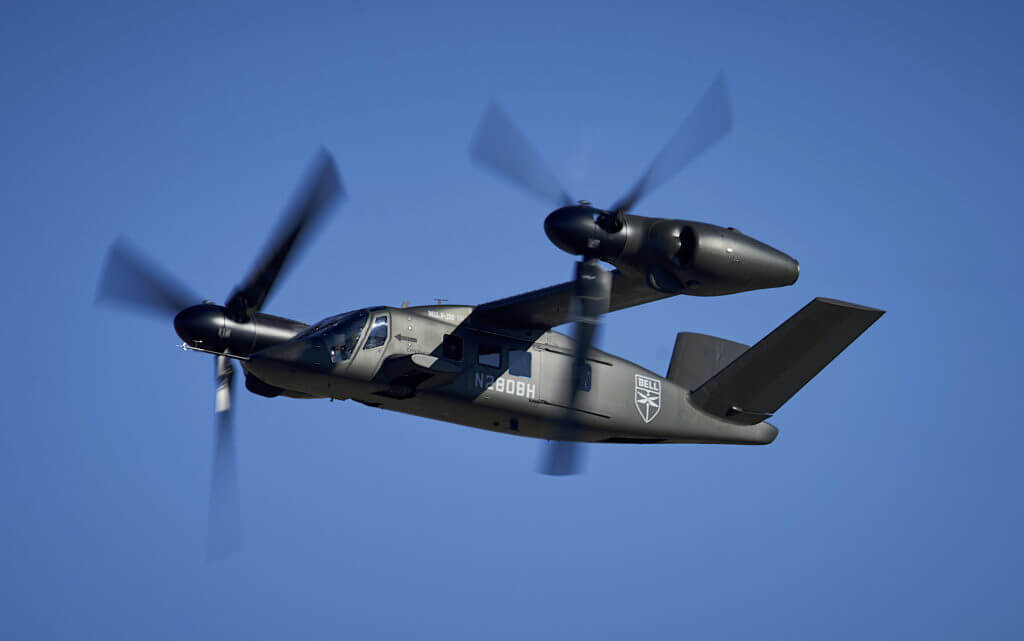
A senior executive from Bell Textron is set to meet with Australia’s Army chief, Lt. Gen. Simon Stuart, on Friday as part of a strategic initiative to demonstrate the advantages of the V-280 Valor tiltrotor for the Australian Defense Force (ADF). This marks a significant step for Bell, which was awarded the contract to develop the V-280 for the Army’s Future Long-Range Assault Aircraft (FLRAA) program in December 2022.
Carl Coffman, Vice President of Military Sales at Bell Textron, expressed confidence in an interview with Breaking Defense that Australia’s vast geography and varied mission requirements align well with the capabilities of the Valor.
“This is a huge country. When we analyze the force structure of the ADF and their operational posture, two primary challenges emerge: the need for effective deployment to secure the homeland and the strategic movement of forces to achieve that objective,” Coffman shared during the Land Forces 2024 conference.
He elaborated on the ADF’s logistical challenges, highlighting that much of the military’s resources are stationed on the country’s coastal edges, while the interior features extensive and demanding terrain. “To defend this nation, I need to be able to rapidly move my forces across the vast distances within Australia,” he added.
Coffman noted that Australians are already familiar with Bell’s capabilities through the V-22 tiltrotor, which operates as part of the US Marine Corps stationed in Darwin. The Australian military is regularly called upon to support disaster response operations due to natural events such as fires and floods, and it often assists other nations throughout the Indo-Pacific region. The flexibility and lift offered by the V-280, he argued, could significantly enhance Australia’s ability to respond to emergencies and threats in the island regions north of the continent—advantages that conventional helicopters may not offer.
Currently, the V-280 is in the engineering, manufacturing, and development phase in the United States, with Bell aiming to have soldiers piloting the aircraft by 2030. Before that timeline, the company anticipates constructing six prototype aircraft alongside two user test models. “We expect to conduct our first prototype test flight in 2026,” Coffman included. The aircraft’s design has been adjusted to accommodate specific requirements from the Special Operations Command, including a refueling probe at the nose.
Coffman suggested that any prospective sale would likely be facilitated through the US Foreign Military Sales (FMS) program. He indicated that his recent discussions included meetings with Maj. Gen. Stephen Jobson, the chief of Army Aviation, who seemed to respond affirmatively to the potential deployment of the V-280.
While not explicitly mentioned, it is notable that Australia’s Special Air Service (SAS) often collaborates with US forces and may be particularly interested in an aircraft capable of covering extensive distances at speeds exceeding those of traditional helicopters—especially one already configured for special operations use.