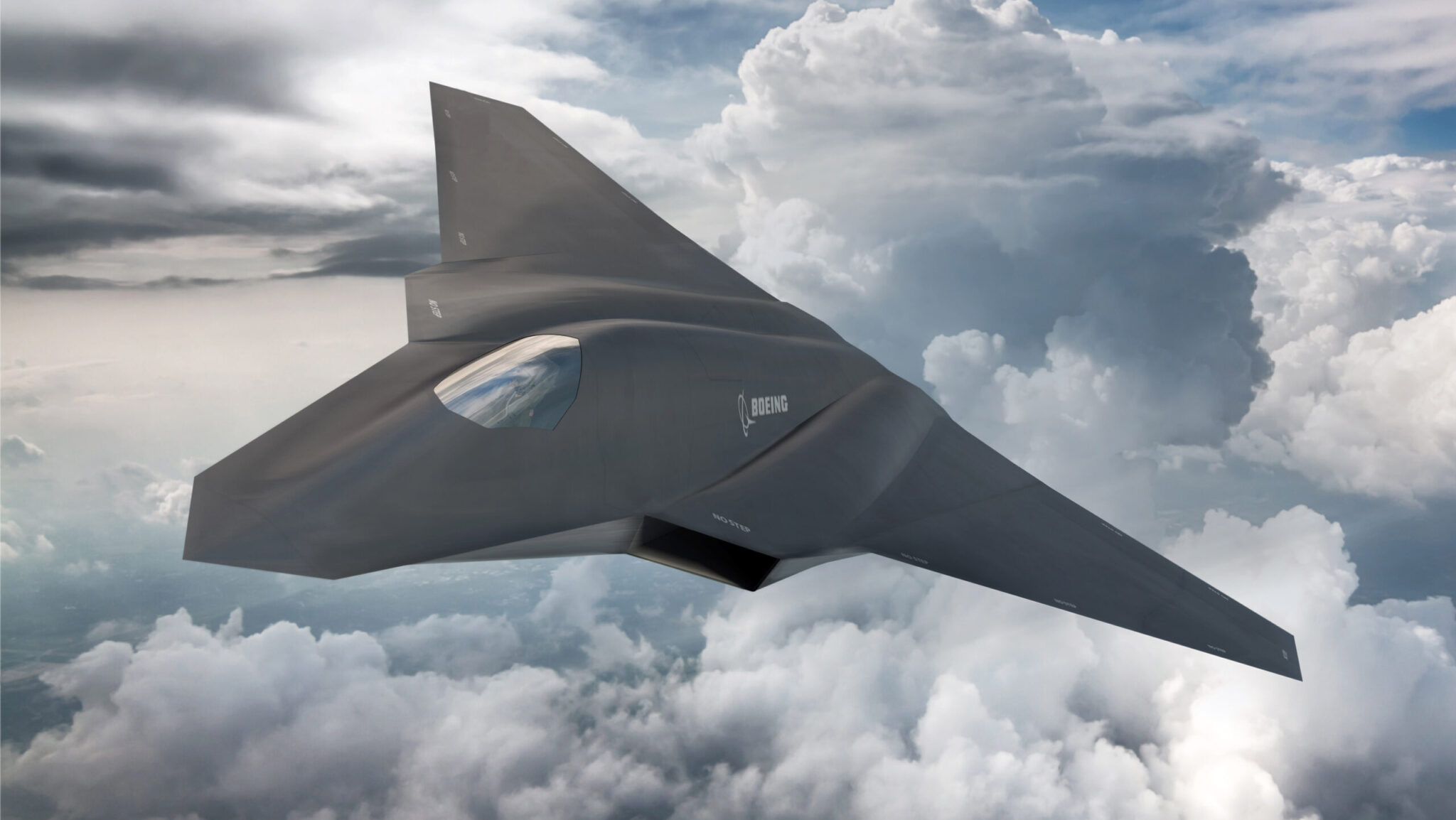
As the U.S. Air Force re-evaluates its plans for a sixth-generation fighter jet, Air Force Secretary Frank Kendall has stated that the service aims to reduce the cost per aircraft to levels comparable to the F-35, which is about one-third of the originally projected price.
However, analysts and defense industry experts warn that achieving this target may be unrealistic without a fundamental rethinking of how fighters and drones will operate together in future combat scenarios.
While the Air Force has not finalized a unit cost target for the manned Next Generation Air Dominance (NGAD) fighter, Kendall indicated that the F-35 represents the upper limit of what the service wants to pay. He described the F-15EX as being in a similar price range but expressed a desire to lower costs further. “Once you start integrating Combat Collaborative Aircraft (CCAs) and transferring some mission equipment and capabilities to them, you can discuss a different concept for the crewed fighter controlling them,” he noted.
Kendall’s comments indicate a significant shift from the Air Force’s initial vision for the NGAD fighter. Defense industry officials have expressed skepticism, arguing that the intended advancements in design, materials, and fleet size will inherently drive up costs compared to more established aircraft like the F-35 and F-15.
Currently, the unit costs for the Lockheed Martin F-35 range from approximately $80 million to $100 million, depending on the variant, while the F-15EX costs about $90 million. In contrast, Kendall had estimated that the NGAD would initially cost around $300 million per unit.
For the Air Force to achieve an optionally-crewed sixth-generation fighter jet at F-35 pricing, they would likely need to significantly reduce the aircraft’s core mission systems—such as radar and sensors—and shift these capabilities to surrounding CCAs. This would enable a focus on enhancing the fighter’s range, stealth, and aerodynamic performance, but it presents several challenges.
First, even if costs could be minimized by redistributing mission systems, the fighter’s essential attributes still come with high expenses. The reliance on CCAs for mission capabilities means they too would need advanced features, potentially increasing their costs as well.
Moreover, this approach would heighten the responsibility of the NGAD pilot on the operational security of the CCAs. If those drones were destroyed, the fighter’s effectiveness and safety could be seriously compromised.
Reducing the mission systems from the fighter to CCAs effectively means that both components must be seen as an integrated package, inherently raising risks for the mission and possibly leading to higher overall costs.
Jeremiah Gertler, a senior analyst at the Teal Group, likened the situation to trying to achieve a high-end vehicle at a low price point, emphasizing the difficulty of reconciling such divergent goals.
While aerospace companies cannot publicly confirm their involvement in the highly classified NGAD program, sources indicate that Lockheed Martin and Boeing were competing for the contract before the Air Force paused the program in the summer. Northrop Grumman CEO Kathy Warden acknowledged a strategic pullback from the NGAD competition, although she suggested they might reconsider depending on the Air Force’s revised approach.
Analysts like Richard Aboulafia have noted that the Air Force’s focus on cost suggests it may be pivoting away from the concept of a super fighter; rather, it appears to be more interested in decoupling capabilities and networking them together. This raises the critical question of whether a manned fighter is even necessary if its capabilities can be integrated into drones.
Aboulafia reflected on the potential shift, stating, “The idea of backing away from a next-gen super fighter is just anathema to the service’s DNA.” He highlighted the historical advantages of having a robust manned fighter and the potential logistical issues posed by high costs.
While offloading some mission requirements to CCAs was always part of the plan, it seems the Air Force may have discovered that the possibilities are broader than initially assessed. Investment analysts also suggest that a focus on lower costs might facilitate not just improved production and upgrades compared to the F-35 but also open avenues for foreign sales if the NGAD price becomes competitive, potentially reshaping the dynamics of international military aviation.
Experts believe that if the Air Force can successfully lower the NGAD costs to around $100 million per unit, it could finally put the sixth-generation aircraft on level footing with the F-35, which has proven exceedingly competitive in global fighter acquisitions.