For years, Moscow has regarded the Arctic as a cornerstone of its national security strategy, investing heavily in the region by opening or refurbishing over 50 military bases and ramping up military operations. In contrast, the United States has shifted its focus between the Middle East and the Pacific, largely relying on allies and partners like Canada to ensure Arctic security. However, Canada has admitted its unpreparedness to tackle the challenges posed by the Arctic environment. If the U.S. does not act swiftly to bolster support in this area, its interests in the Arctic could be jeopardized.
Historically, the harsh conditions of the Arctic offered a natural defense for the United States, making offensive military operations difficult. Yet, the increasing likelihood of the “Blue Arctic”—an ice-free region for extended periods—presents a new threat. This could enable great power rivals, such as Russia and China, to position military assets directly adjacent to the U.S. For example, Russian and Chinese warships have recently been spotted patrolling near Alaska in unprecedented numbers. As General Terrence J. O’Shaughnessy, former commander of the U.S. military in the Arctic, noted, the region can no longer be viewed as a “fortress wall,” and appropriate preparations must be made to defend it.
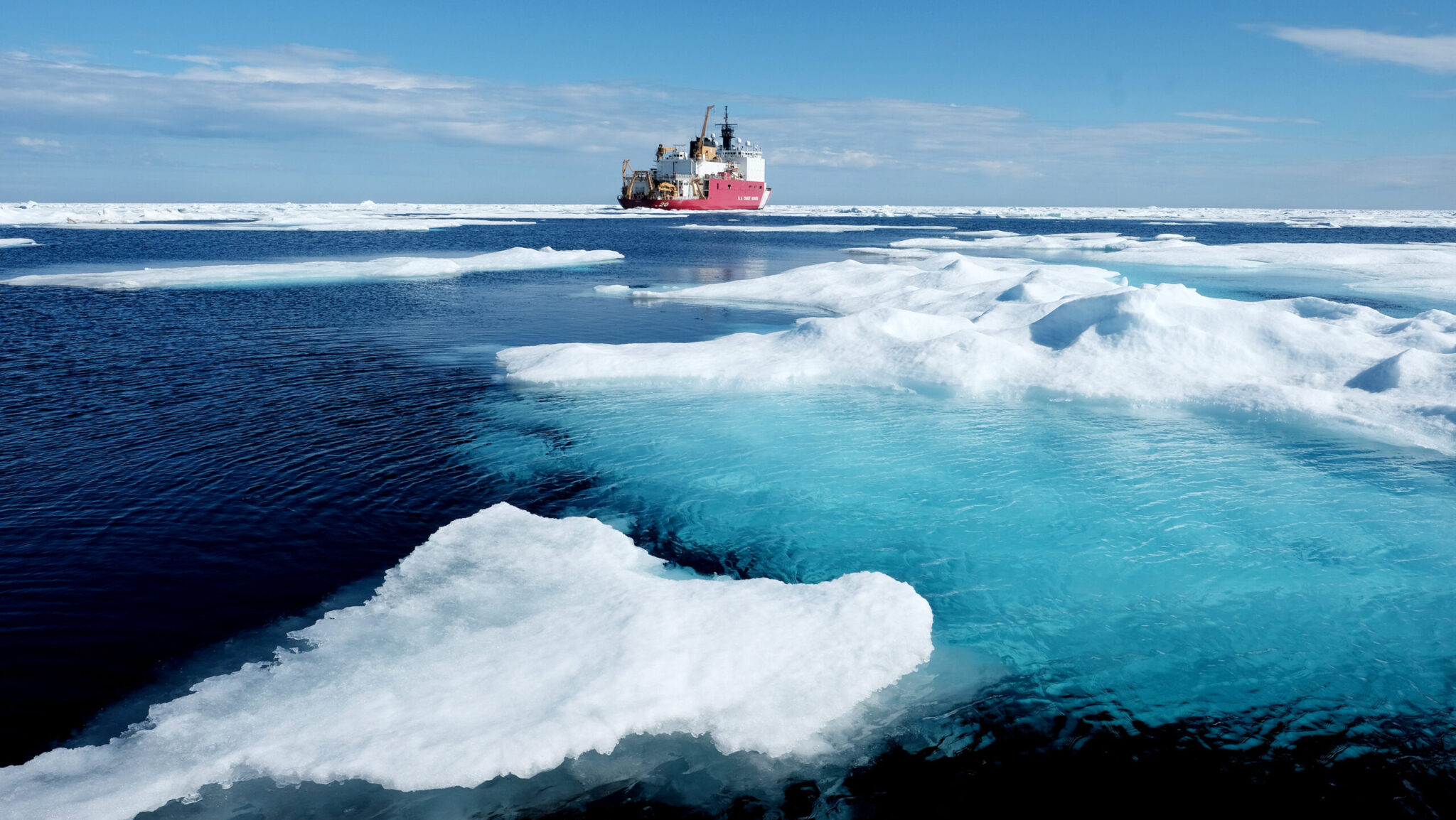
While Russia poses a significant challenge, it is not a mere pacing threat in the Arctic. Currently, Russia commands nearly 53% of the Arctic Ocean’s coastline and has established numerous military bases in the region. In stark contrast, the United States operates only six bases, most of which are located in southern Alaska, outside the Arctic Circle. As of 2023, the U.S. Coast Guard has just five icebreakers or ice-capable patrol vessels, essential for maintaining a presence in the Arctic, while Russia boasts 57 such vessels. It will take years for the U.S. icebreaking fleet to be sufficiently expanded to conduct large-scale operations effectively.
In addition to rapidly enhancing its military presence, Russia has conducted unprecedented naval exercises and targeted American fishing vessels in Arctic waters. Russia is asserting control over newly opened shipping lanes, such as the Northern Sea Route, designating parts of this route as internal waters in order to regulate shipping passage through them. This increased aggression could foreshadow Russian attempts to expand its control over additional Arctic territories, posing a direct threat to U.S. national interests in Europe and the Indo-Pacific. The United States Navy’s Arctic commander, Admiral Daryl Caudle, has expressed concerns about Russia potentially establishing its own “nine-dashed line” around the North Pole.
The U.S. is unprepared to confront the Arctic challenge independently. In light of this, the Department of Defense (DoD) is emphasizing the importance of regional allies and partners to the U.S. Arctic strategy, with Canada at the forefront. However, experts and officials have raised concerns about Canada’s readiness. Defense Minister Bill Blair has noted that the Canadian Armed Forces (CAF) are in a “death spiral” due to recruitment issues, and former Vice Admiral Mark Norman has characterized Canada’s military readiness as “borderline atrocious.”
From an American perspective, Canada’s military challenges illuminate a significant vulnerability in U.S. Arctic security strategies, which rely heavily on strong partnerships. Controlling nearly 25% of the Arctic, Canada has a vested interest in maintaining security in the region. Currently, Canada operates four Arctic and offshore patrol ships (AOPS), with two more expected by the end of 2024. The CAF has approximately 300 full-time military personnel in the Yukon and Northwest Territories, who conduct joint patrols and support operations. Annually, Operation NANOOK showcases Canada’s Arctic capabilities and offers a platform for collaboration with allies, particularly the United States.
However, the question remains: can Canada effectively respond if required? As of December 2023, the Department of National Defence (DND) reported that only 58% of the CAF could respond to NATO needs. Estimates suggest that the Canadian air force, navy, and army operate at underperforming capacities—45%, 46%, and 54%, respectively—due to recruitment challenges and personnel shortages. The CAF fell short of its recruitment goal by nearly 16,000 members in 2023, with expectations for similar outcomes in 2024, exacerbated by a higher attrition rate.
Recognizing the severity of the situation, Canada has aimed to revitalize its armed forces since 2017, committing to increase defense spending from CAD $18.9 billion ($14 billion USD) to CAD $32.7 billion by 2026-2027. Recently, the DND has intensified these efforts, reflecting significant public support; a March 2024 poll by the Angus Reid Institute found that 53% of Canadians believe military spending should rise to 2% of GDP or higher.
The 2024 Canadian defense policy, titled *Our North, Strong and Free: A Renewed Vision