As Army leaders finalize budget plans extending through 2030, air and missile defense has emerged as a primary focus, according to senior officials Army Under Secretary Gabe Camarillo and Army acquisition head Doug Bush.
In an interview with Breaking Defense prior to the Association of the US Army conference, Camarillo emphasized the increasing emphasis on air and missile defense, highlighting it as a significant area of growth in recent years. „We’re still working on the ‘26 POM [program objective memorandum] submission across the department, but if you look at the trajectory of where we’ve been in the last couple of years, it shows clear growth,” he said.
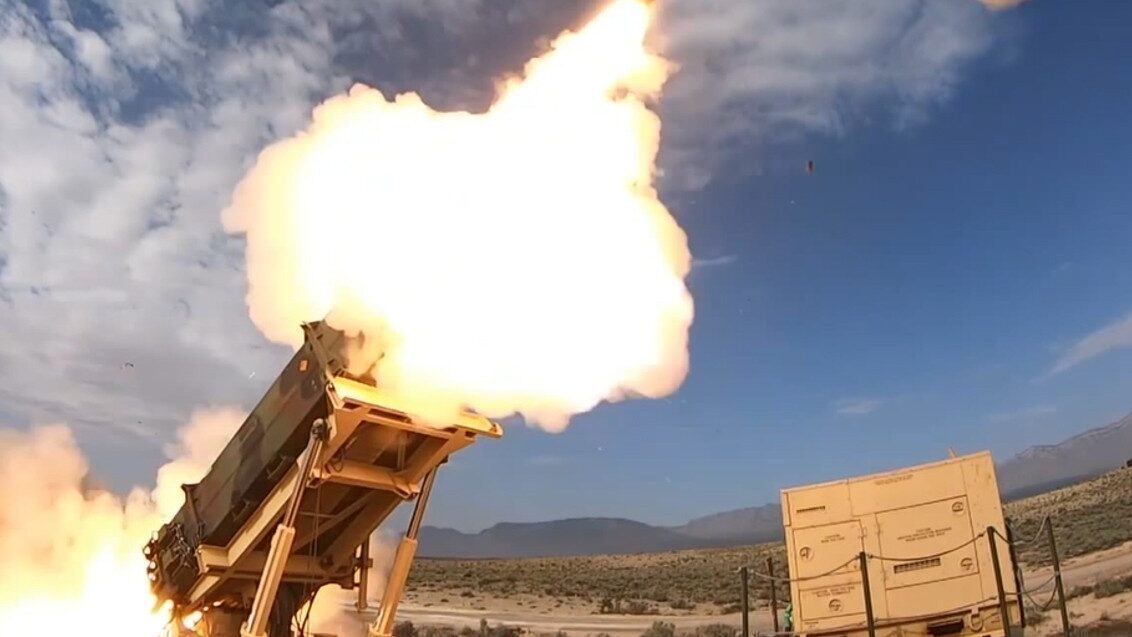
The Army is planning a wide range of investments in air and missile defense, with a particular focus on enhancing its Patriot missile system and increasing the number of counter-unmanned aircraft systems (C-UAS) to counter emerging aerial threats.
The ongoing conflicts in Ukraine and the Middle East have provided crucial insights that inform these budgeting plans, including the recent deployment of a Terminal High Altitude Area Defense (THAAD) battery to Israel, which will be manned by about 100 soldiers. Army Secretary Christine Wormuth downplayed concerns about the strain this deployment might place on the force, noting, “That’s not a very large number of soldiers, so it’s not adding a tremendous amount of additional strain, broadly, to the community.” However, she acknowledged that the Air Defense Artillery units have the highest operational tempo within the Army.
These deployments and global observations are influencing budget planning for fiscal years 2026 to 2030, although future plans could be affected by changes in presidential administration. Camarillo and Bush are focused on several key areas for air defense investment.
The Army’s current Patriot force comprises 15 battalions, but given its high demand, the service plans to add two additional battalions over the next five years. According to Camarillo, the exact number of battalions needed for effective air defense is uncertain, stating, „It’s hard to say if 17 battalions will be the sweet spot,” due to the substantial global demand for air defense capabilities.
By the summer of 2025, the Army expects to have its eighth THAAD battery operational while also continuing to test its new Indirect Fire Protection Capability Increment 2 (IFPC Inc 2) launcher. If testing goes smoothly, the Army will acquire these launchers en masse to defend against threats, including supersonic cruise missiles.
The development and deployment of new C-UAS systems are also a top priority. Recently, the Pentagon launched the Replicator 2 initiative to identify C-UAS solutions for protecting fixed sites both within and outside the continental United States. While details on specific systems are still under wraps, Camarillo noted that the Army may explore both existing systems and those in development.
Bush explained that the Office of the Secretary of Defense has urged military branches to evaluate specific sites and provide cost and timeline estimates for establishing C-UAS defenses. However, implementing these systems domestically involves additional scrutiny due to regulatory requirements not present in combat zones like Iraq or Jordan.
To address the small UAS threat, Army leaders indicate that a portfolio approach is necessary. This includes investing in various systems, ranging from missile-based options like Coyote and Roadrunner to directed energy solutions, including high-energy lasers and high-powered microwaves, and lower-cost kinetic systems. Bush noted the need for additional cost-effective proximity rounds and mentioned the potential for outfitting Bradley Fighting Vehicles with alternative caliber options for enhanced C-UAS capabilities.
Camarillo reiterated the Army’s commitment to rapidly deploy directed energy systems at scale to counter UAS threats, emphasizing the necessity of using a diverse range of strategies to stay ahead of evolving challenges. “It’s not just one thing that’s going to defeat the small UAS threat; it is a range of approaches that we have to take,” he stated.