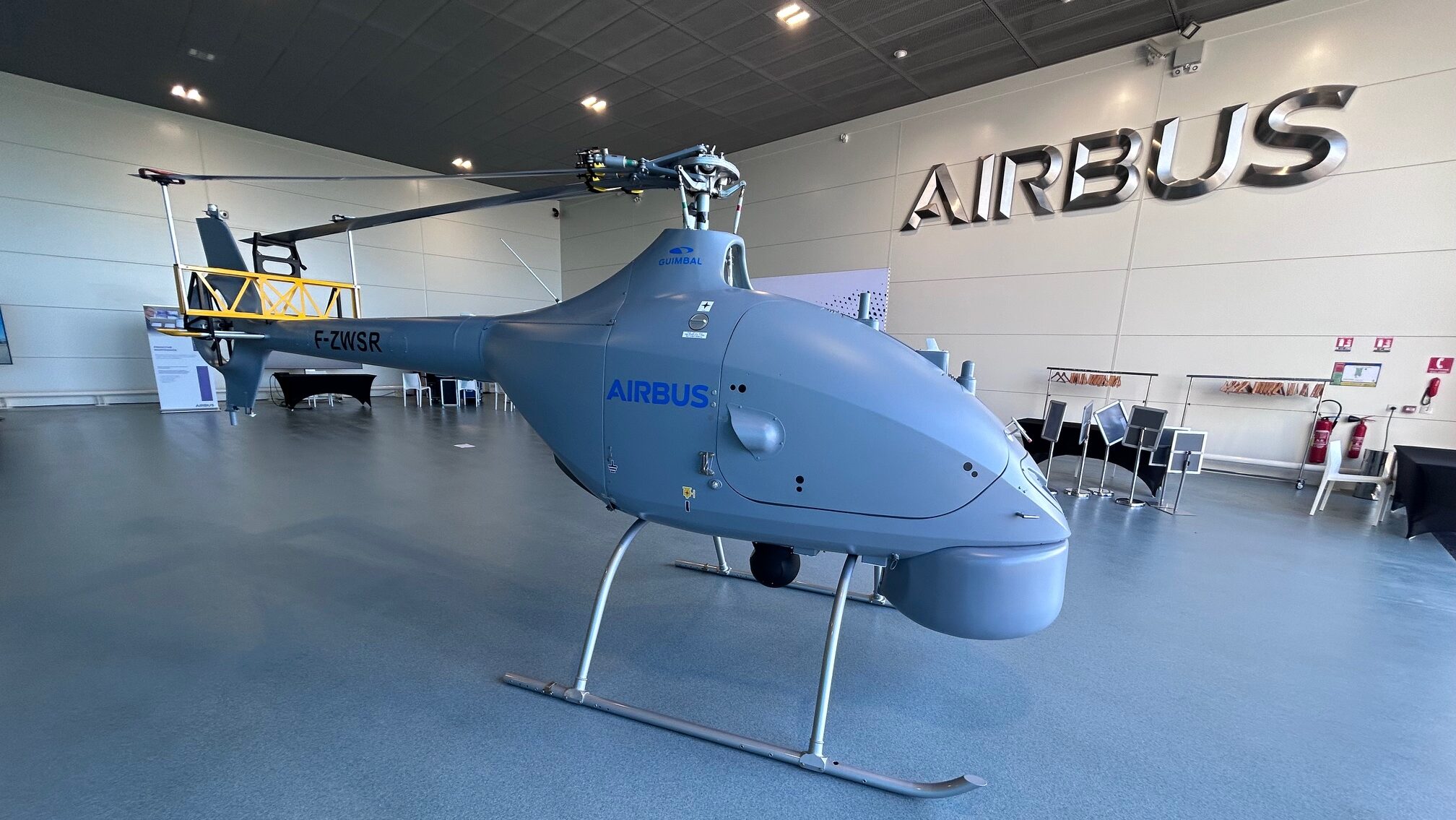
The French Navy, in collaboration with the country’s DGA military procurement agency, is poised to launch the next phase of the Airbus Helicopters VSR700 unmanned aircraft system (UAS) program within the next few weeks or months. This development will facilitate further incremental advancements for the aircraft, with entry into service projected in the next two to three years, according to Bruno Even, CEO of Airbus Helicopters.
This anticipated progression follows successful flight tests of a VSR700 demonstrator conducted off the French Navy’s multi-purpose FREMM frigate last year, an initiative that is part of the SDAM (Navy Airborne Drone System) de-risking technology effort. Airbus and Naval Group, the joint developers of the VSR700, were awarded an SDAM development contract in 2018.
During a recent press day at Airbus Helicopters’ production facility in Marignane, France, Even expressed optimism about the upcoming decision on the VSR700 program with the Navy and the French DGA. “We see the need for more unmanned capability,” he noted, emphasizing the program’s importance.
Even mentioned that discussions are ongoing regarding the size of the aircraft order, but he refrained from providing specific numbers. Under the SDAM de-risking phase, the uncrewed helicopter reportedly met all operational requirements.
According to France’s long-term defense plan for 2024-2030, the country has committed to acquiring 10 SDAM aircraft by the end of the decade and at least 15 by 2035. However, reports from June have indicated that Airbus may face competition for the SDAM production contract, particularly from Austria’s Schiebel S-300 rotary wing UAS.
The VSR700, capable of vertical takeoff and landing and based on France’s Guimbal Cabri G2 light helicopter, has been designed primarily for naval-based intelligence, surveillance, targeting, and reconnaissance (ISTAR) as well as anti-submarine warfare (ASW) operations. In a separate statement, Even revealed that the VSR700 could also be configured to undertake logistics missions for the French Army, although the design for such adaptations has yet to commence.
With the program’s evolution underway, the French Navy and Airbus are evidently positioning themselves to enhance unmanned aerial capabilities within France’s defense strategy, paving the way for increased operational flexibility and effectiveness in various military missions.