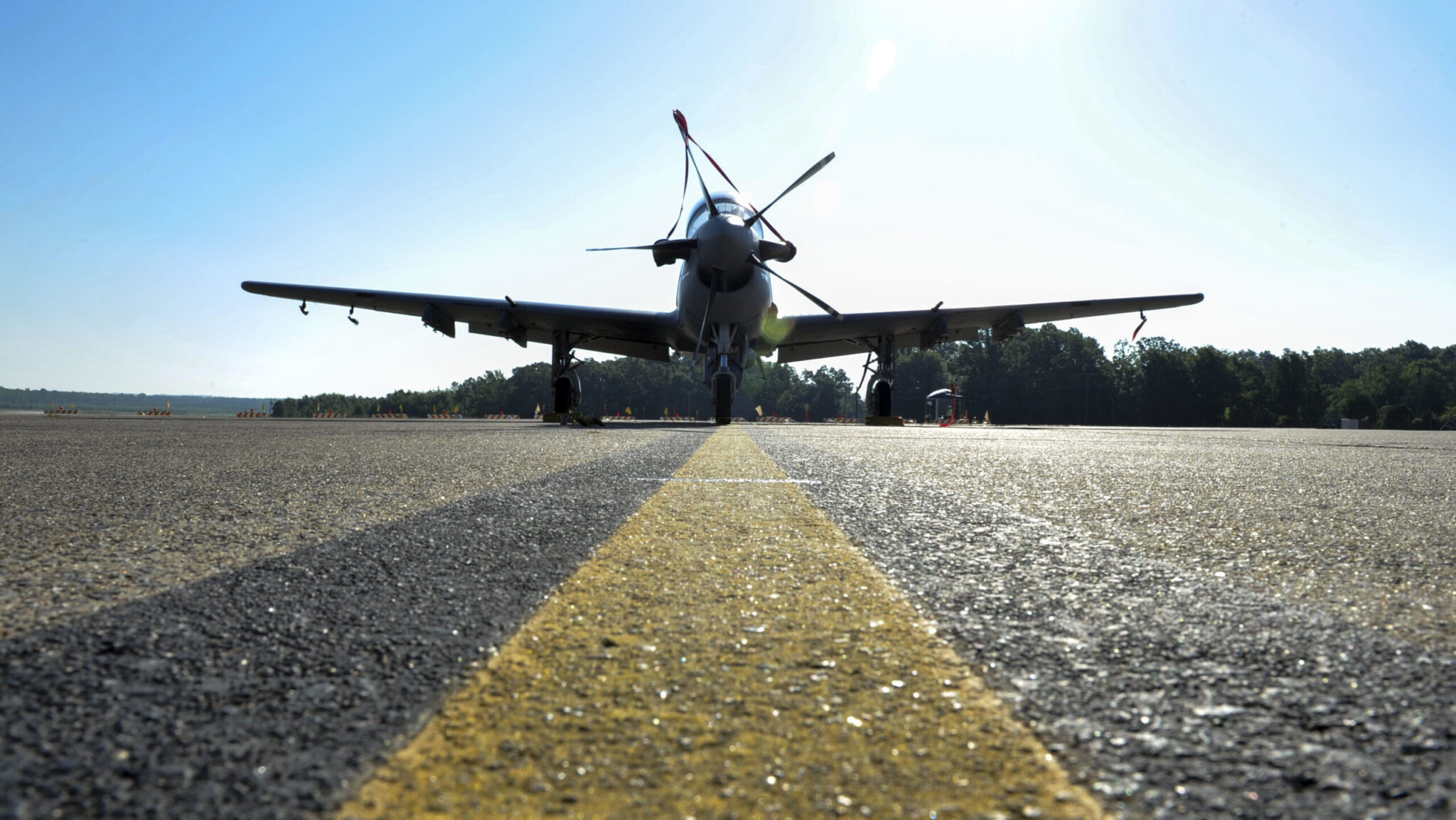
Embraer is actively pursuing new orders for its A-29 Super Tucano to maintain operations at its American final assembly line in Jacksonville, Florida, as 2025 approaches—a critical year for addressing a production gap, according to the company’s defense CEO, Bosco da Costa Jr.
The Jacksonville facility, established in 2013, was designed to produce the turboprop aircraft for the US military and Foreign Military Sales (FMS) customers, particularly for the Afghan air force pilots trained by US troops. However, with the end of US involvement in Afghanistan, production at the site has slowed significantly, reaching what da Costa termed a “minimal pace.”
“We are running the facility without big orders coming from FMS,” he stated. “We are facing a gap of production there,” while emphasizing the need to secure orders from FMS cases and possibly from the US government.
The Jacksonville plant has a production capacity of around 24 Super Tucanos per year, but currently has only four aircraft in various stages of construction. An Embraer spokesperson confirmed that these aircraft are allocated to current and near-term customers but did not disclose which countries have placed orders.
The Jacksonville operation faces challenges due to its unique structure. Most Super Tucano orders are handled through Embraer’s primary production facility in Brazil. The US-assembled A-29 variant is processed in Jacksonville before US contractor Sierra Nevada Corp. equips the aircraft with US-specific mission systems and communications gear in Colorado, serving primarily US customers or Pentagon-brokered FMS orders.
While Embraer has secured new Super Tucano contracts this year from countries including Paraguay and Uruguay, these do not contribute to filling the order gap for Jacksonville.
Da Costa emphasized the importance of 2025 for finding solutions to this production lull, stating, “The option is to find orders. That’s the only option.”
Sierra Nevada Corp. expressed its continued partnership with Embraer, focusing on A-29s and logistics support, but deferred specific inquiries about the Jacksonville plant to Embraer.
Currently, Embraer views the US military, particularly the Air Force, as a key potential customer. In the late 2010s, the Air Force considered acquiring light attack aircraft as a cost-effective alternative to traditional fighter jets. Although it procured a few A-29s and AT-6 turboprop planes for testing, plans for a full acquisition program were halted in 2019.
Earlier this month, three A-29s from that evaluation process were transferred to Edwards Air Force Base in California for use as a test platform for sensors and weapons.
“We still believe that this platform could serve the US Air Force, and we are fighting to keep this facility. But again, we are facing problems without orders and without demand,” da Costa noted.
Despite not delivering any Super Tucanos in 2023, Embraer produced approximately a dozen aircraft, including the four from Jacksonville, which are awaiting contracts for delivery. The company anticipates securing two more A-29 orders in the current year, but both are expected to be produced in Brazil.