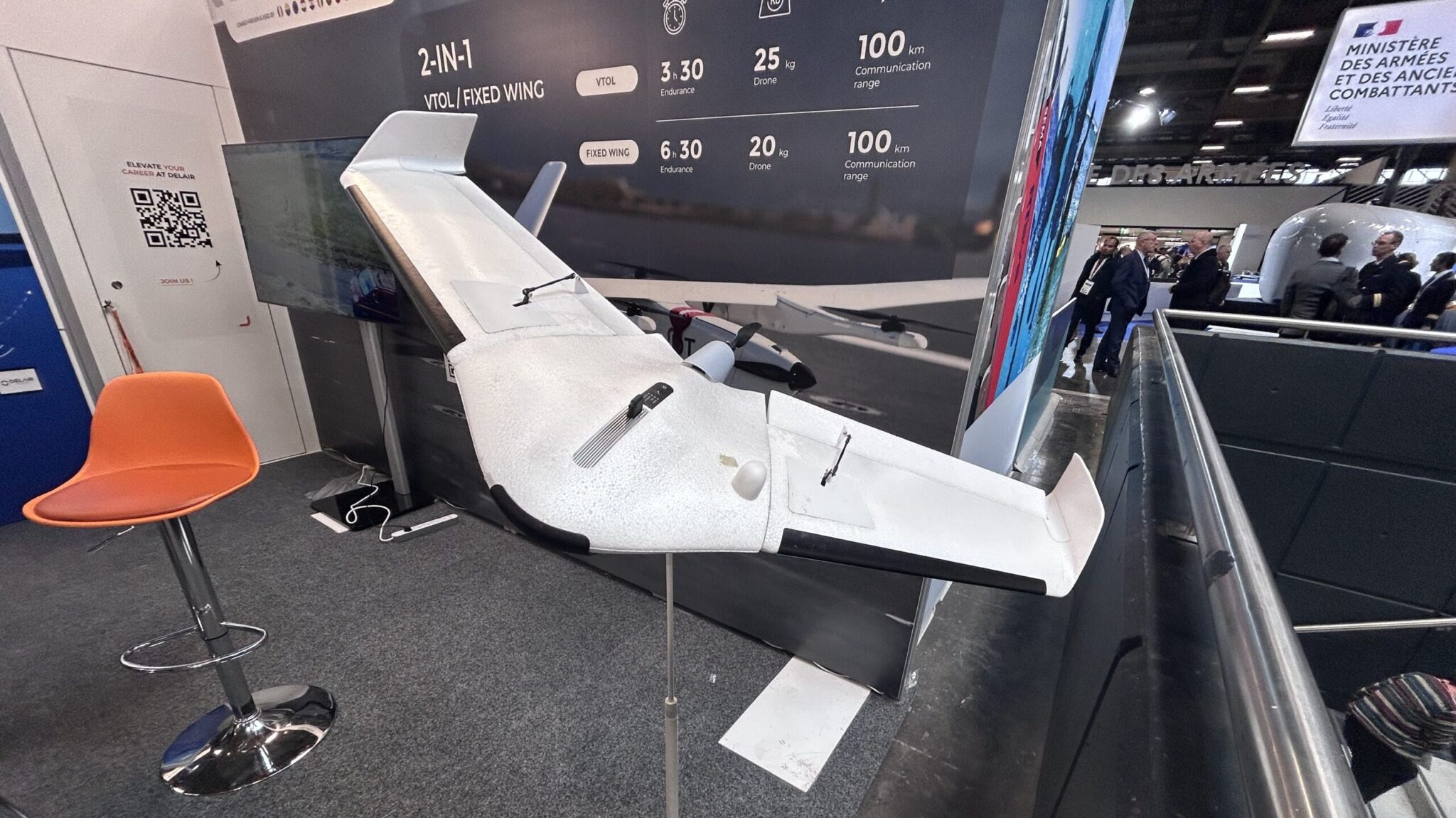
France has officially begun transporting loitering munitions to Ukraine for the first time, following the rapid development of these suicide drones over the past six months. The munitions, known as OSKAR (Opportunity Strike Kinetics Aircraft Ruggedised), are produced by French drone manufacturer Delair in collaboration with KNDS France.
According to Bastien Mancini, CEO of Delair, the OSKAR platforms are currently being sent to Ukraine under the French Colibri (Hummingbird) project, which plans to transfer a total of 100 short-range loitering munitions as part of a broader initiative to acquire 2,000 units of various types. Mancini confirmed that deliveries are underway, although he did not disclose further details about the shipments.
In October, Sébastien Lecornu, France’s Armed Forces Minister, indicated that successful testing of the loitering munitions had been completed, with deliveries expected to commence imminently.
The OSKAR system, evolved from Delair’s UX11 unmanned aerial vehicle (UAV), is equipped with a 2.3-kilogram (5-pound) warhead supplied by KNDS France. It has an operational flight time of up to 45 minutes and is designed to engage fixed targets, light vehicles, and personnel. The platform was selected as one of two solutions under the Colibri program in March.
Mancini highlighted the rapid transformation of the demonstrator into an operational product, emphasizing that the phase of development is now complete with drones being delivered to Ukraine. He noted that loitering munitions have proven to be a cost-effective alternative to anti-tank and cruise missiles, adding that US manufacturer AeroVironment had provided “thousands” of drones to Ukraine since the war began.
Delair has previously supplied Kyiv with surveillance drones, including the UX11 and DT26 models, and has received valuable feedback from these operations. However, Mancini acknowledged the ongoing threat posed by Russian electronic warfare (EW) capabilities, cautioning that the effectiveness of current platforms could change rapidly in the field.
To counteract EW threats, OSKAR employs satellite navigation-denied capabilities and features fully encrypted communication over a range of 25 kilometers (15.5 miles), according to KNDS specifications.
Additionally, Mancini mentioned Delair’s recent acquisition of Squadrone System, a French manufacturer specializing in swarming and inspection drones. This acquisition may enable the testing of multiple OSKAR units in a coordinated swarm configuration, although he refrained from disclosing the value of the transaction.
Delair is also actively participating in the Tactical Multi-Objectives Swarming UAVs (TAMOS) initiative, led by the French Defense Procurement Agency (DGA) and the Defence Innovation Agency. This two-year research and development program aims to create an interface allowing human operators to control several small UAVs for both civil and defense applications.