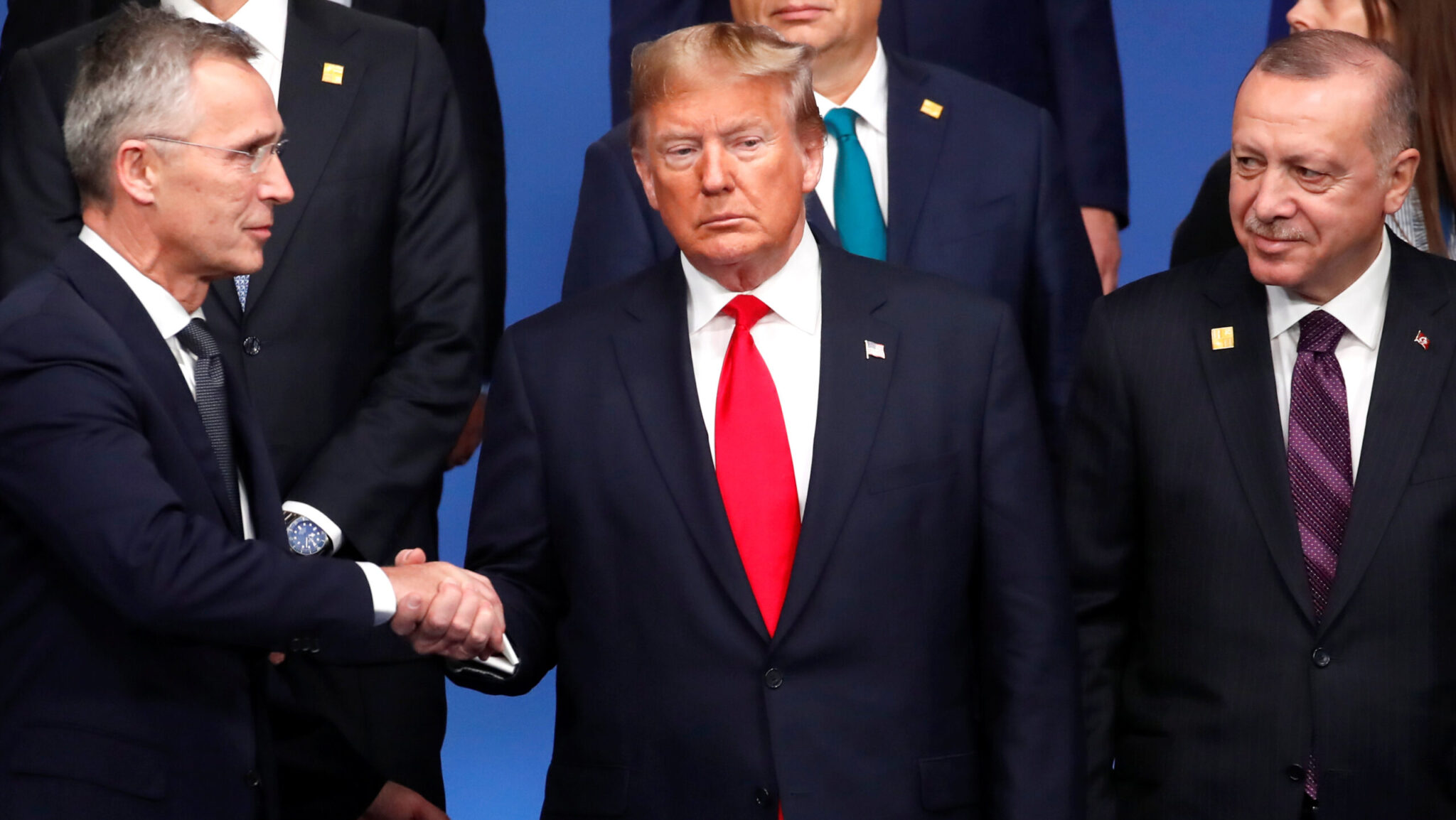
A significant shift in US and European relations is expected if Donald Trump returns to the presidency. However, several analysts argue that this may not necessarily jeopardize American support for Ukraine or NATO’s future.
“It’s crucial for us to halt [Russian President Vladimir] Putin in Ukraine, though it remains unclear what Trump’s presidency might mean for that,” stated John Herbst, former ambassador to Ukraine and senior director of the Atlantic Council’s Eurasia Center, during a recent briefing with Atlantic Council experts.
Herbst pointed out that Trump’s favorable remarks about Putin and his calls for a swift end to the conflict might be counteracted by influential voices in his administration, such as former CIA Director Mike Pompeo and former National Security Advisor Robert O’Brien, who would likely oppose reducing support for Kyiv.
“If Trump listens to the advice of his less experienced advisors and pursues a ceasefire that clearly benefits Russia, he will face backlash from many, including Republicans, for appearing to capitulate to Putin,” Herbst noted, mentioning that Trump spoke with Ukrainian President Volodymyr Zelensky immediately after winning the election.
Herbst emphasized that the potential for criticism from within Trump’s party would influence his decisions, as he would want to avoid being perceived as weak or as surrendering Ukraine to Putin, which could lead to more severe repercussions for the United States.
Other analysts, including Matthew Kroenig and Rachel Rizzo from the Atlantic Council, echoed Herbst’s assessment. They anticipate that Trump will seek a diplomatic resolution from the outset of his presidency to avoid the appearance of conceding to Russia.
“He’ll want to project strong leadership on the global stage, rather than being seen as someone who capitulates,” Rizzo remarked. “What this means for Ukraine remains uncertain, but I’m not convinced it will be an unequivocal setback for our Ukrainian allies.”
NATO Implications A Trump presidency could also significantly affect NATO, especially after he has previously questioned the alliance’s importance and criticized countries failing to meet the 2 percent GDP defense spending benchmark. Since his first term, more nations have begun to meet that target, and talks are underway to increase it to 3 percent.
With nine out of 32 NATO countries still below the threshold, Rizzo speculated that Trump’s administration may approach NATO as a series of bilateral security agreements tied to defense spending, which could potentially lead to a two-tiered NATO system, as Trump has suggested. However, Kroenig expressed doubt that this would be formalized as policy, especially given names like O’Brien, Pompeo, and Senator Tom Cotton in consideration for Trump’s cabinet.
Analysts concur that NATO Secretary General Mark Rutte will face pressure to maintain NATO’s significance and encourage all member nations to reach the 2 percent GDP goal. “That number is now at 23 — it should be at 32. Rutte needs to craft the narrative, and if part of that is letting Trump take credit for rising defense spending, then that’s acceptable; there’s likely some truth to that,” Rizzo added.
Rutte has already begun this narrative, congratulating Trump on his reelection and crediting him for the increased defense spending among NATO members. “When he was president, he motivated us to surpass the 2 percent threshold, and thanks to him, NATO members, excluding the US figures, are now above that mark,” Rutte stated ahead of a European Political Community meeting.