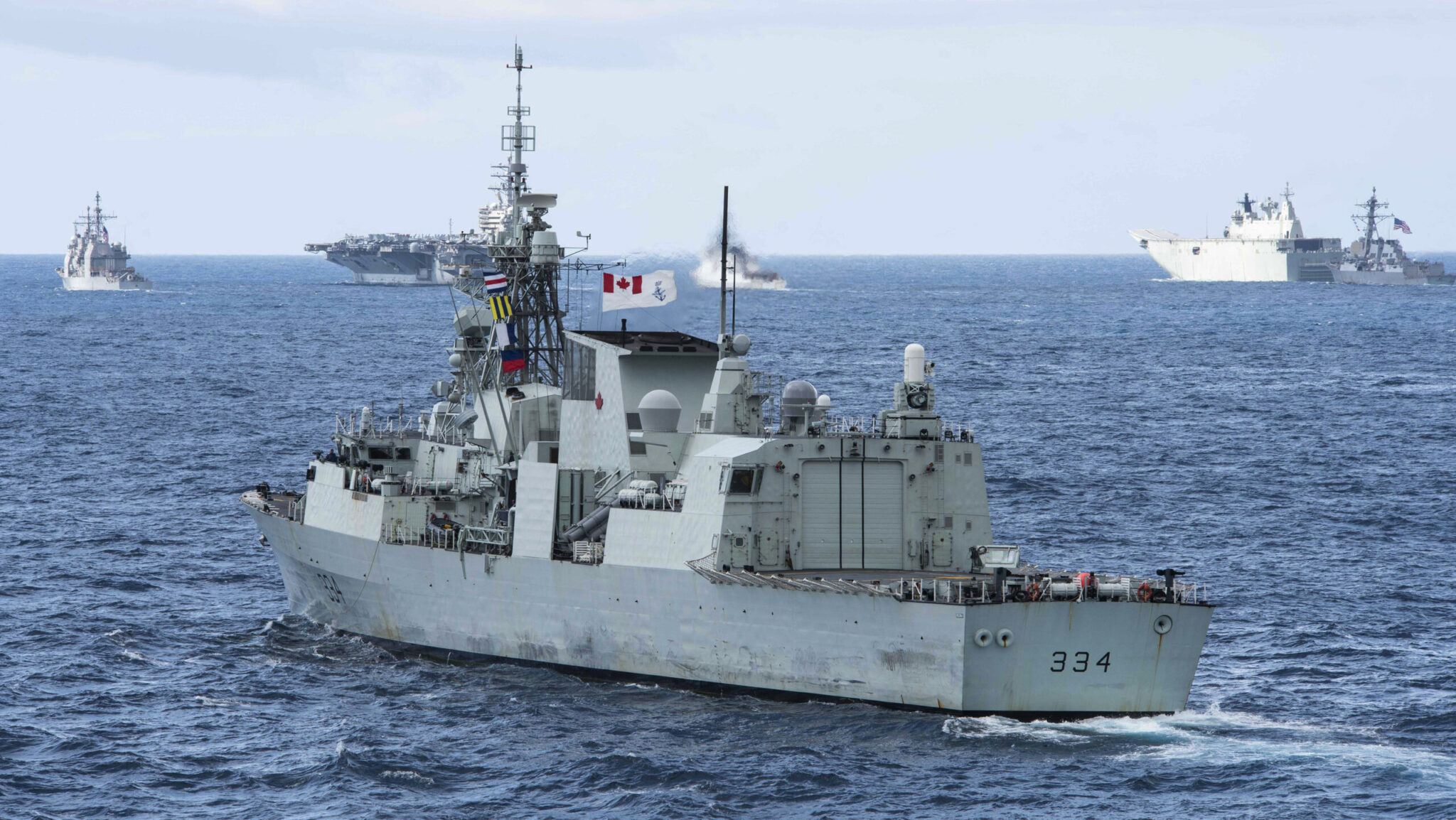
The Canadian government has awarded Lockheed Martin Canada a substantial contract valued at up to $1.85 billion Canadian dollars (approximately $1.33 billion USD) to support the continued combat system integration and in-service maintenance of the Halifax-class frigates for their remaining operational lifespan.
Glenn Copeland, the general manager of rotary and mission systems for Lockheed’s Canadian division, shared insights with Breaking Defense regarding the contract’s significance. This new agreement follows an original long-term contract that began in 2008 and has recently concluded, with options extending through 2045—the projected retirement year for the last frigate in the Royal Canadian Navy (RCN) fleet. Lockheed’s role as the systems integrator focuses on the ongoing update of the software that operates the fleet’s combat management system.
According to Bill Blair, Canada’s Minister of National Defence, “The Royal Canadian Navy’s fleet of Halifax-class frigates are the backbone of maritime operations at home and abroad. This in-service support contract will ensure our frigates remain operationally effective until the arrival of our future fleet of River-class destroyers.” Lockheed’s combat management system, known as CMS330, is already widely used throughout Canada’s naval fleet and is a critical component of the RCN’s operations.
The Halifax-class frigates, with the first ship entering service in the 1990s, have become essential vessels for the RCN. However, given their aging status and the projected need for them to remain operational into the 2040s, Canada is making efforts to extend their service life, initially expecting retirement in the 2030s.
This contract is pivotal until the Canadian Surface Combatant, now designated as the River-class destroyer, is fully operational. Built by Irving Shipbuilding, this new class will incorporate Lockheed Martin’s design, derived from BAE Systems’ Type 26 Global Combat Ship. Copeland indicated that the first three River-class ships are currently under contract, with expectations for a second contract to cover six additional vessels after a production decision is made later this year. The first of these new destroyers is anticipated to enter service in the early 2030s.
The CMS330 combat management system is also slated for installation on the River-class destroyers, which Copeland hopes will enhance its marketability for international sales, particularly in Europe. He noted, “There are many countries looking to modernize their fleets—those with MEKO-class ships or similar types—alongside nations constructing new warships that do not necessarily require the Aegis Combat System, which, while offered by Lockheed, is a more costly and specialized solution.”
Currently, the CMS330 is deployed across 42 platforms, with Copeland expressing optimism that this number will exceed 75 within the next decade. This growth reflects Lockheed Martin’s commitment to providing advanced maritime capabilities to support the Royal Canadian Navy and allied forces.