Plan for Extended Maintenance of Logistics Ships
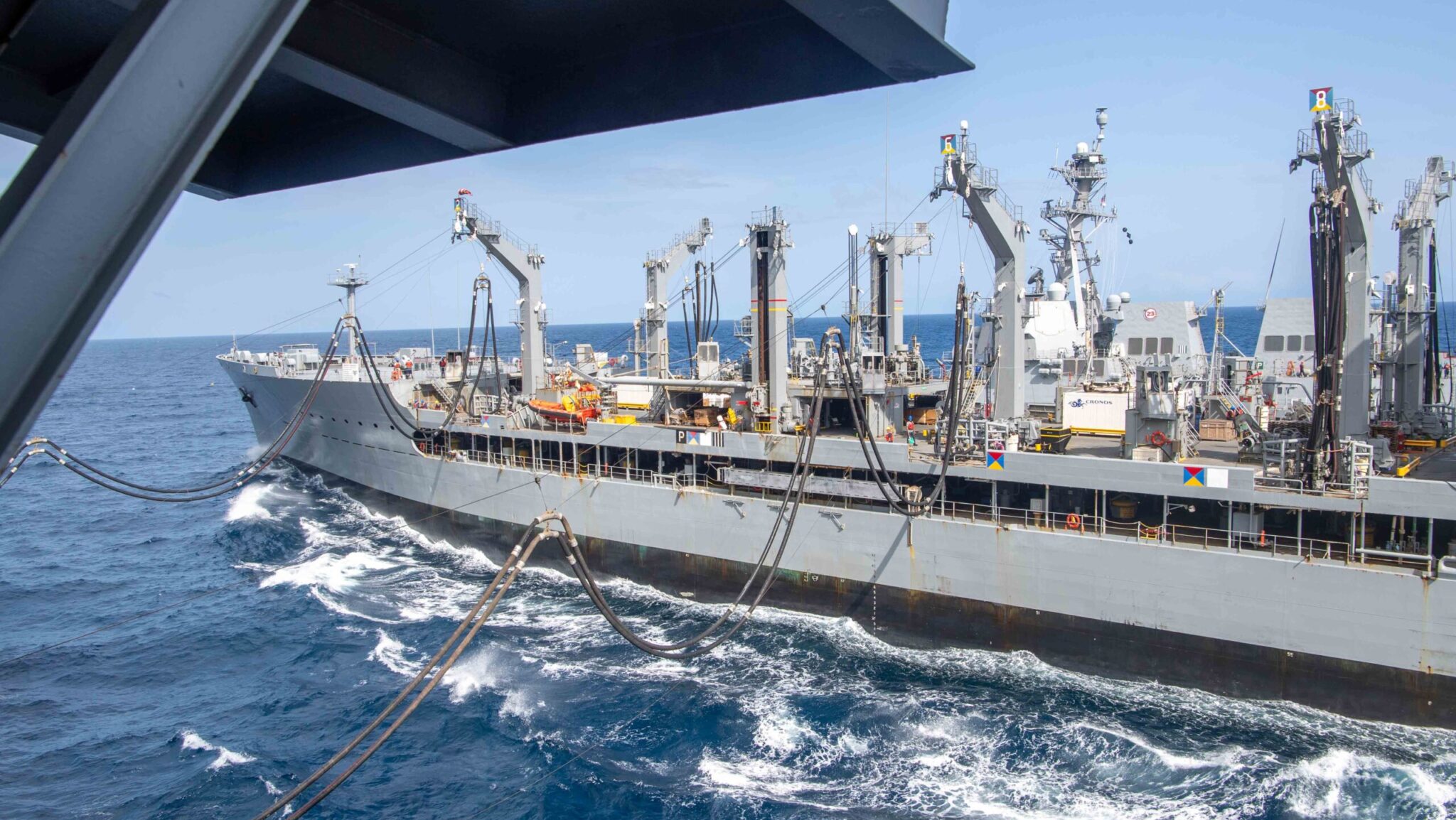
The Navy announced a new initiative late last month to place several Military Sealift Command (MSC) logistics ships into extended maintenance periods and reassign certain crews to higher-priority vessels. This decision comes as part of efforts to enhance operational efficiency amid ongoing challenges in logistic support.
Valuable Role of Civil Service Mariners
“Our civil service mariners play invaluable roles providing continuous logistics support to our deployed naval forces, and they are working overtime to sustain that mission globally,” said Navy Secretary Carlos Del Toro in a recent statement. He emphasized that this initiative will not only address current operational logistics challenges but also ensure that MSC has the necessary policies, programs, and incentives to recruit and retain future generations of civil service mariners.
MSC’s Operational Capacity and Employment
Military Sealift Command is responsible for managing civilian crews operating various support and auxiliary ships that resupply U.S. Navy warships worldwide. The organization employs approximately 5,500 civil service mariners and 1,500 contracted mariners, operating a fleet of 140 logistics supply ships, including fleet replenishment oilers and dry cargo/ammunition vessels.
Projected Ship Maintenance and Inactivation
Rear Adm. Philip Sobeck, MSC’s chief, indicated that by the end of 2026, up to 17 ships would either undergo extended maintenance or planned inactivation. While he did not disclose specific vessels involved, USNI News previously reported that the Navy was considering such measures earlier this year.
Industry-Wide Shortage of Mariners
Sobeck highlighted a critical shortage across the U.S. marine workforce, particularly among civilian mariners, impacting the ability to grow the Combat Logistics fleet. “This shortage is an industry-wide problem, and we find ourselves in direct competition with the commercial industry,” he stated. He pointed to challenges faced by MSC’s mariners, including delayed relief, extended deployments, and pay limitations. By reassigning crews, the Navy aims to create more predictable schedules and minimize overdue reliefs.
Long-Term Concerns and Shortage Statistics
The shortage of qualified merchant mariners has been a persistent issue. Ann Phillips, head of the Transportation Department’s Maritime Administration, noted that a 2017 study estimated that concurrent operations of the commercially operated U.S.-flagged fleet and sustained military sealift operations would require about 13,600 mariners with unlimited credentials. However, at that time, only roughly 11,760 mariners were qualified and actively sailing, leaving a deficit of more than 1,800 mariners.
Ongoing Shortages Within MSC
While Sobeck did not provide updated figures on the national mariner shortage, he stated that MSC is currently facing a daily shortfall of approximately 800 to 1,000 personnel.
Goals for the Future
“The goal is to fully execute MSC’s workforce initiative by the end of fiscal year 2026,” Sobeck concluded. This initiative aligns with the Chief of Naval Operations’ Project 33 goal, which aims to prepare for high-end, joint, and combined combat by 2027.