One of the key advantages that the United States believes it holds over its peer competitors is the advanced and extensive training its personnel undergo prior to deployment for missions. This belief has been further reinforced by over two and a half years of war in Ukraine, where reports have indicated that Russian recruits receive as little as two weeks of training before being sent into combat, resulting in alarmingly high casualty rates.
At this year’s Interservice/Industry Training Simulation and Education Conference (I/ITSEC), conversations with various firms and organizations indicate that the training and simulation community is striving to incorporate lessons from real-world conflicts to ensure that training remains relevant for today’s military personnel.
Speakers at this year’s conference noted that new and rapidly changing elements on the battlefield are not radically altering training and simulation requirements but rather adding new components to the training syllabus.
During the opening ceremonies, Vice Chief of Naval Operations Admiral James W. Kirby and Lt. Gen. Benjamin T. Watson, head of the USMC Training and Education Command, emphasized the critical importance of training in an era where weapon systems are becoming increasingly complex and costly.
Comparing one ground vehicle to “an F-35 on wheels,” Watson pointed out that such advanced hardware is too expensive to acquire and operate, making it impractical to subject these platforms to excessive operational tempo just to enhance proficiency. This leads to a “steeply increasing need for simulation” to reduce costs and extend the lifespan of the equipment.
The two officials also highlighted the significant role of artificial intelligence in the training and simulation domain, where it can enhance the effectiveness of military personnel through “predictive analysis.”
In a subsequent panel discussion following the industry keynote address, Watson elaborated on the challenges that US military commanders may face in future conflicts. He stated, “You cannot adequately train units and personnel once hostilities begin without leaving gaps in operational forces.”
“If you anticipate insufficient preparation time and inadequate force capacity at the onset of conflict, making high-level and realistic training a priority is essential,” Watson stated. “Failing to position your assets to be relevant when conflict arises will hinder your ability to prepare within a timely manner.”
He further stressed that any forthcoming combat scenario will involve near-constant surveillance, which the US military needs to adapt to and train for now.
The remarks made by the two officers aligned closely with the discussions and demonstrations taking place among exhibitors on the conference floor.
Originally conceived as a predominantly US Navy event, I/ITSEC has evolved into a conference that encompasses all branches of the military, US federal agencies, major defense contractors, healthcare companies, transportation experts, and cyber operatives.
“It is one of the few defense industry events where you see operators, engineers, and IT specialists in the same room, engaging in dialogues about common challenges,” stated one participant on the conference floor.
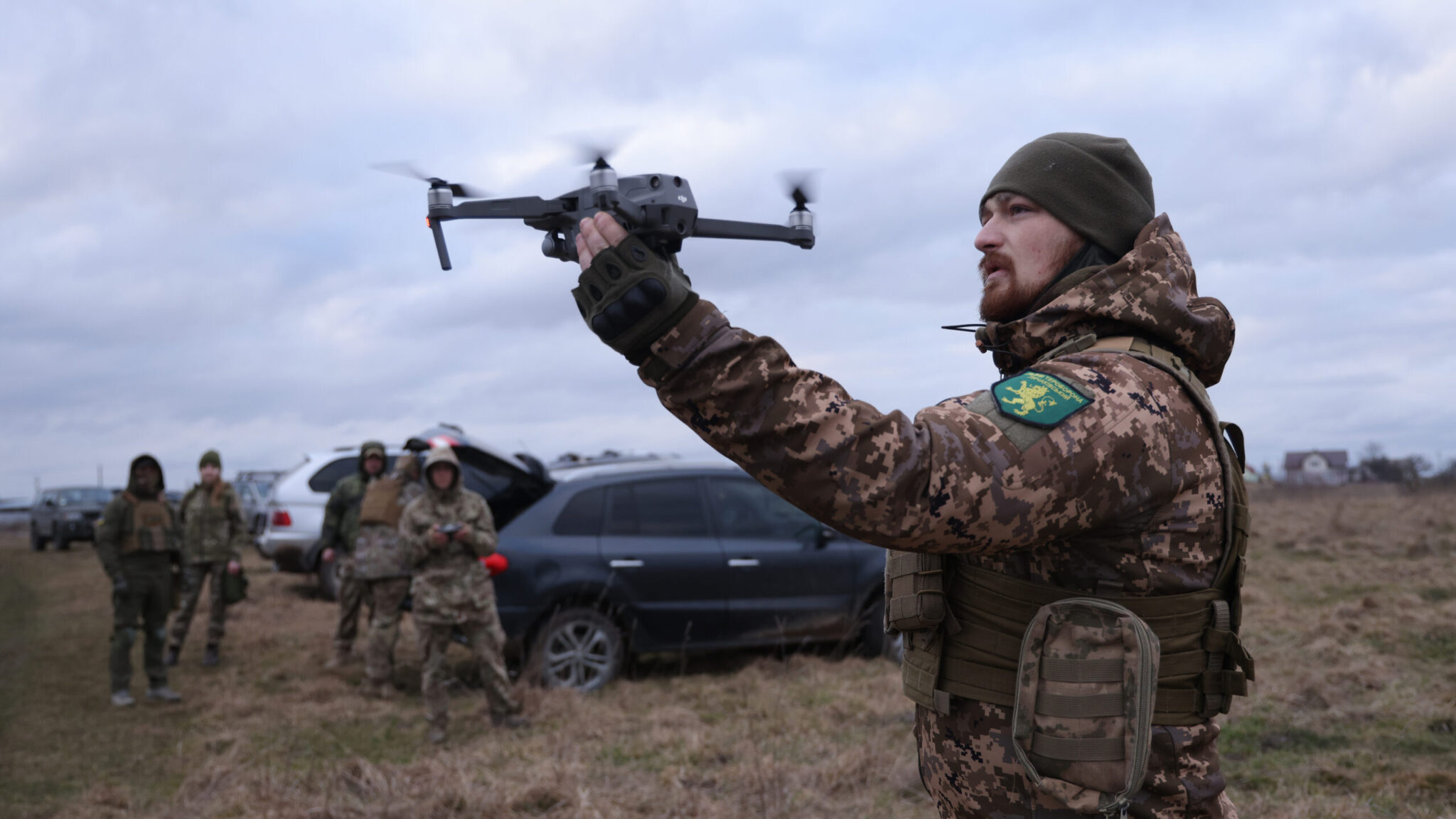
While not a major focal point of the officers’ opening comments, a tour of the exhibit hall clearly reflected an acknowledgment of the significant role that drones of various shapes, sizes, and mission profiles play on the modern battlefield. However, training and simulation for drone warfare extend beyond the need for training skilled drone pilots.
Several contractors showcased products designed to enable military personnel to counter the surge of low-altitude drones on the battlefield. This ranged from simple training systems that teach infantry how to effectively shoot down UAVs to advanced electronic warfare simulations designed to neutralize large numbers of Russian drones.
In a recent large-scale attack utilizing drones, Ukrainian electronic warfare systems successfully took down over 50 suicide drones and caused several others to return to base after their guidance systems were disrupted. This kind of large-scale electronic warfare capability will be crucial for the US and its allies to maintain.