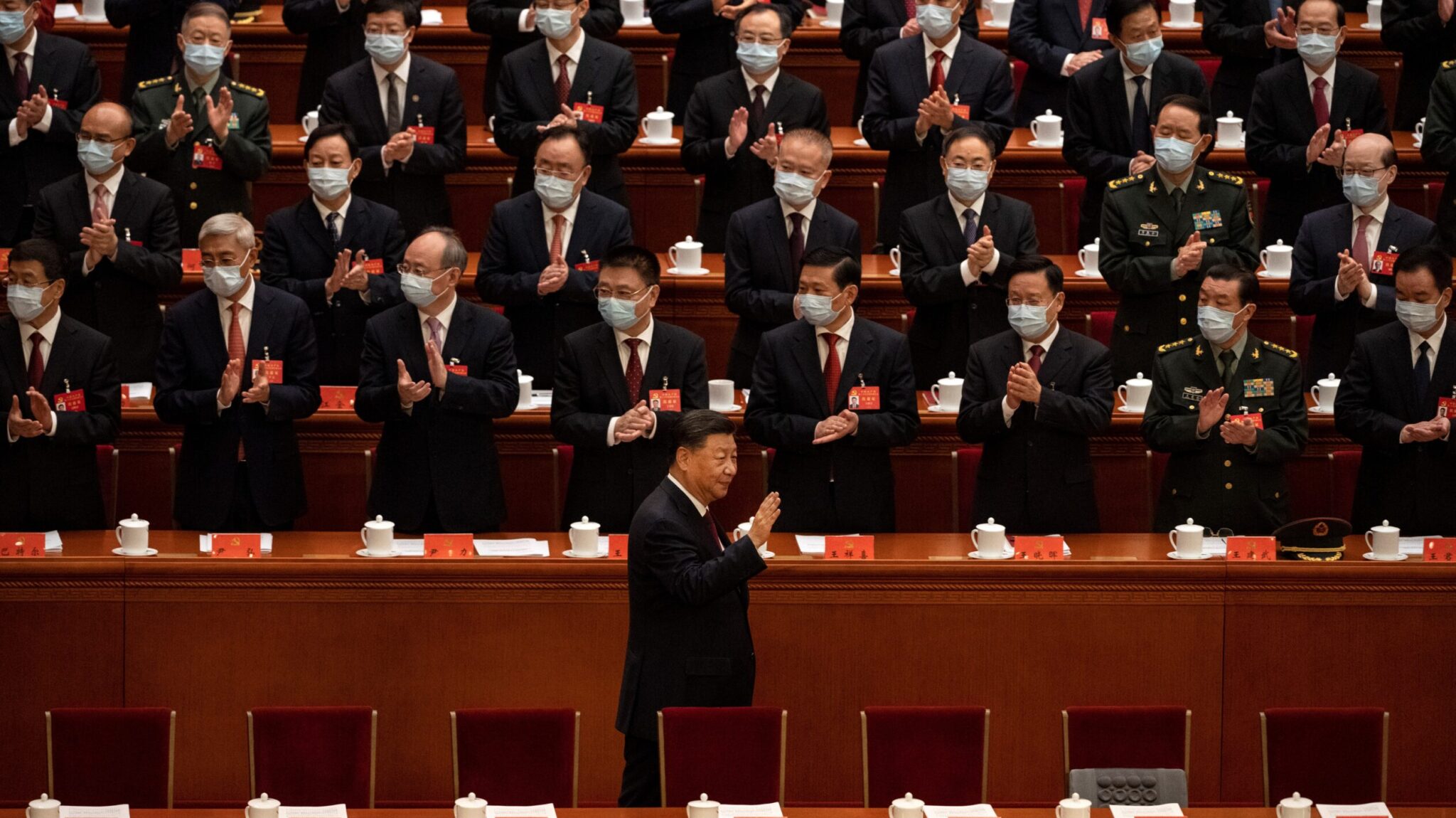
A recent public announcement regarding the investigation of a prominent figure in the Chinese military for “serious violations of discipline” has raised significant concerns among analysts, who believe this reflects a larger trend in the ongoing scrutiny of senior defense leadership. Breaking Defense reports that Miao Hua, director of the Political Work Department at the Central Military Commission (CMC), has been suspended amidst the unfolding situation.
This development marks a departure from previous actions taken against former defense ministers, who disappeared from public view before being confirmed as under investigation for corruption. According to defense expert Dean Cheng, Miao’s position is more senior than that of the defense ministers, indicating substantial ramifications for Beijing.
Miao was „directly responsible for ensuring that the People’s Liberation Army (PLA) remains loyal to the Chinese Communist Party (CCP),” Cheng noted in an email to Breaking Defense. His removal, therefore, is significant, as it directly concerns top CCP leadership. The PLA’s loyalty is critical, and any issues within the Political Work Department suggest that the military may not be fully reliable, especially in the eyes of the CCP.
The exact outcomes of these developments remain uncertain, as experts agree that investigations into corruption within the PLA Rocket Force (PLARF) reflect a more extensive and systematic scrutiny across the military. Meia Nouwens, a defense analyst from the International Institute for Strategic Studies in London, mentioned that two key factors appear at play: addressing corruption in vital service branches of the PLA and personal connections among those under investigation.
The implications are further accentuated by the unusual situation of three Chinese defense ministers being investigated for corruption and now the suspension of someone even higher in rank. Just a day prior to Miao’s announcement, reports emerged that current Defense Minister Adm. Dong Jun was also under investigation. A spokesperson for the Chinese military reportedly dismissed that allegation as “shadow-chasing” without elaboration.
Prior to Dong, Li Shangfu, the former Defense Minister, was removed from office in October of the previous year, having not been seen publicly since late August. Furthermore, the last foreign minister, Qin Gang, also vanished from the public eye for several weeks before being formally dismissed in July.
These events point to significant turmoil within the Chinese military. Having three defense ministers investigated and two publicly accused of corruption does not convey stability within the PLA. Nouwens emphasized that the investigation of Miao Hua in a senior capacity heightens the seriousness of the matter and raises questions about the interactions between foreign militaries and the PLA, which typically occur via defense ministers.
While Nouwens posits that Xi Jinping may indeed be earnest about combating corruption, Cheng cautions that the term “corruption” is often utilized by the CCP as a means to target individuals who have fallen out of favor with the leadership for various reasons.
Cheng elaborated, “This reflects a fundamental reality; Chinese officers (and officials more broadly) might be removed on corruption charges, but that doesn’t inherently mean they are corrupt. The term ‘anti-corruption’ is essentially a catch-all that is convenient in the light of Xi’s ongoing campaign against corruption, but does not necessarily reflect the true justification for someone’s removal.”
Opposition to Xi’s policy decisions could also act as a trigger for such removals, he added. The PLA has undergone substantial reforms throughout Xi’s administration, particularly in 2015 when significant restructuring occurred within the services and the CMC. Thus, the investigations into Miao and Dong Jun should be viewed alongside the removal of several high-ranking officials from the PLA Rocket Force, including Wei Fenghe and Li Shangfu.
Cheng indicated that the current purges may reflect efforts by the leadership to initiate changes in PLA doctrine and strategy that conflict with Xi’s preferences. Achieving increased resources without corresponding missions may foster resentment at higher levels, leading to further purges instigated by Xi.
He concluded by asserting that the PLA is likely due for a new doctrinal framework. Unlike the US military, which approaches doctrine differently, the Chinese military takes doctrinal changes very seriously, as such changes often result in shifts in acquisitions and organizational structure.