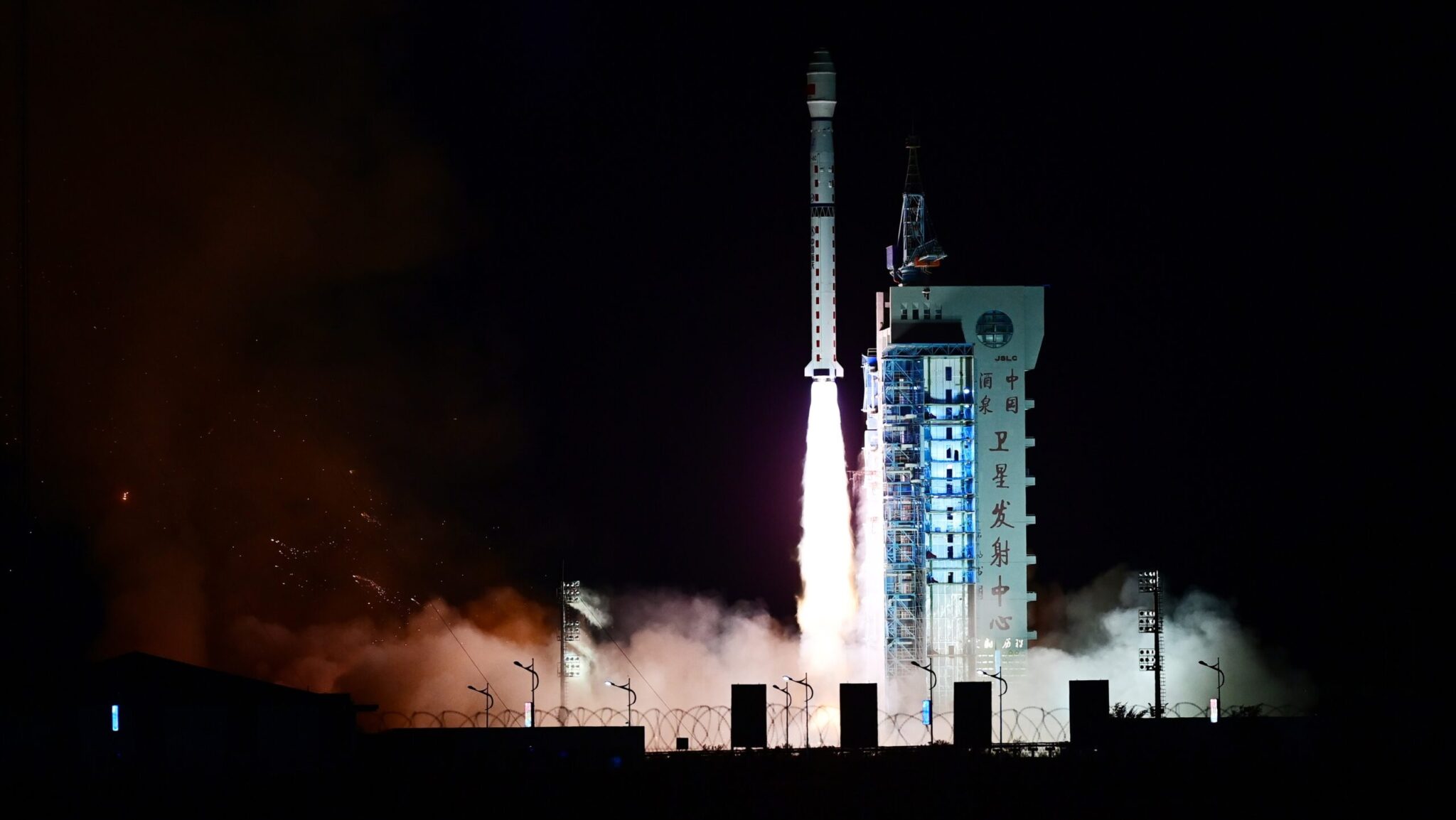
A new report prepared for Congress’s U.S.-China Economic and Security Review Commission highlights the escalating risks posed to U.S. national security by China’s rapidly advancing remote sensing capabilities. Authored by the OTH Intelligence Group, the report is titled “China’s Remote Sensing” and aims to inform and spark discussion among commission members and Congress.
The bipartisan commission, established in 2000, is tasked with providing Congress insights into the security implications of the U.S.-China trade relationship and has previously influenced legislative concerns regarding China’s economic policies.
Although the report does not represent an official endorsement from the commission, similar reports have historically informed the commission’s annual recommendations to Congress. The OTH report underscores that China’s development of advanced remote sensing technologies poses both immediate and long-term threats to U.S. security, with key findings including:
- The People’s Liberation Army (PLA) is enhancing its military modernization efforts by improving its capabilities to observe, detect, track, and target U.S. and allied forces through a combination of military and dual-use civil and commercial remote sensing technologies.
- China may secure a dominant position in remote sensing technologies that are crucial for emerging sectors, such as electric and autonomous vehicles, commercial satellite remote sensing, and the burgeoning space economy.
The report indicates that China is currently leading globally in several areas of remote sensing research, particularly in multispectral and hyperspectral imaging, radar technologies, and satellite navigation systems. Notably, China is advancing its application of machine learning and artificial intelligence to boost its remote sensing capabilities.
For instance, a report from April 2024 noted that China’s Taijing-4 03 satellite, equipped with AI processors, successfully identified and captured detailed imagery of significant U.S. naval assets, confirming the integration of military and commercial remote sensing efforts.
These findings resonate with concerns voiced by senior officials at the recent Spacepower 2024 conference, where it was emphasized that the growing number of Chinese military and commercial satellites could be leveraged against U.S. terrestrial forces.
The report includes 12 specific recommendations for Congress, including:
- Implementing regulatory and financial measures to bolster the domestic remote sensing industry and encourage investment in advanced areas such as small drones, LiDAR, and next-generation remote sensing technologies like quantum sensing. This may involve expanding funding for programs like the National Science Foundation and Small Business Innovation Research (SBIR).
- Encouraging the Department of Defense (DoD) to collaborate closely with allies to understand potential Chinese uses of improved remote sensing capabilities in conflict and reduce vulnerabilities for the U.S. and its allies.
- Supporting DoD initiatives to expedite the procurement of commercial remote sensing capabilities from the U.S. and allied countries.
- Considering funding in future defense appropriations to mitigate the impacts of enhanced Chinese remote sensing, including investments in counter-intelligence, surveillance, reconnaissance (ISR) systems, electronic warfare capabilities, and air defense systems.
As the U.S. grapples with these evolving challenges, the report emphasizes the urgency of addressing China’s advancements in remote sensing technology to safeguard national security and economic interests.