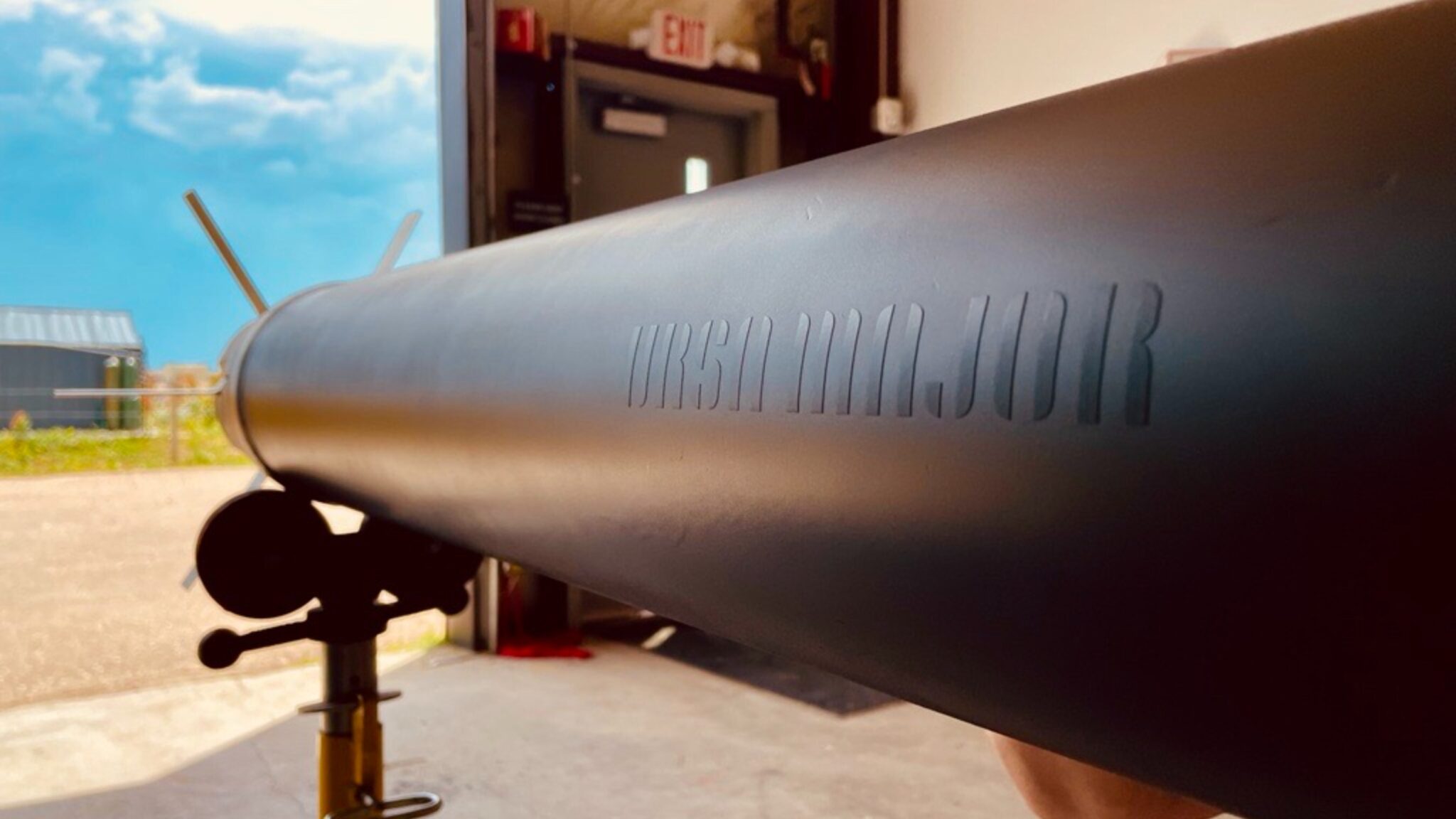
RTX’s weapons division, Raytheon, and defense startup Ursa Major Technologies have successfully completed two test flights utilizing a missile powered by a newly developed solid rocket motor. This significant achievement marks a crucial advancement for Ursa Major as it positions itself to become a third supplier of solid rocket motors for the U.S. weapons industry, with qualification of the technology targeted for 2026.
Ursa Major CEO Dan Jablonsky emphasized the rapid development timeline, stating, “This is an Army program that we’ve been working on with Raytheon. We went from concept and design to firing and flight on the range in just under four months, which is lightning fast.”
The recent test flights took place at Naval Air Weapons Station China Lake in California, featuring a Raytheon missile propelled by an Ursa Major solid rocket motor that measures less than 10 inches in diameter. However, specific details regarding the capabilities of the Ursa Major motor and the weapon being tested remain undisclosed. Jablonsky did not provide information on whether a missile from an existing program was used or the motor’s exact specifications, while a Raytheon spokesperson directed inquiries about the missile to the Army.
Looking ahead, Ursa Major plans to conduct additional test flights with Raytheon over the coming year, including tests of an extended range version of the missile. The company is also expanding its facilities to increase production capacity once the design is fully qualified.
Jablonsky indicated optimism about future opportunities, stating, “We expect to pick up programs of record in the vicinity of what we’ve just flown… and we proved out our agile manufacturing techniques in doing so.” He also mentioned that Ursa Major could provide surge capacity for existing programs with Raytheon or potentially other defense companies.
Currently, the U.S. solid rocket motor industry comprises only two main suppliers: L3Harris’s Aerojet Rocketdyne and Northrop Grumman, which acquired Orbital ATK in 2018. The industry has faced significant challenges posed by supply chain constraints stemming from the COVID-19 pandemic, exacerbating difficulties due to increased demand for weapons amid geopolitical tensions, such as the ongoing war in Ukraine.
Defense executives from major firms like RTX and Lockheed Martin have voiced concerns regarding the production capacity and scheduling issues of current suppliers, prompting them to invest in and partner with new companies to expand the industrial base. While several startups, including Ursa Major Technologies, Anduril, and X-Bow Systems, have announced intentions to enter the solid rocket motor market, their designs will require years of testing and validation.
Raytheon’s venture capital arm, RTX Ventures, has been supporting Ursa Major since 2023. Since the establishment of its solid rocket motor manufacturing cell, Ursa Major has grown its team to about 40 employees, according to Jablonsky.
Ursa Major has also developed various configurations of rocket motors ranging from two-inch diameters—suitable for shoulder-launched weapon systems—to larger 22-inch diameters intended for vertical launch systems. The company has made the strategic decision to produce its own energetics, thereby reducing reliance on existing suppliers already at capacity.
Furthermore, other defense manufacturers are forming alliances with potential new motor suppliers. In August, Lockheed Martin announced a partnership with General Dynamics Ordnance and Tactical Systems to establish GD-OTS as a solid rocket motor manufacturer for Lockheed’s Guided Multiple Launch Rocket System (GMLRS), with the first motors expected to be produced in Camden, Arkansas, around 2025. If successful, this initiative could lead GD-OTS to produce motors for additional weapon systems in the future.