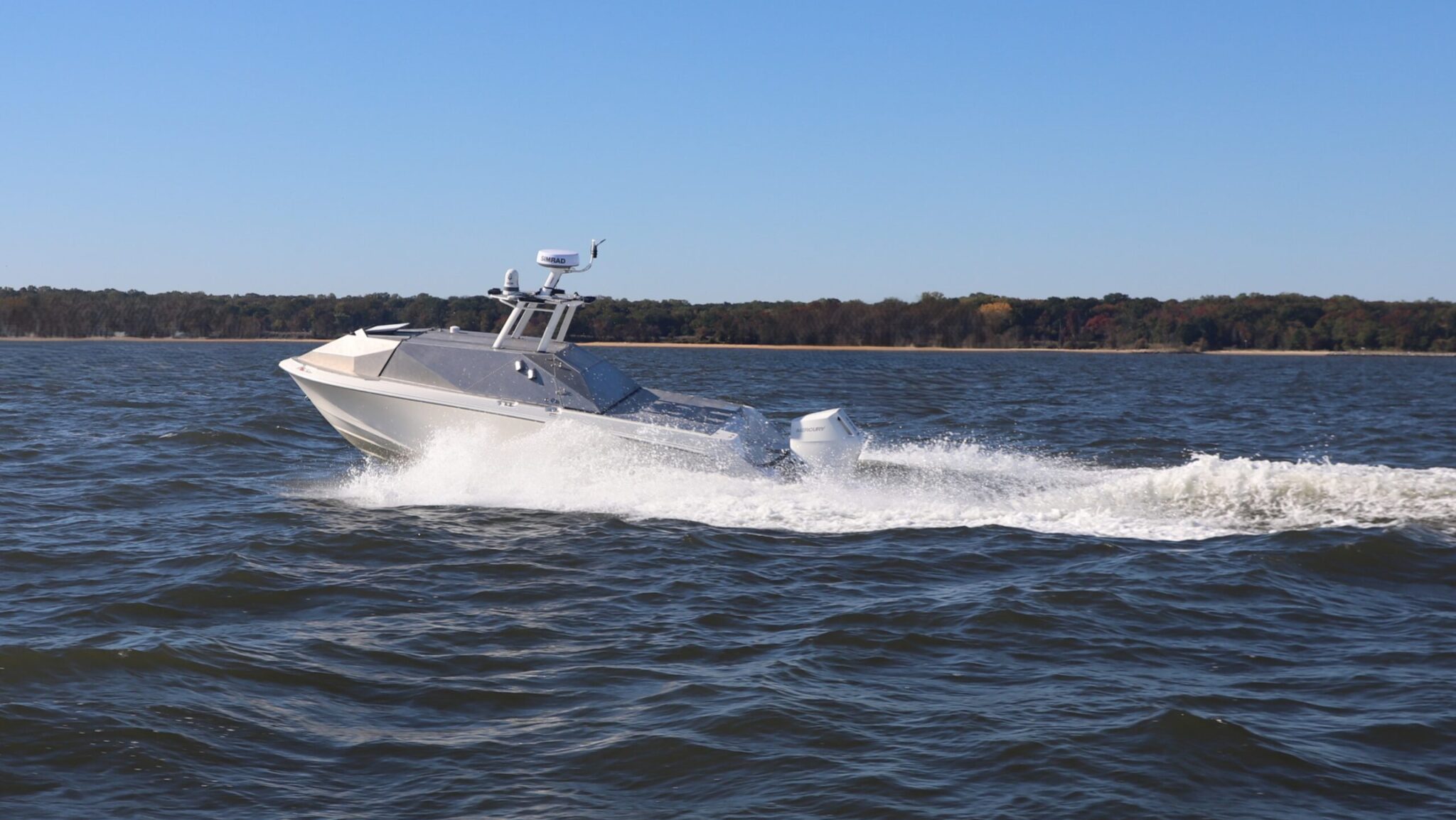
Textron Systems has announced the launch of a new family of autonomous maritime surface vessels, named Tsunami, aimed at delivering low-cost, multi-mission assets that the Pentagon has been pursuing in recent years.
“We look out across the market and evaluate our customers’ emerging needs,” stated David Phillips, a company executive, during a press briefing last week. The company has been engaged in discussions with the Navy and noted a growing interest in a small, rapidly deployable unmanned surface vehicle capable of supporting a range of missions beyond mine countermeasures.
Phillips refrained from specifying any particular contract opportunities the company aims to pursue in the short term with this new product line.
The Tsunami family of vessels features 24-, 25-, and 28-foot variants, with a payload capacity of up to 1,000 pounds and operational ranges between 600 and 1,000 nautical miles, as detailed in a company statement. These unmanned surface vehicles (USVs) are designed to operate in sea state 4 conditions, meaning they can handle moderate to rough seas. Sea states are measured on a scale from 0 to 9, with lower numbers indicating calmer conditions, while higher numbers reflect increasingly turbulent waters. Textron collaborated with Brunswick Corp., based in Illinois, in the design of these new USVs.
The US Navy has actively integrated unmanned systems into its fleet since fiscal 2020, with Textron’s “Common Unmanned Surface Vehicle” playing a crucial role in testing for a significant mine countermeasures program. However, the production contract for the USV designated for Navy use was ultimately awarded to Bollinger Shipyards.
The introduction of Textron’s new USVs comes amid a wave of similar product launches from companies like Saronic. The Navy’s operational forces have shown eagerness to use and experiment with commercially available unmanned systems whenever appropriate. For instance, Saildrone has deployed its USVs in support of the US 4th Fleet off the coast of South America and the US 5th Fleet in the Middle East as part of the service’s experimental tech office, Task Force 59.
In addition, the Navy is developing its unique unmanned vehicles tailored to its requirements through initiatives like the Extra Large Unmanned Undersea Vehicle, awarded to Boeing, and the small UUV known as Lionfish, granted to HII.
The enthusiasm for such vessels extends beyond the United States. According to Breaking Defense, France’s Naval Group, a key contractor for the French Navy and the nation’s shipbuilder, has introduced its first USV, named “Seaquest.”