Introduction:
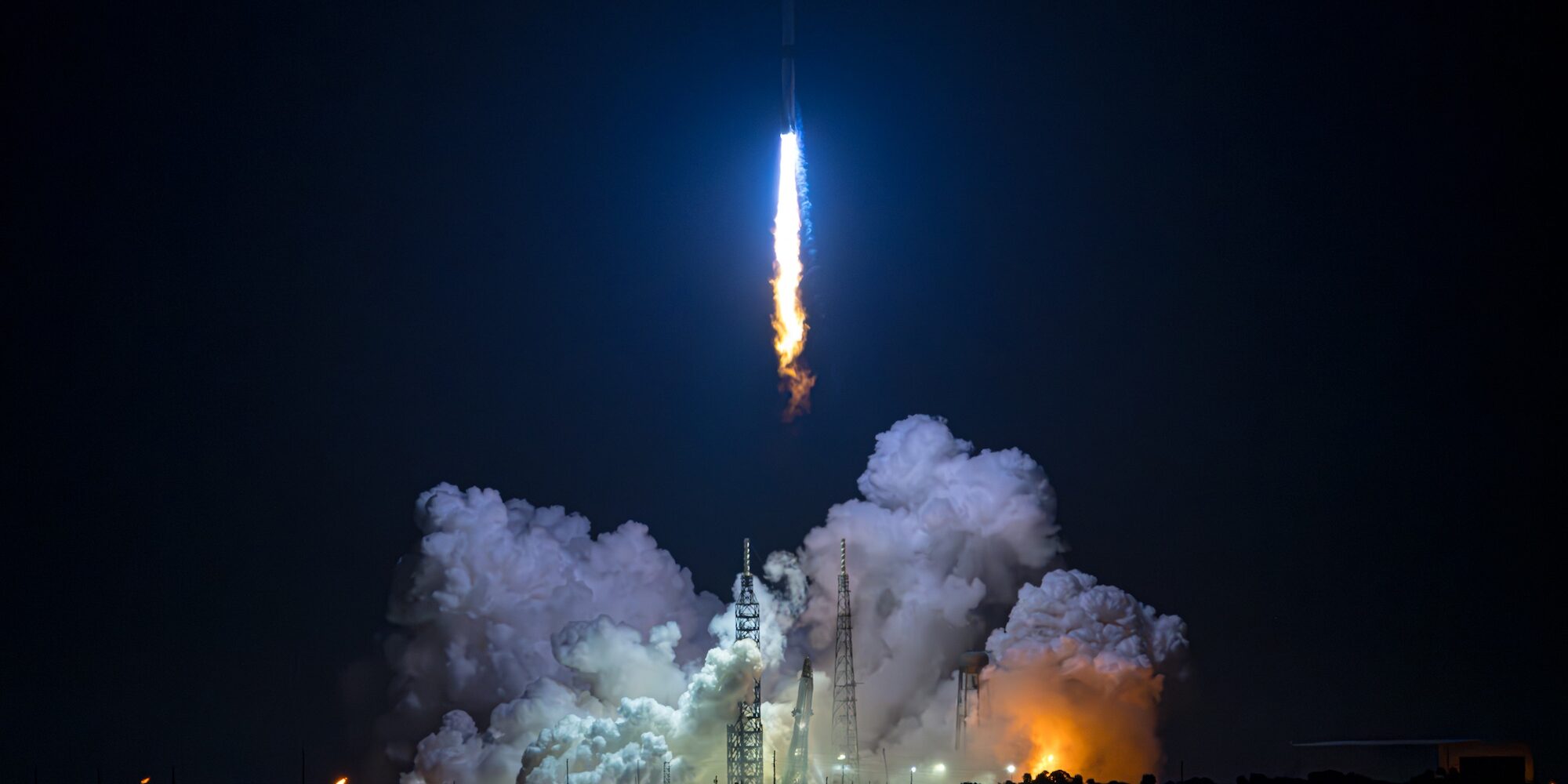
Blue Origin, the space launch company established by billionaire Jeff Bezos nearly 25 years ago, successfully conducted its first test of the New Glenn heavy-lift rocket early this morning. The rocket successfully lifted the company’s Blue Ring Pathfinder demonstration spacecraft to orbit, in collaboration with the Pentagon’s Defense Innovation Unit (DIU).
New Glenn’s Inaugural Test Launch Marks a Significant Milestone:
The achievement of the New Glenn rocket’s testing success is likely to resonate with the Space Force, which views this launch vehicle as a potential competitor to SpaceX’s Falcon series rockets, dominating critical launches under the Defense Department’s National Security Space Launch program.
Rocket’s Capabilities and Performance Details:
The impressive two-stage New Glenn rocket, named in honor of astronaut John Glenn, has the capacity to transport over 13 metric tons to geostationary transfer orbit and up to 45 metric tons to low Earth orbit. While the rocket performed as anticipated, the reusable first stage did not successfully land on Blue Origin’s recovery ship, “Jackyln,” named after Bezos’s mother. However, the NG-1 test mission is being celebrated as a success both within and beyond the company.
Reactions from Industry Leaders and Officials:
Blue Origin’s CEO, Dave Limp, expressed pride in the rocket achieving orbit on its first attempt. He acknowledged the ambitious goal of landing the booster, named “So You’re Telling Me There’s a Chance,” on its initial try and highlighted the lessons to be learned for future launches. Clay Mowry, CEO of the American Institute of Aeronautics and Astronautics, also praised the milestone, emphasizing the notable technical advancements made during this first attempt.
Future Aspirations and Competition in the Space Launch Market:
Looking ahead, Blue Origin aims to quickly complete two certification flights to compete for the National Security Space Launch (NSSL) Phase 3 program’s Lane 2, which pertains to launches of high-priority payloads and those targeting more challenging orbits. SpaceX’s Falcon 9 and Falcon Heavy are currently the only vehicles certified for such launches.
Pentagon’s Ongoing Partnerships and Prototype Contracts:
On January 5, the DIU announced advancement in three prototype contracts under its Orbital Logistics Vehicle Project, which includes collaborations with Blue Origin’s Blue Ring platform used for heavy utility multi-orbit logistics, Northrop Grumman’s Space Logistics offering refueling technologies, and Spacebilt’s work on in-space assembly and manufacturing for Department of Defense applications.
Introduction:
Blue Origin, the space launch company established by billionaire Jeff Bezos nearly 25 years ago, successfully conducted its first test of the New Glenn heavy-lift rocket early this morning. The rocket successfully lifted the company’s Blue Ring Pathfinder demonstration spacecraft to orbit, in collaboration with the Pentagon’s Defense Innovation Unit (DIU).
New Glenn’s Inaugural Test Launch Marks a Significant Milestone: The achievement of the New Glenn rocket’s testing success is likely to resonate with the Space Force, which views this launch vehicle as a potential competitor to SpaceX’s Falcon series rockets, dominating critical launches under the Defense Department’s National Security Space Launch program.
Rocket’s Capabilities and Performance Details:
The impressive two-stage New Glenn rocket, named in honor of astronaut John Glenn, has the capacity to transport over 13 metric tons to geostationary transfer orbit and up to 45 metric tons to low Earth orbit. While the rocket performed as anticipated, the reusable first stage did not successfully land on Blue Origin’s recovery ship, “Jackyln,” named after Bezos’s mother. However, the NG-1 test mission is being celebrated as a success both within and beyond the company.
Reactions from Industry Leaders and Officials:
Blue Origin’s CEO, Dave Limp, expressed pride in the rocket achieving orbit on its first attempt. He acknowledged the ambitious goal of landing the booster, named “So You’re Telling Me There’s a Chance,” on its initial try and highlighted the lessons to be learned for future launches. Clay Mowry, CEO of the American Institute of Aeronautics and Astronautics, also praised the milestone, emphasizing the notable technical advancements made during this first attempt.
Future Aspirations and Competition in the Space Launch Market:
Looking ahead, Blue Origin aims to quickly complete two certification flights to compete for the National Security Space Launch (NSSL) Phase 3 program’s Lane 2, which pertains to launches of high-priority payloads and those targeting more challenging orbits. SpaceX’s Falcon 9 and Falcon Heavy are currently the only vehicles certified for such launches.
Pentagon’s Ongoing Partnerships and Prototype Contracts:
On January 5, the DIU announced advancement in three prototype contracts under its Orbital Logistics Vehicle Project, which includes collaborations with Blue Origin’s Blue Ring platform used for heavy utility multi-orbit logistics, Northrop Grumman’s Space Logistics offering refueling technologies, and Spacebilt’s work on in-space assembly and manufacturing for Department of Defense applications.