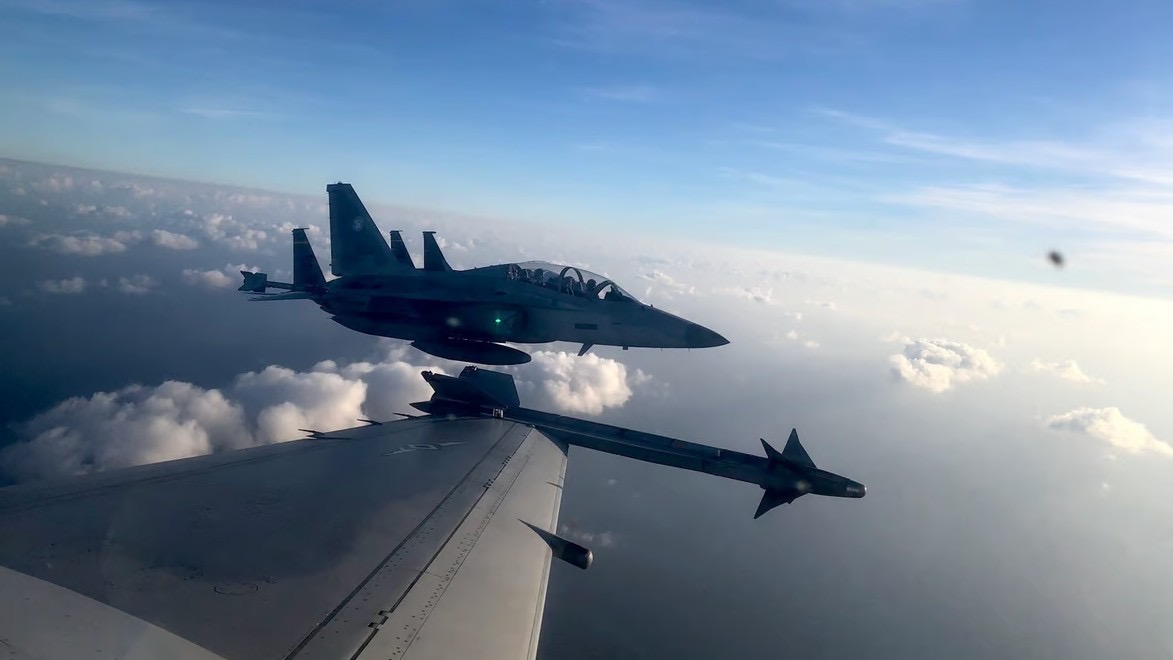
A Strategic Enhancement The Philippines has made a significant decision to enhance its air defense capabilities by doubling its FA-50 light fighter fleet. The government has reportedly opted to purchase an additional 12 aircraft from South Korea, a move that analysts suggest may not deter China but could challenge Beijing’s regional ambitions.
Details of the New Order The announcement, detailed in a report from the Philippines Department of National Defense, indicates that the acquisition is valued at approximately P40 billion ($683 million). Although the Procurement Monitoring Report did not specify the number of aircraft, sources like the Asia Pacific Defense Journal confirm the order for a dozen units.
Military Implications and Regional Dynamics Analysts emphasize that this addition significantly enhances the operational capabilities of the Philippines’ vast archipelago. However, they caution that these fighters are unlikely to pose a serious threat to China’s advanced aircraft, such as the J-20. China’s persistent military pressure in the region, particularly concerning territorial claims in the South China Sea, continues to be a challenge for Philippine forces.
Shifts in Foreign Policy and Alliances This new procurement strengthens the Philippines’ ties with South Korea, following an earlier commitment of $420 million in 2014. John Blaxland, an expert from The Australian National University, notes that this reflects a strategic pivot away from past policies that had allowed the Philippine Air Force to diminish over time. China’s aggressive tactics, particularly through its maritime militia, have inadvertently spurred the Philippines to cooperate more closely with the United States and other allies, including Australia and Japan.
Context of South Korean Relations While the collaboration with South Korea is significant, Blaxland warns against overestimating its implications due to the current political instability in Korea, which may lead to changes in defense policy priorities.
Technical Capabilities of the FA-50 The FA-50 fighter jets, as articulated by Malcolm Davis from the Australian Strategic Policy Institute, are effective lightweight platforms. When operated by skilled pilots, they could challenge the older aircraft within the People’s Liberation Army Air Force (PLAAF). However, given their current armament—limited to within-visual-range missiles—they remain at a disadvantage against newer Chinese models equipped for extended-range combat.
Future Considerations for Regional Stability The overarching concern remains whether China’s assertive claims in the South China Sea will wane in light of the Philippines’ bolstered defense capabilities. Blaxland asserts that China will closely monitor the situation to see how this acquisition influences Filipino defense strategies, though meaningful changes are likely years away as training and integration into the Philippine Air Force occur.
Conclusion: Incremental Improvement in Defense Readiness Despite the enhancements, experts believe that the Philippine Air Force remains one of the weakest in the region, with capabilities still lagging behind historical levels from the Pacific War era. Davis anticipates that the PLAAF may not substantially alter its operational strategies due to the additional squadron, suggesting a continuity of current readiness and posture.