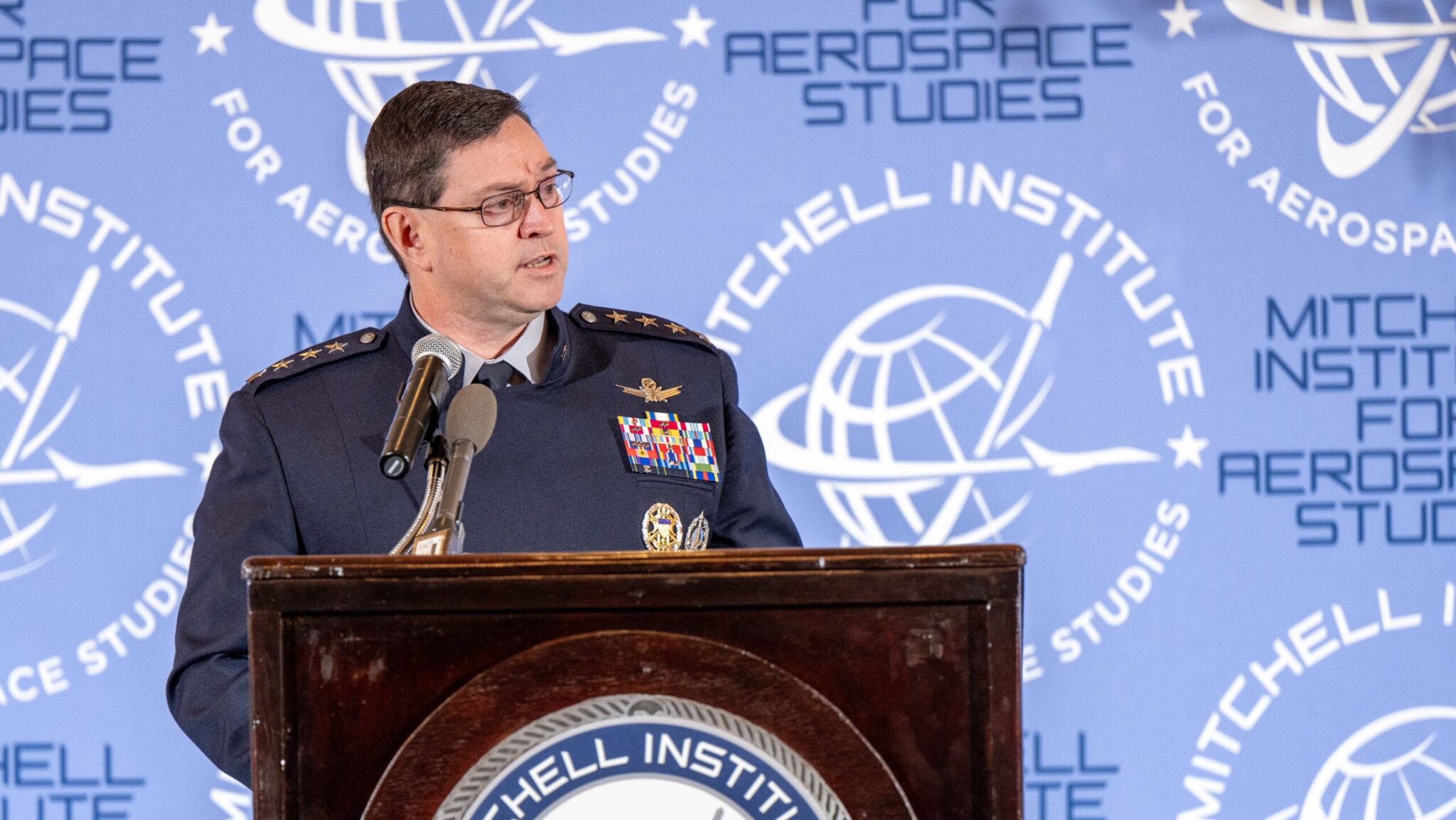
Overview of the Directive
Chief of Space Operations Gen. Chance Saltzman has issued a directive prohibiting all Space Force personnel from participating in events sponsored by the Mitchell Institute, signaling a significant shift in interactions between the military and the think tank. This ban was communicated via an email from Maj. Gen. Steven Whitney, the Space Force staff director, and will remain in effect until further instructions are provided.
Details of the Directive
The email, sent to Space Force and US Space Command leadership, specifically mentions that participation in Mitchell-sponsored events is halted, but attendance at the Air Force Association’s Warfare Symposium remains unaffected. The guidance also requests that leaders disseminate the information to their teams.
While the email does not explicitly state the reason for the ban, it comes in the wake of a Mitchell Institute report released on February 19, which urged the Department of Defense to clarify the Space Force’s role in warfighting. The report concluded that Saltzman’s framework for space power, known as “Competitive Endurance,” appears to lean heavily toward defensive postures rather than emphasizing offensive capabilities, reflecting ongoing hesitations among Guardians regarding space as a warfighting domain.
Background on the Mitchell Institute
The Mitchell Institute for Aerospace Studies operates as a 501(c)(3) independent think tank that traditionally advocates for U.S. military air power and, increasingly, space power. It is named after Army Brig. Gen. William Mitchell, a pioneer of early airpower concepts and their significance for future military operations and global security.
Response from the Mitchell Institute
In response to the directive, retired Air Force Lt. Gen. David Deptula, dean of the Mitchell Institute, acknowledged Gen. Saltzman’s commitment to fostering a warfighting mindset within the Space Force. He pointed out that for many decades, military personnel were discouraged from associating the terms „warfighting” and „space” together in discussions. However, current geopolitical dynamics necessitate a change in this perception.
Deptula stated, “The Space Force leadership knows this and is pressing hard to evolve the service.” He reinforced the Mitchell Institute’s ongoing commitment to advocate for the Space Force, emphasizing the imperative to enhance its resources, personnel, and authority essential for achieving a posture of “peace through strength.”
Conclusion
The decision to halt Space Force personnel engagement with the Mitchell Institute reflects the complexities and evolving dynamics within military strategy regarding space operations. It underscores the critical dialogue ongoing within the Space Force about its future roles and responsibilities, especially in the context of potential adversarial threats. As the situation develops, the Space Force’s relationship with external organizations like the Mitchell Institute will be pivotal in shaping its advocacy and strategic posture in the realm of space power.