Significant Progress in Engine Development
Engine manufacturers GE Aerospace and Pratt & Whitney, a subsidiary of RTX, have both attained a crucial design milestone in the Air Force’s Next Generation Adaptive Propulsion (NGAP) program. Both companies have successfully cleared the Detailed Design Review (DDR), enabling them to move forward with the construction of their respective prototypes.
GE Aerospace’s Achievement
On Wednesday, GE Aerospace announced that its prototype, designated the XA102, has passed the DDR. This milestone represents the final hurdle before the manufacturing phase begins. Steve Russell, the vice president and general manager of Edison Works at GE Aerospace, emphasized the company’s innovative model-based engineering approach as a significant factor in the XA102’s success and stated their commitment to collaborating with supply chain partners as they transition into the procurement and build phase.
Pratt & Whitney’s Announcement
In a parallel development, Pratt & Whitney reported that its NGAP prototype, known as the XA103, also achieved the DDR milestone. Pratt highlighted the completion of its “first fully digital” DDR, showcasing the increasing role of digital design tools in Pentagon weapon system development. Chris Flynn, Pratt’s vice president of Military Development Programs, reaffirmed the company’s commitment to advancing propulsion capabilities for the U.S. Air Force, citing a long history of collaboration on jet engine development since World War II.
Context and Future Prospects
The announcements from both companies come after the Air Force expanded contract ceilings for each vendor to $3.5 billion in a recent round of awarded contracts for the NGAP program. As the prototypes undergo testing later this decade, the Air Force is expected to evaluate their performance and make a decision on which engine will proceed into production.
The Promise of Adaptive Engine Technologies
The adaptive engine technologies central to the NGAP program have the potential to significantly enhance military propulsion systems. These engines are designed to adjust their operational characteristics in-flight, allowing for improved fuel efficiency during cruising and increased thrust when necessary. Both GE and Pratt’s designs leverage insights gained from previous work under the Adaptive Engine Transition Program, which had developed a prototype engine for the F-35 but was ultimately sidelined due to budget constraints.
Connection to Next Generation Air Dominance (NGAD)
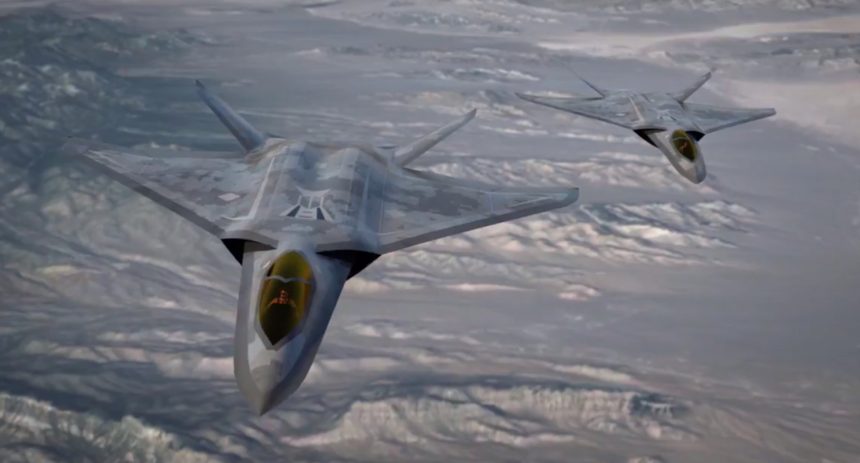
The NGAP engines are intended primarily for the Air Force’s Next Generation Air Dominance (NGAD) fighter, a sixth-generation aircraft currently under review following a pause by the Biden administration. The NGAD is the only known military program set to utilize adaptive engine technologies, while the Navy’s next-generation F/A-XX fighter is expected to rely on more traditional propulsion methods.
Former Air Force Secretary Frank Kendall had identified the NGAP engine as a potential avenue for reducing costs associated with the NGAD fighter, which is projected to be several hundred million dollars per unit. Simplifying the engine design could play a crucial role in making the aircraft more economically viable.
Implications for Future Budget Decisions
Recent internal analyses have confirmed the need for a manned sixth-generation fighter. However, the Trump administration’s forthcoming decisions regarding defense spending remain uncertain. The NGAD program is subject to the recent directive from Secretary Hegseth to reduce projected spending across the board by 8% over the next five fiscal years, with some projects, such as the Collaborative Combat Aircraft, explicitly protected from cuts.
Conclusion
The successful completion of the DDR by both GE Aerospace and Pratt & Whitney signifies a critical step forward in the development of advanced propulsion systems for the U.S. Air Force. As the prototypes progress into the construction phase, the potential benefits of adaptive engine technologies for future military aviation remain a central focus for both defense contractors and Air Force leadership amid ongoing budget discussions and strategic evaluations.