Democrats Raise National Security and Ethics Alarm Flags
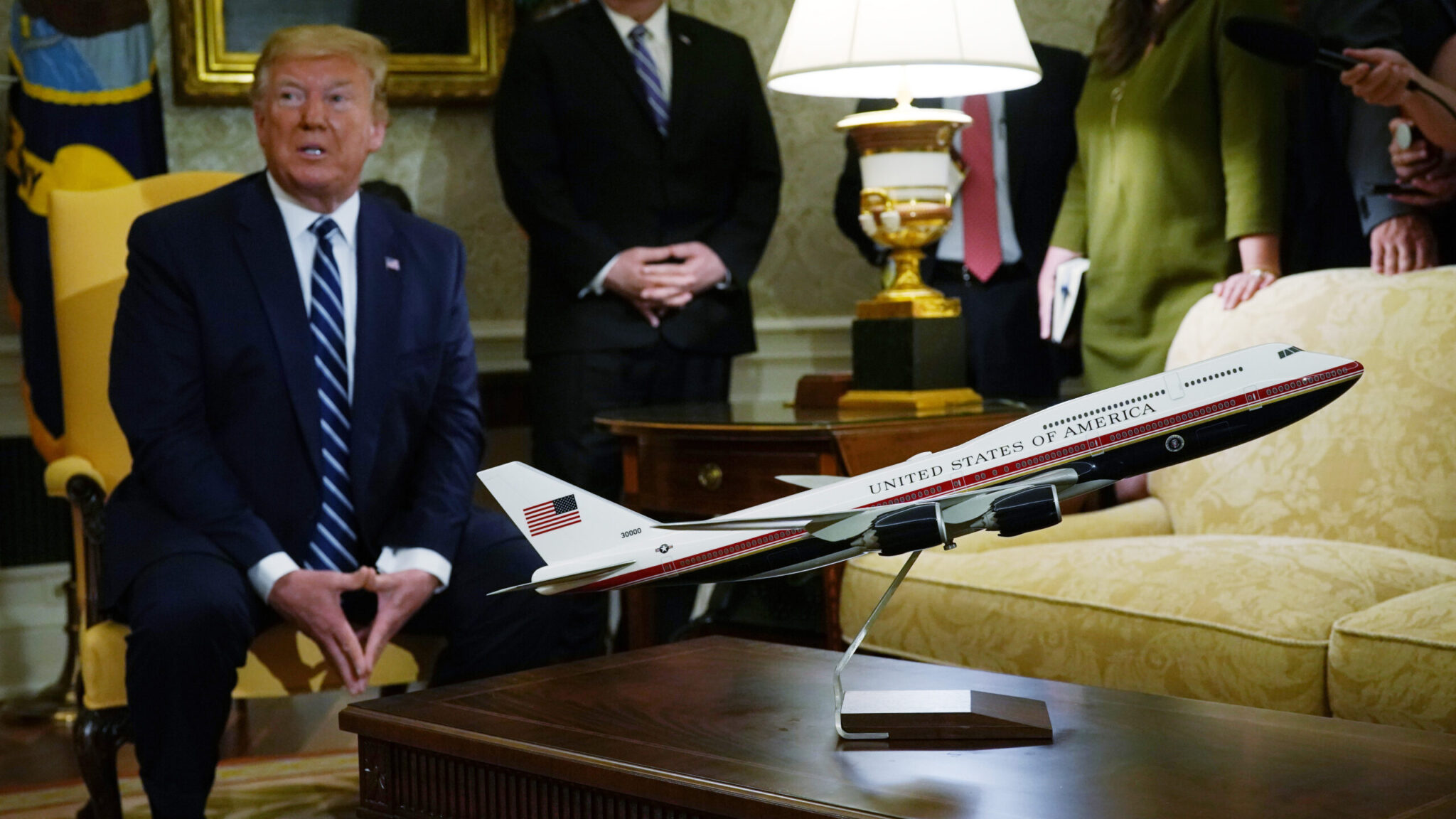
The Trump administration’s proposed plan to accept a Boeing 747, originally owned by Qatar’s royal family, as a “temporary” gift for Air Force One has sparked fierce criticism from congressional Democrats. Critics describe the move as a potential conflict of interest and a serious national security risk, promising to take legislative action to block it.
A “Gift” with Potential for Personal Use
Sunday reports from major news outlets revealed that the Trump administration intended to accept a Qatar government gifted Boeing 747 — a move that would position the aircraft as a presidential transport during Trump’s current term. Sources told The New York Times that the arrangement might lead to transferring ownership to Trump’s presidential library after his term, raising concerns about its future use for personal purposes.
While Qatar’s government stated no final decision had been made, President Trump appeared to confirm the plan on Truth Social, claiming the Defense Department was obtaining a “gift, free of charge” to replace the aging Air Force One fleet. An official announcement was expected during Trump’s upcoming trip to Qatar, ABC News reported.
Legal and Security Concerns Mount
Rhode Island Senator Jack Reed, the top Democrat on the Senate Armed Services Committee, labeled accepting such a gift without Congressional approval a “clear violation” of the Emoluments Clause, which prohibits federal officials from accepting foreign gifts without legislative consent. Reed emphasized the serious counterintelligence risks posed by operating a foreign-owned aircraft potentially accessible to Qatar, a concern echoed by others.
Security and Cost Implications
Connecticut’s Rep. Joe Courtney, who oversees the Air Force One program, pointed out that the plan is “completely unnecessary,” noting that the current VC-25B aircraft are on track for delivery by 2027. He highlighted that Air Force One isn’t merely a luxury jet but a highly secure platform with sophisticated communication systems—upgrades that could be delayed or complicated by retrofitting a foreign aircraft.
Arizona Senator and former Navy pilot Mark Kelly warned about “serious counterintelligence concerns,” emphasizing the need for secure, encrypted communications and missile defense systems on any presidential aircraft, especially one flagged for foreign ownership.
Legislative Moves and Ethical Questions
Several Democratic senators, including Brian Schatz, Chris Coons, Cory Booker, and Chris Murphy, indicated plans to seek legislative action. They emphasize that accepting a foreign gift valued at approximately $400 million undermines public trust and could lead to undue foreign influence. Murphy explicitly mentioned he would oppose arms sales to nations trying to benefit Trump financially, citing Qatar’s gift and the UAE’s investments as examples.
Rep. Ritchie Torres has called for investigations into the transfer, writing to oversight agencies to scrutinize the plan further.
Trump Defends the “Gift”
When questioned about the controversy, President Trump insisted it wasn’t a personal gift but a donation to the Department of Defense. He added that he could decline the gift or pay for the aircraft himself but preferred to accept it, describing it as “free.”
Context: The Broader Push for New Presidential Planes
This controversy unfolds amid ongoing efforts to procure the next-generation presidential aircraft from Boeing, with the first VC-25B expected by 2027 if recent relaxations in technical requirements are approved. Boeing faces billions in cost overruns on the program, which involves extensive structural modifications for converting commercial 747s into military command jets.
Additionally, reports indicate L3Harris is working to modify the Qatar 747, though the extent of alterations remains unclear. Experts warn that even a temporarily adapted foreign aircraft could be highly vulnerable to espionage, with concerns about bugs, tracking devices, and potential sabotage—issues intensified by Qatar’s access during the aircraft’s production.
Ethical and National Security Debates Intensify
Former CIA analyst Elissa Slotkin cautioned that Qatar’s access during the aircraft’s production “can have real consequences,” referencing past sabotage operations and security vulnerabilities associated with exposure to foreign producers of sensitive equipment.
As the debate heats up, lawmakers across party lines are preparing to scrutinize and potentially block the transfer, citing the core concerns of legality, security, and integrity of the presidency.