Chinese Fighters Fly Over Pyramids During Bilateral Exercise
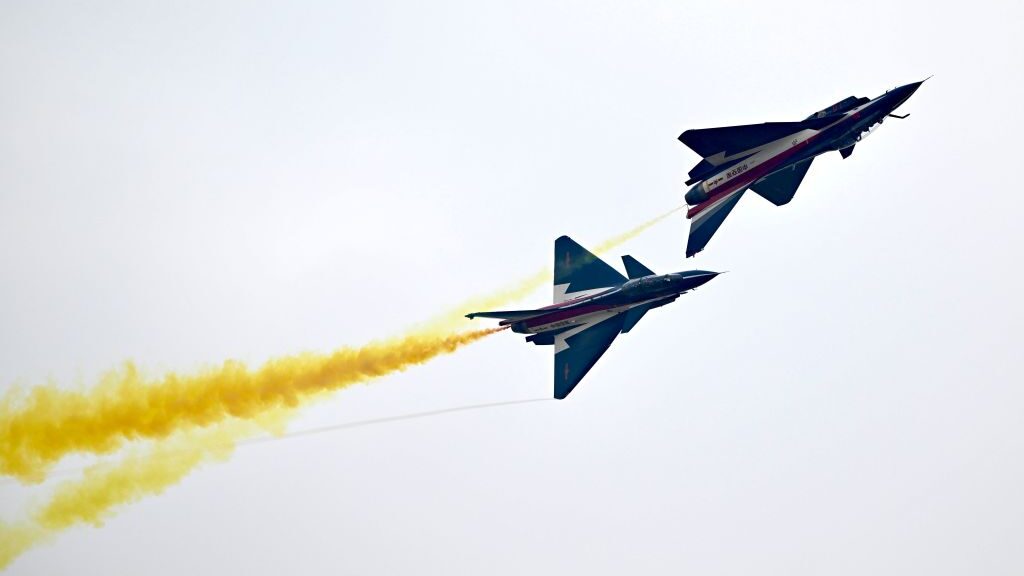
Hopes for a strengthened US-Egyptian partnership may have been severely undermined by recent developments involving China’s military influence in Cairo. An 18-day joint air exercise with Beijing, dubbed “Eagles of Civilization 2025,” concluded on May 4. The exercise prominently featured Chinese J-10 multirole fighter jets flying over Egypt’s iconic pyramids, highlighting Cairo’s expanding military cooperation with Beijing.
Egypt’s Military Engagement with China Sparks Concern
While there’s no evidence that Egypt’s American-made F-16 fighters participated in the exercises, the very display of Chinese aircraft in Egyptian airspace signals a troubling shift. Washington should issue a warning that, moving forward, any participation of US-origin systems in joint drills with Chinese forces would constitute a red line. Such violations should prompt the immediate suspension of spare parts, upgrades, and other US military aid to Egypt.
Congressional leaders are also urged to review US procedures for monitoring the end-use of American weapons abroad and to reassess Egypt’s annual Foreign Military Financing (FMF), currently set at around $1.3 billion.
Details of the “Eagles of Civilization 2025” Exercise
The exercise featured Chinese military aircraft, including the KJ-500 early warning plane, Y-20 transport, Y-20U aerial tanker, and Z-20 helicopter. Egyptian forces reportedly flew MiG-29 fighters during the drills, but details remain limited, primarily sourced from Chinese media—possibly to avoid US criticism. Notably, a video shows an Egyptian pilot in the rear seat of a J-10, illustrating deepening military exchanges and potential future aircraft acquisitions.
This marks the first time Egypt and China trained together in air superiority, air defense suppression, battlefield rescue, and aerial refueling missions. The visible participation of Egyptian pilots in Chinese jets enhances speculation that Cairo is leaning toward purchasing the J-10, especially amid reports that Pakistani-operated J-10s recently downed Indian fighters with Chinese-made PL-15 missiles.
A Shift in Egypt’s Strategic Alliances
Egypt’s military engagement with China has intensified following 2024’s “Year of the Egyptian-Chinese Partnership,” characterized by increased trade, economic agreements—including $1 billion in contracts signed in September—and high-level visits to Beijing. China’s influence has grown through military cooperation—Egypt operates Chinese K-8 trainers and is considering more advanced acquisitions—along with expanded joint naval exercises and military training programs.
This ongoing diversification reflects Egypt’s long-term strategy to reduce reliance on the United States and strengthen ties with China and Russia. Over the past two decades, Chinese investments and military exports to Egypt have skyrocketed, from $3.34 billion (2005–2013) to over $16.62 billion (2013–2023). Chinese drones like the Wing Loong and associated missile technology have also been fielded by Cairo.
Implications for US Security and Policy
As Egypt’s strategic drift accelerates, the US must address potential threats to its influence and military assistance programs. Washington should openly communicate that integrating US systems—such as Egypt’s F-16 fleet—into Chinese-led exercises would trigger immediate restrictions on American military support. A congressional review of end-use monitoring procedures is necessary to ensure compliance and quick detection of breaches.
Given the significant US aid, Congress must also reconsider whether current FMF levels align with American strategic interests amid Egypt’s expanding military ties to adversaries. As Cairo appears to seek a strategic balance, US policymakers risk weakening the long-standing peace and security arrangements if they continue to overlook these developments.
A Call for Reassessment and Strategic Clarity
If Egypt moves further into China’s orbit, the US must reassess its relationship and adjust security assistance accordingly. Without a firm stance, the sight of Chinese fighters over Egyptian skies may soon become a common image—potentially reshaping regional alliances and challenging US influence in the Middle East.