A Breakthrough in Defense Cooperation Amid Political Tensions
After years of strained relations following Brexit, the European Union and United Kingdom have finally reached an agreement on a defense and security trade partnership. This pact represents a crucial step toward closer cooperation in military and industrial fields, signaling a potential shift in their broader relationship.
Strategic Cooperation and Key Focus Areas
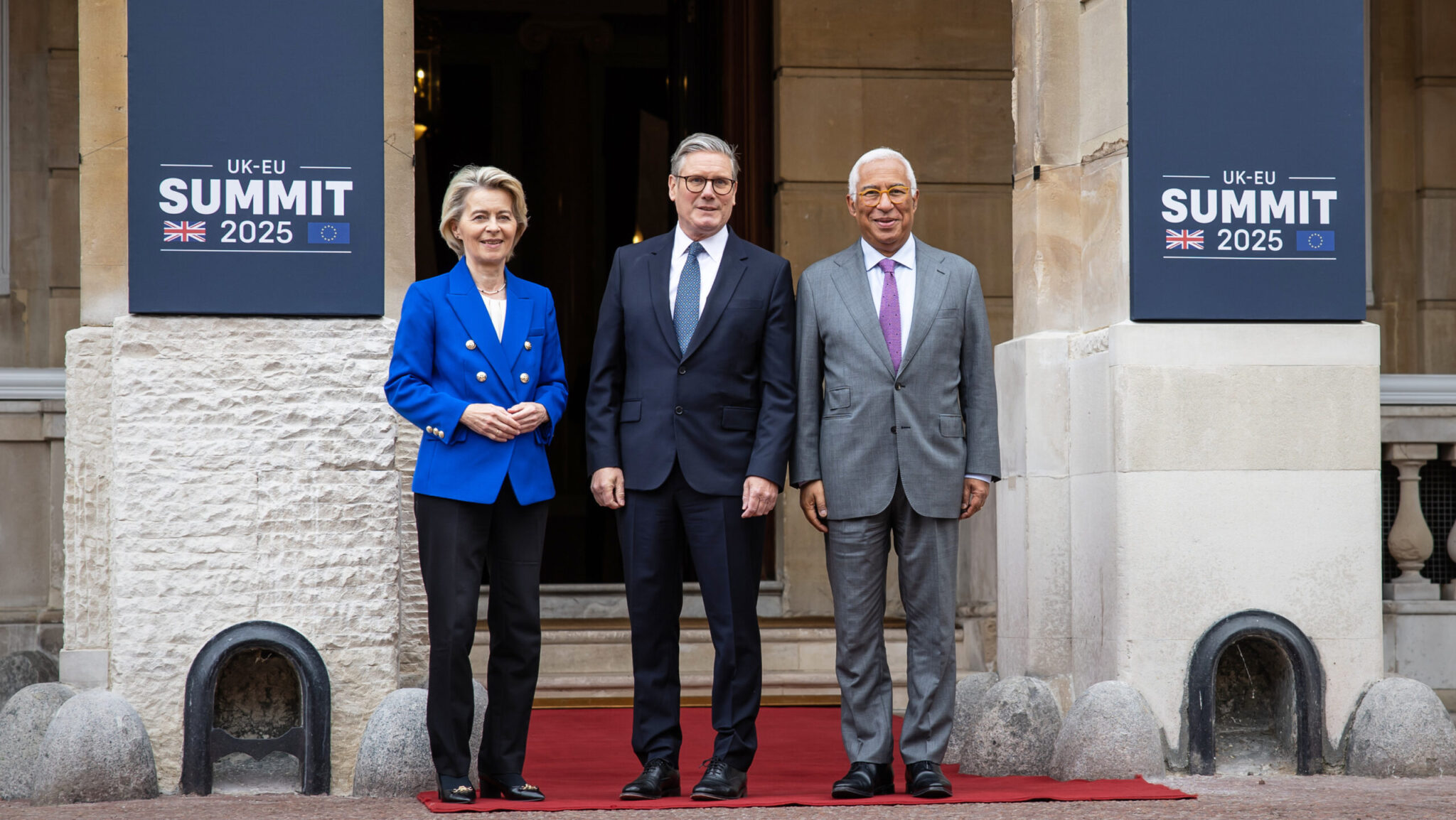
European Commission President Ursula von der Leyen announced during a EU-UK Summit in London that the new “partnership” aims to enhance collaboration across industry, military mobility, peacekeeping, crisis management, and countering hybrid threats. She described it as a “first step” toward integrating UK involvement into EU-related defense initiatives, although additional negotiations are needed before UK companies can fully compete for joint procurement under the €150 billion (€169 billion) Security Action for Europe (SAFE) program.
Building Toward a Deeper Defense Integration
The “Common Understanding” document signed today underscores the intention for the UK and EU to explore avenues for mutual cooperation once SAFE is adopted, within their respective legal frameworks. The EU’s SAFE initiative, part of the broader ReArm project valued at up to €800 billion, aims to urgently boost defense spending and industrial capacity across Europe by facilitating loans for major equipment programs. Von der Leyen emphasized that SAFE would “increase our readiness,” “close military gaps,” and “enhance interoperability,” all while creating new opportunities for defense industries.
Industry Opportunities and Challenges
Britain’s departure from the EU in 2020 has historically limited local suppliers from competing for Union defense contracts. While the new agreement opens potential avenues for companies such as BAE Systems, Babcock, and Rolls Royce, industry representatives like Kevin Craven, CEO of the UK’s ADS Group, expressed cautious optimism. “While this is a welcome development, the lack of detail means we shouldn’t celebrate prematurely,” he stated, highlighting the need for clarity on specific participation terms.
Broader Strategic Significance
European Council President Antonio Costa praised the accords, calling them a “new chapter” in UK-EU relations. He stressed that the agreements symbolize more than just words—they embody commitments to security, prosperity, and development. Costa emphasized that increased cooperation would reinforce Europe’s contribution to NATO and improve strategic coordination, particularly in focusing on global issues like Ukraine. He also announced plans to intensify sanctions on Russia’s Vladimir Putin.
UK’s Perspective: Trade and Independence
UK Prime Minister Keir Starmer highlighted the pact’s economic benefits, describing it as a “landmark” trade deal that grants unprecedented access to the EU market–second only to countries within Africa and the EU itself—while maintaining the UK’s stance on not rejoining the single market or customs union. Starmer reiterated the government’s commitment to sovereignty and control over migration and trade policies.
Skepticism from Defense Observers
However, not everyone is convinced of the pact’s potential impact. Ed Arnold, a senior researcher at the Royal United Services Institute, questioned the “level of ambition” behind the partnership, noting a notable lack of “tangible deliverables or milestones.” Analysts warn that without clear, measurable progress, the agreement’s strategic value could remain limited.
Conclusion
The EU-UK defense and security trade agreement signals a tentative but significant move toward rebuilding trust and cooperation post-Brexit. While practical details and concrete milestones are yet to be seen, the partnership’s success could shape future European security architecture and foster enhanced collaboration in confronting shared threats.