After Ukraine’s bold attack, questions arise about US readiness and offensive capabilities
Surprising Aggression Spurs Scrutiny of US Defense Readiness
Following Ukraine’s recent “Operation Spider Web”—a daring drone attack that destroyed over a dozen Russian heavy bombers and surveillance aircraft—top U.S. military leaders are urgently assessing their own defenses and offensive strategies. The assault has highlighted rapid advancements in drone warfare and exposed vulnerabilities in traditional military infrastructure.
Humbling Revelations: Ukraine’s Drones Challenge Past Assumptions
Air Force Chief of Staff Gen. David Allvin told the Special Competitive Studies Project’s AI+ Expo that the operational sophistication displayed by Ukrainian drones surpasses anything previously imagined, urging the U.S. to “be humble” in considering future threats. “That’s one thing that should humble us,” he remarked, reflecting on the unprecedented tactics used.
Even the manner in which news of the attack broke underscores the transparency and connectivity of modern warfare. Smartphone videos and social media posts immediately disseminated images of the damage, while open-source intelligence analysts swiftly verified the destruction via satellite imagery—once the domain of covert government agencies.
A World Where Secrets Are Hard to Keep
Army Chief of Staff Gen. Randy George emphasized that in today’s hyper-connected environment, “You can’t really hide anymore.” He explained that military installations must adapt by dispersing forces, reducing signatures, and embracing mobility—an evolution the Army has been working on for years.
Allvin echoed this sentiment, noting that traditional ideas of sanctuaries or safe zones are outdated. “The old way of thinking, that there are sanctuaries, is sort of going away,” he said.
Defense in the Modern Age: Hardened Bases and New Technologies
Allvin acknowledged that the U.S. has taken steps to harden bases with resilient structures and survivable capabilities—budgeted and underway—yet “it’s not where it needs to be.” The Army is investing in anti-drone measures, jammers, lasers, high-powered microwaves, and traditional anti-aircraft defenses. However, defending facilities against a multifaceted drone threat remains a significant challenge.
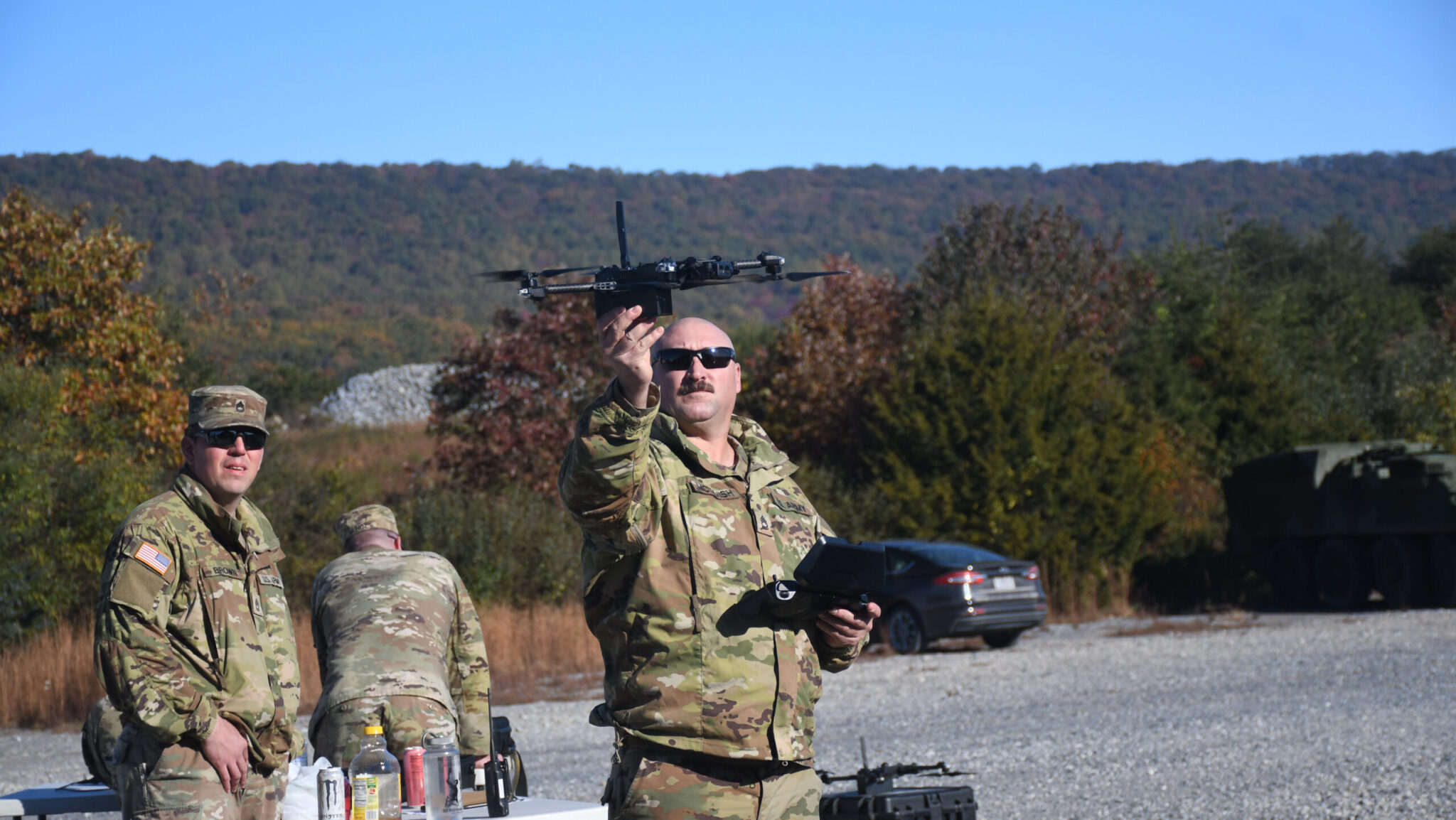
To counter these threats, the Army is preparing for large-scale exercises like “Fly Trap,” aimed at developing responses to swarms of drones, including hostile small UAVs.
Offensive Opportunities: Learning from Ukraine’s Success
While defensive concerns dominate discussions, military leaders see opportunity in offensive tactics. Allvin suggested the U.S. should consider integrating tactics similar to Ukraine’s drone use into its own operations—emphasizing that effective effects can be generated by less expensive, more numerous platforms.
“All we need is a platform that can generate effects, disrupt, and alter the battlefield,” he said, stressing that sophistication doesn’t necessarily equate to cost or complexity. “We need systems that can produce effects efficiently.”
Rethinking Drone Production and Innovation
George highlighted the need for the U.S. to become a leader in drone manufacturing, emphasizing rapid adaptation and innovation—traits exemplified by Ukrainian UAV producers. Unlike traditional defense procurement, which relies on long cycles like the Program Objective Memorandum (POM), he advocates for more agile, flexible approaches.
“The technology is changing in our pocket,” George said, criticizing the slow pace of traditional procurement processes. “We need to build systems that are adaptable, ingest disruptive technology, and don’t lock us into 25-year-old designs.”
Allvin reinforced this point, warning against “locking in” to specific technologies and underscoring the importance of institutional agility—saying the personnel are talented and innovative, but the bureaucracy needs to catch up.
The Heart of the Challenge: Institutional Adaptation
Both leaders acknowledged that the key obstacle isn’t the talent or ingenuity of individual servicemembers but the military’s ability to adapt its processes and structures in real time. They stressed the importance of fostering innovation, speed, and flexibility within the defense apparatus to match the rapid evolution of warfare technology.
Conclusion: A Call to Embrace Change and Agility
The Ukrainian drone attack serves as a wake-up call, prompting the U.S. military to re-evaluate its strategies—not only in how it defends its assets but also in how it employs small, disruptive technologies offensively. As the battlefield becomes more transparent, dispersed, and driven by rapid technological change, the institutions must evolve to maintain dominance.