The commander of a US Navy task force dedicated to unmanned systems has announced that the team is actively deciding which systems are ready for „operationalization” and which require further development.
Task Force 66: Evaluating USVs
Rear Adm. Michael Mattis, commander of Task Force 66, established in May 2024, revealed this evaluation process in an interview with Breaking Defense. Task Force 66 recently participated in Baltic Operations 2025 (BALTOPS), a major international maritime exercise with the US and NATO countries. This exercise served as a crucial platform for evaluating various commercial USVs.
Focus on Low-Cost Systems
Mattis, whose office is under US 6th Fleet, described Task Force 66’s mission as using low-cost systems, like commercial-off-the-shelf USVs, to „impose costs on the adversary.” Much of this work is based on products and intelligence provided to Ukraine.
Broader Trend Towards Unmanned Vessels
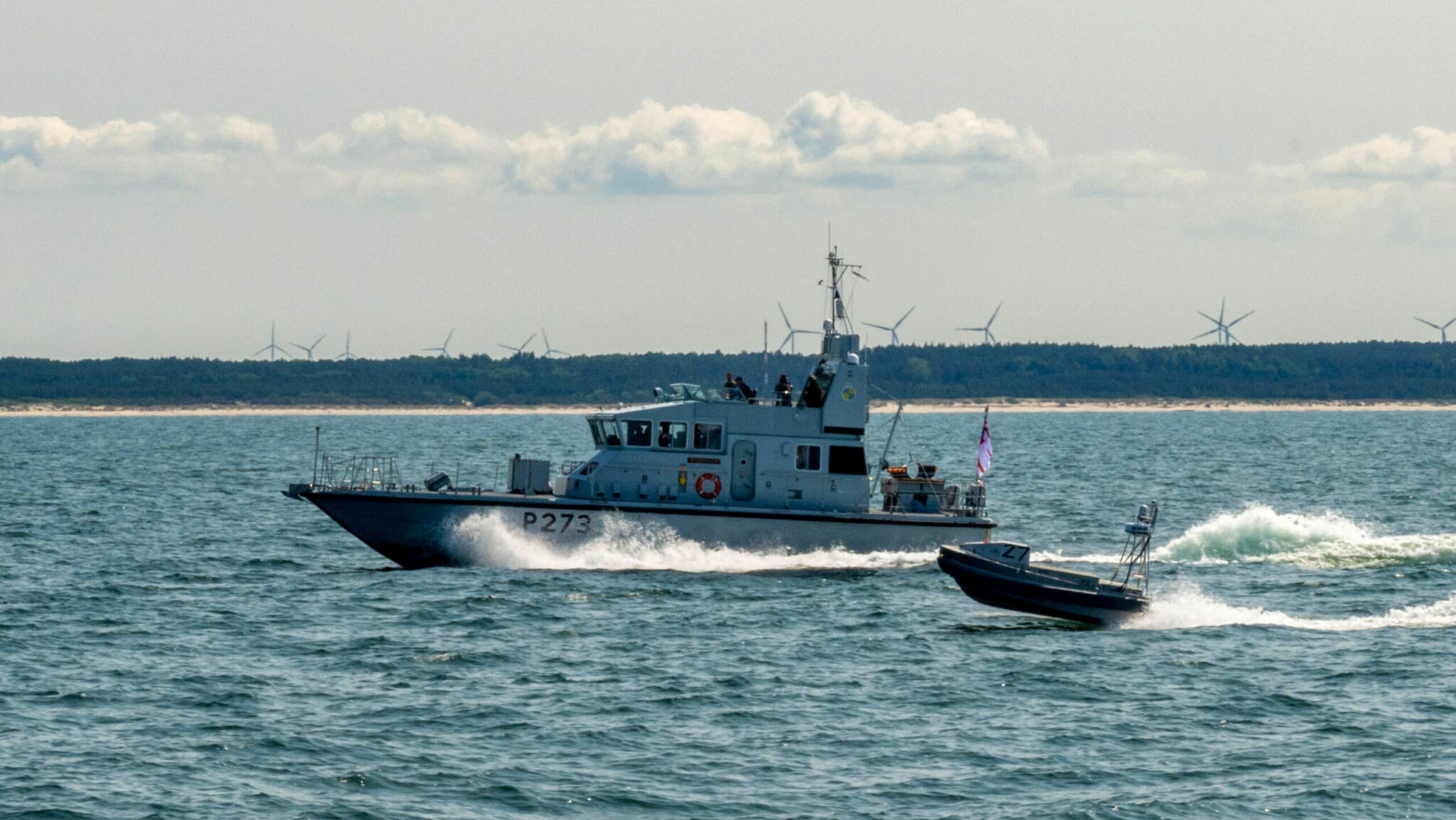
While Mattis’s decisions don’t dictate other fleet commanders’ choices, TF-66’s acceptance and implementation of certain vessels aligns with the Navy’s broader, gradual move to incorporate unmanned surface and subsurface vessels into its fleet. BALTOPS included „red versus blue scrimmages” where sailors tested the capabilities of several USVs attacking a warship.
Global Autonomous Reconnaissance Craft (GARC)
The Navy used at least 10 Global Autonomous Reconnaissance Craft USVs during BALTOPS, which have already been approved for procurement through the Pentagon’s Replicator program.
HavocAI Rampage USVs
The service also employed 10 HavocAI Rampage USVs, which the admiral characterized as „multi-mission,” focusing on contested logistics missions. Task Force 66 does not plan to operationalize the current configuration of these USVs but is considering future iterations.
Seasats Lightfish USVs
BALTOPS also featured two Seasats Lightfish USVs, which Mattis said are currently „operational,” but underwent further trials to ensure their operational readiness for extended durations.
Controlling Multiple Autonomous Vessels
Beyond individual USV operation, Mattis said TF-66 is developing the capability to control multiple autonomous vessels through a „single pane of glass,” referring to commanding numerous vehicles through a singular command-and-control station. This includes integrating this capability with NATO allies.
Demonstrated Capability
„We have demonstrated in these software architectures the ability to control multiple boats. I think … our current record is controlling about 12 USVs and one [unmanned aerial system] simultaneously from one single pane of glass,” he said.