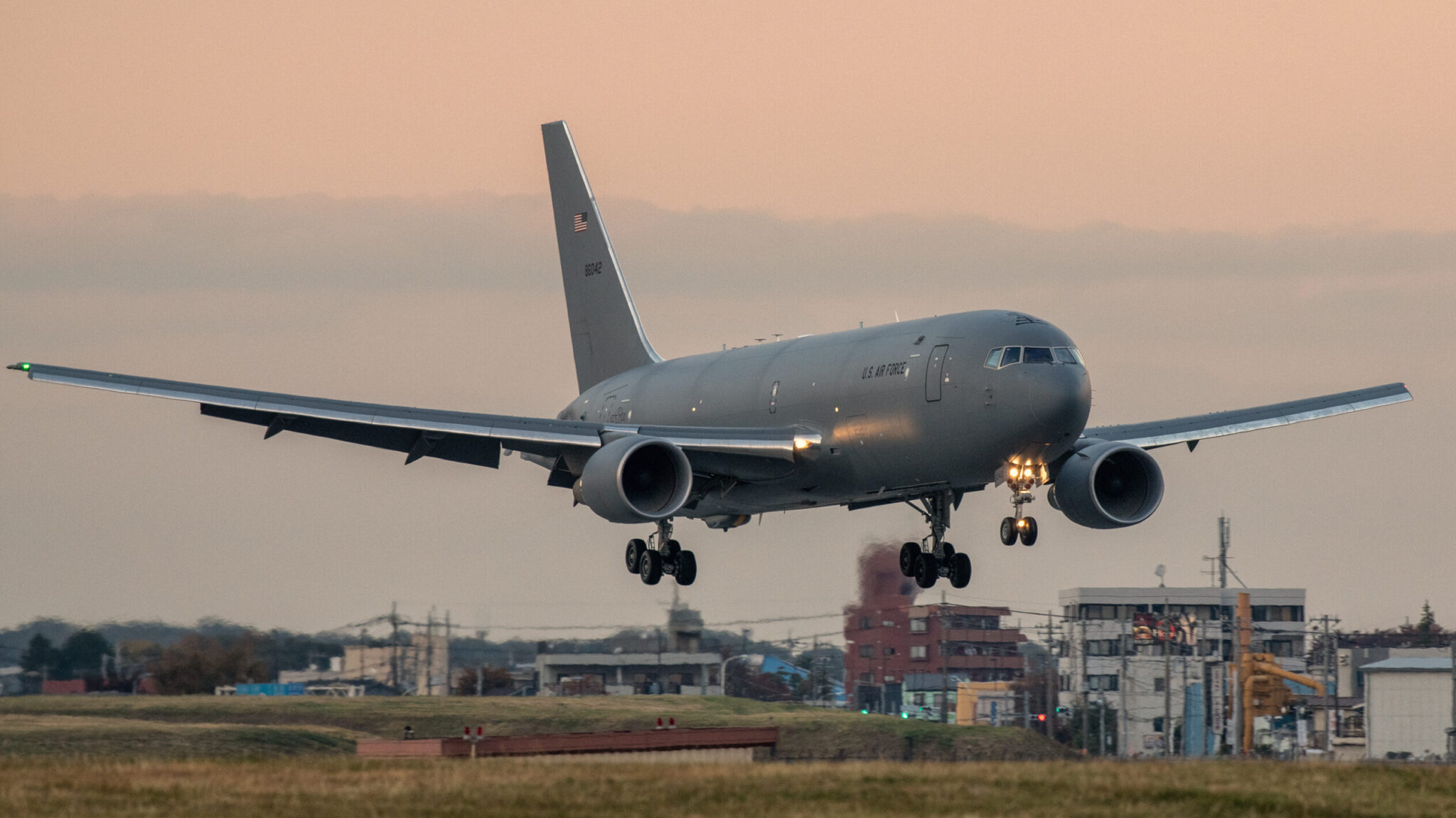
Shifting Focus on Air Refueling Fleet
Just two years after unveiling ambitious plans for a cutting-edge, stealthy tanker—known as the Next-Generation Air Refueling System (NGAS)—the U.S. Air Force appears to be reorienting its tanker acquisition strategy once again. The latest move involves a program aimed at extending the production of current tankers, with indications that Boeing’s KC-46 Pegasus could play a central role.
New Program Aims to Extend Tanker Production
According to the recently released fiscal 2026 budget documents from the Department of Defense, the Air Force is proposing a “Tanker Production Extension” program scheduled to launch next year. The effort seeks $23.8 million to develop a request for proposals (RFP), with plans to finalize this process by the third quarter of FY26.
Uncertain Futures for Tanker Procurement
The ultimate outcome of this extension remains unclear. The Air Force might hold a competition inviting rival bidders—possibly Airbus or Embraer, both of which have expressed interest in providing tankers—against Boeing. Alternatively, the service could choose to purchase additional KC-46s through a sole-source process, especially since the budget emphasizes using the Pegasus’s Capability Production Document as the “most affordable” basis for this new phase.
Shift from Previous Plans
This new strategy replaces the earlier KC-135 Tanker Recapitalization Program, which aimed to replace aging KC-135 aircraft until a futuristic tanker, the NGAS, could be developed and deployed. However, the NGAS effort, once envisioned as a low-observable, survivable platform, now appears uncertain under current budget priorities, with only about $13 million allocated in FY26 for analysis of alternatives and survivability enhancements.
Ambiguity Surrounding NGAS
An Air Force spokesperson confirmed that the limited FY26 funding aims to “preserve research and development in cross-platform HVAA connectivity and survivability initiatives.” The agency continues to explore ways to integrate new mission systems to improve tanker survivability, but the future of NGAS remains in limbo.
Return to Proven Solutions?
This latest shift may reflect a cautious return to previous expectations—namely, continuing to buy more KC-46s as a near-term measure, rather than rushing into a new, unproven system. When the tanker recapitalization and NGAS plans were initially announced, senior officials indicated a preference for the KC-46 as a short-term solution to replace the KC-135.
Industry Shifts and Competition
The tanker acquisition landscape has been fluid, with Lockheed Martin previously partnering with Airbus on an A330-based tanker, only for Lockheed to withdraw in late 2023. Airbus remains engaged—while Embraer has launched an aggressive campaign promoting its KC-390, including promises to manufacture in the U.S. if awarded a contract.
Investments in the KC-46 Program
Despite financial challenges—including billions lost by Boeing on the Pegasus program due to fixed-price contracts—the Air Force continues to heavily invest in the platform, requesting approximately $81.2 million in FY26 for upgrades. The service also plans to increase the program of record to a maximum 188 aircraft under the current Boeing contract.
Upcoming Upgrades and Risk Reduction
A “risk reduction study” for a Block II upgrade for the KC-46, focusing on communication and navigation system enhancements, is scheduled for FY26. The current Block I upgrade, which includes upgraded secure communications, is expected to complete in FY28.
Financial Impacts on Boeing
Boeing has faced billions in losses on the KC-46 program, but future orders—supported by the new extension—could help mitigate some of these financial setbacks. The move marks a return to confidence in the aircraft’s capabilities, even amid ongoing development and procurement uncertainties.