Aurora Flight Sciences’ Bid Dismissed as Bell Advances to Phase 2 of SPRINT Program
The Pentagon’s Defense Advanced Research Projects Agency (DARPA) has selected Bell Textron to develop a groundbreaking experimental aircraft capable of high speeds and vertical takeoff and landing—marking a significant milestone in next-generation aerospace technology. The decision effectively eliminates Aurora Flight Sciences from further consideration in this phase of the project.
Bell Wins Phase 2 of DARPA’s SPRINT Program, Aiming for Breakthrough Technology
In a statement today, Bell confirmed its advancement to Phase 2 of DARPA’s Speed and Runway Independent Technologies (SPRINT) program. This next step authorizes Bell to proceed with designing, building, ground testing, and certifying its X-plane prototype, with a planned third phase for flight testing anticipated for 2028. DARPA officials verified to Breaking Defense that Bell is the sole company selected for this phase. The agency has requested $55.2 million in funding for the program in fiscal year 2026 [PDF].
Bell’s Executive Vice President for Engineering, Jason Hurst, expressed enthusiasm: “Bell is honored to be selected for the next phase of DARPA’s SPRINT program and excited to demonstrate a brand-new aircraft with the first-ever stop/fold technology. This achievement, built on nearly 90 years of X-plane development, is a testament to our commitment to advancing warfighter capabilities.”
Innovative Tech Focused on Flexibility and Speed
The SPRINT project, a joint effort between DARPA and U.S. Special Operations Command, envisions an adaptable aircraft capable of vertical takeoff and landing (VTOL), speeds of 400 to 450 knots (over 500 mph), and the ability to hover in austere, unprepared environments. The technology aims to provide versatile rapid deployment options that could be adapted into various aircraft configurations in the future.
The first phase of the program included competitors Northrop Grumman, Piasecki Aircraft Corp., Aurora, and Bell. Aurora, a Boeing subsidiary, advanced into the firstB stage last year with their high-lift, low-drag fan-in-wing X-plane design. Aurora highlighted that testing validated the design’s feasibility, stating, “We are proud of the advancements we made through SPRINT, and we look forward to applying fan-in-wing technology to future high-speed, vertical lift programs.”
Bell’s Technological Innovations and Past Work
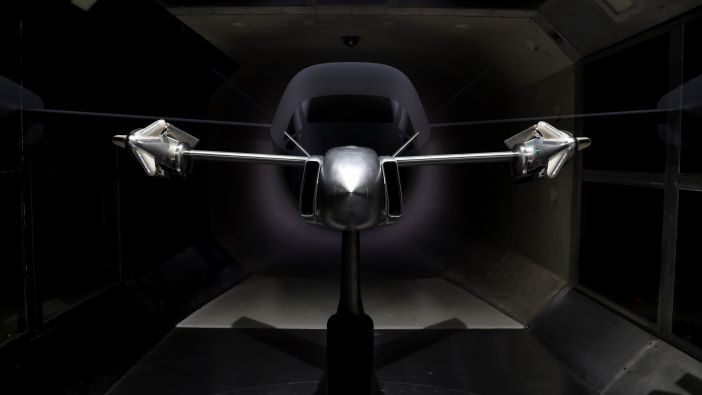
Bell has demonstrated several key technologies for the SPRINT aircraft, including “folding rotor, integrated propulsion, and flight control systems,” tested at Holloman Air Force Base. Wind tunnel testing at Wichita State University’s National Institute for Aviation Research further supported their development. The “stop/fold” technology features a tilting rotor for hovering and vertical takeoff/landing, which can be stowed to reduce aerodynamic drag, with jet engines providing forward thrust at higher speeds—per The Warzone.
Bell’s previous concept positioned this system as an uncrewed platform capable of sea-based missions, potentially serving in austere environments like the Indo-Pacific with limited runway access.
Beyond SPRINT: Other Next-Gen Projects
In addition to SPRINT, Bell is actively involved in other cutting-edge aircraft programs. Notably, the company is manufacturing the Army’s V-280 Valor tiltrotor, which was selected for the Future Long-Range Assault Aircraft (FLRAA) program. The Army is accelerating FLRAA development to meet future operational demands.
Summary
Bell’s selection to proceed to the next phase of DARPA’s ambitious high-speed, runway-independent aircraft project marks an important step toward revolutionizing military mobility and rapid deployment. The technology demonstrated could redefine how U.S. forces operate in contested or remote environments, enabling faster, more flexible response options in future combat scenarios.