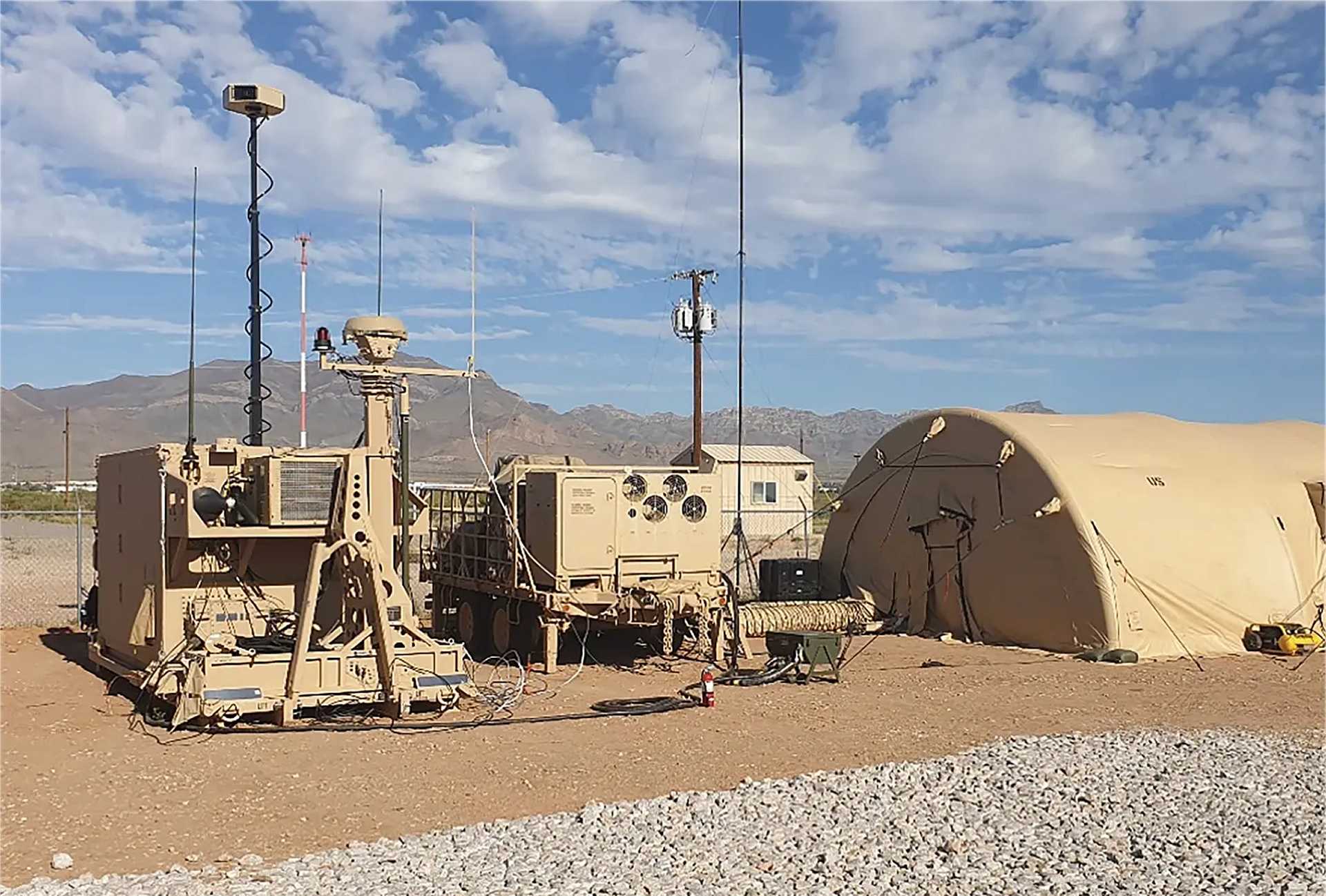
Northrop Grumman is actively promoting its Integrated Battle Command System (IBCS) to the European Sky Shield Initiative (ESSI) and NATO’s Air Command and Control System (ACCS) replacement program, a top executive confirmed at the Royal International Air Tattoo.
Engaging with ESSI and NATO: Demonstrating IBCS Capabilities
Kenn Todorov, vice president and general manager of Command & Control and Weapons Integration at Northrop Grumman, revealed that the company has engaged in discussions with both programs and provided information and virtual demonstrations at their request.
Evaluation Process: Cost vs. Benefit Analysis
Todorov stated that the programs are currently in an evaluation process, assessing the cost and benefit of adopting a system like IBCS. He expressed confidence that IBCS is a strong contender for both initiatives.
IBCS: Integrating Disparate Systems for Enhanced Defense
IBCS is designed to integrate sensors and effectors that were not initially designed to work together, creating a unified and more effective defense system. The system is particularly relevant in the face of increasing missile threats worldwide.
Growing Missile Threat: A Pressing Need for Advanced Defenses
Todorov emphasized the growing missile threat, citing examples from Russia, Ukraine, the Middle East, Iran, and Israel. He stressed that the missile defense problem is not diminishing, making advanced systems like IBCS crucial.
European Expansion: Leveraging Growing Defense Budgets
With the growing need for air defenses across the continent and increasing defense budgets, Europe is a logical market for IBCS. The system already has a foothold within the alliance, with the US and Poland committed to its deployment.
Poland’s Progress: Moving Towards Full Operational Capability
Poland is set to achieve full operational capability with IBCS on Sept. 16, with a live fire flight test across 500 kilometers.
Linking Sensors and Shooters: A More Efficient Battlespace
The Poles recognize the benefits of linking sensors and shooters together, creating a more efficient battlespace and improving the ability to handle waves of incoming threats.
Potential Interest from UK, Denmark, and Germany:
Todorov hinted at potential interest from the UK, Denmark, and Germany, confirming conversations with UK officials considering systems for integration within the UK defense design. He also highlighted Denmark as potentially the next country to make a decision on IBCS.
Inter-European Integration: Strengthening NATO Alliances
Germany is also showing interest in IBCS, and Todorov noted the inter-Europe integration interest within NATO, as well as between NATO and US forces. Nations are interested in being able to work together in a conflict, making interoperable systems like IBCS highly valuable.
Industrial Strategy: Local Manufacturing for European Partners
Northrop Grumman’s European push is supported by an industrial strategy that could see certain physical components produced within European countries. Agreements have been established with Diehl Defence and Airbus in Germany, and Marshall Aerospace in the UK.
Local Manufacturing Examples: Command Centers and Communication Systems
Local manufacturing could include command and control mobile shelters, communication towers, and server racks.
Future Vision: IBCS in the Cloud
Todorov stated that the future vision for IBCS involves moving the system to the Cloud, reducing its form factor and potentially enabling deployment on smaller devices like smartphones.